

The Piano Prescription
At Georgia State, a cross-field team of researchers is working to rewire the injured brain in an unexpected way: with a combination of music and technology. Their work, centered around a digital app called KeyStroke, is helping patients regain movement and making the process effective and even enjoyable.
The Musician/Scientist
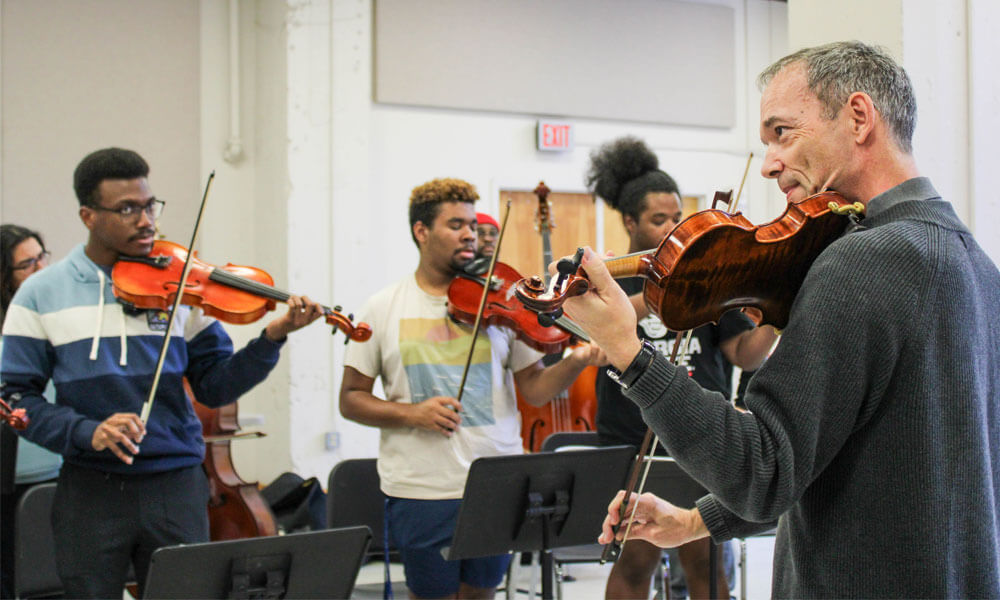
Martin Norgaard has spent his career at the intersection of art and analysis. A jazz violinist turned scholar, he’s a professor of music education at Georgia State’s College of the Arts, where he teaches courses in string education as well as classes focused on the psychology and neuroscience of music. His latest passion goes beyond the classroom, putting music to work as medicine.
 “Music cognition is such a fascinating field,” Norgaard says. “You can go in so many directions, from studying how kids learn to play to looking at brain activity during improvisation or working with health professionals to develop therapies based on music. It’s all driven by this question of how we think through sound and how the brain listens, reacts and creates.”
That fascination is fueling a collaboration with Yi-An Chen, an assistant professor of occupational therapy in Georgia State’s Byrdine F. Lewis College of Nursing and Health Professions. Together with neuroscientist and Assistant Professor of Communication Sciences and Disorders Rachael Harrington in the College of Education & Human Development, they are investigating how music can help stroke survivors regain movement in their hands and arms.
‘Like Guitar Hero — But for Recovery’
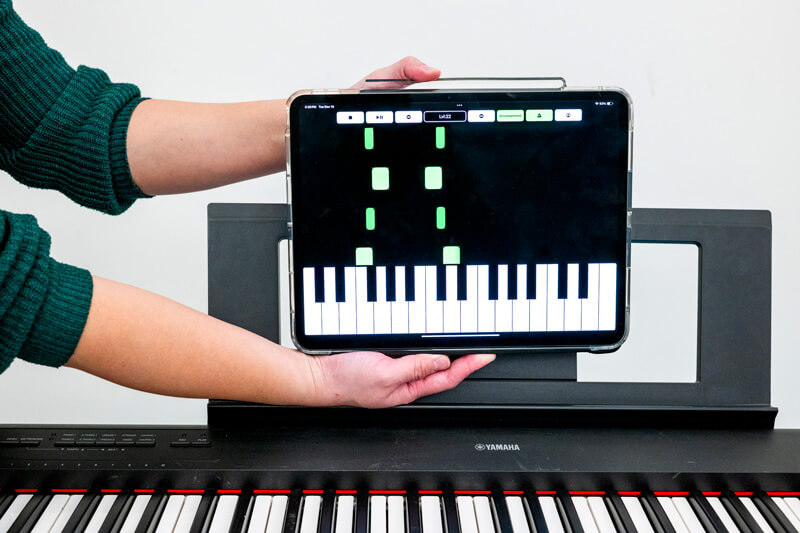
The result is a therapeutic piano app designed for stroke rehabilitation. It’s called KeyStroke, and the experience, Chen says, feels “a bit like Guitar Hero — but for recovery.” Patients are guided by on-screen notes as they play simple melodies on a piano keyboard, turning repetitive motor exercises into a kind of game.
 KeyStroke’s melodies are composed by Norgaard and students in his lab using a therapeutic sequence created by Chen based on how the hand, wrist and arm relearn functional movements after injury. Norgaard’s lab also created the background music used in the app’s current version, so each exercise is like a miniature duet between the patient and the app.
“The goal isn’t really to learn to play piano,” Norgaard explains. “It’s to redevelop upper-extremity function. The songs are structured from a developmental and therapeutic perspective, not a musical one.”
Chen says that design is intentional. “If you think about traditional rehab exercises, they can be boring, repetitive and often not motivating,” she says. “With KeyStroke, people are engaged. They’re listening, moving and creating all at once.”
Seeing the Music Work
In early studies, the team has seen encouraging results. Patients who spent more time using the app showed greater improvement in hand and arm control than those who didn’t.
“We saw a clear correlation between how much patients used the app and how much their function improved,” Norgaard says. “That told us it wasn’t just about time. It was about the musical training itself.”
In their 2025 pilot study using KeyStroke, the researchers found the music therapy app encouraged patients to do thousands of rehabilitative movements at home — far more than in traditional therapy.
Participants pressed 14,000 keys over two weeks, for 30 minutes on most days. That amounted to 1,555 timed finger, wrist or shoulder repetitions per session. Experts believe that frequency and duration could be enough to spark neuroplastic recovery in these patients’ brains.
This work builds on a 2023 study in which participants used a commercial piano-training app and also showed positive feedback and improvements in motor function.
Their findings led the research team to improve upon what they were doing with the off-the-shelf app and begin the process of customizing the practice experience for greater impact and patient benefit. That led them to a collaboration with Gil Weinberg at Georgia Tech’s Center for Music Technology.
As an expert in AI and musical robotics, Weinberg is helping to develop an updated version of KeyStroke that includes adaptive features and improved usability.
“This idea actually started before the whole AI boom,” Chen says. “We wanted something that could adapt to each person — how they play, how they move — and generate new songs that fit their level. It’s about using technology to make therapy personal.”
Eventually, Weinberg’s AI tools will allow the app to learn from each user’s data and compose new songs tailored to their progress. If a patient struggles with certain movements, KeyStroke could generate exercises that target those actions to keep the therapy personalized.
WHEN MUSIC MEETS MEDICINE
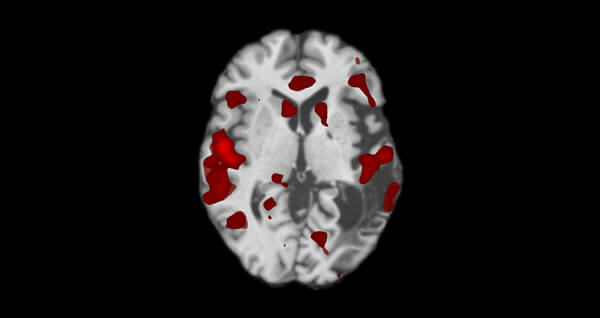
The Neuroscience Behind the Beat
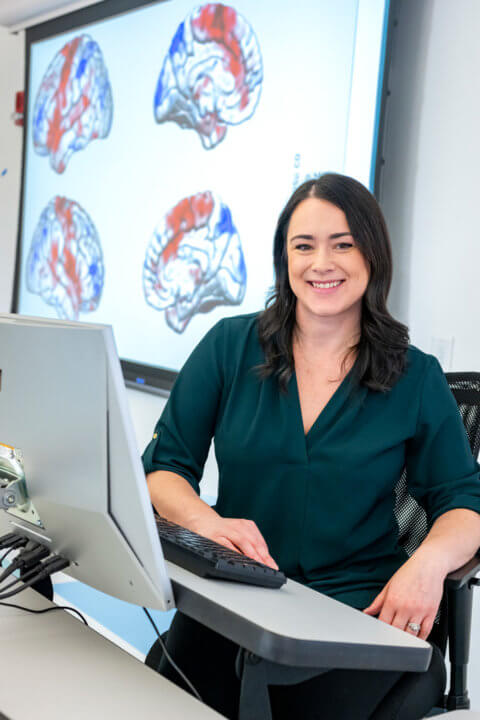
Assistant Professor of Communication Sciences and Disorders Rachael Harrington studies how targeted brain stimulation can aid stroke recovery, helping patients regain reading, language and motor skills through individualized neurorehabilitation.
While work continues to upgrade the app’s capabilities, Harrington is studying what’s happening in the brains of patients who use it. She’s analyzing how musical rehabilitation affects brain connectivity after therapy.
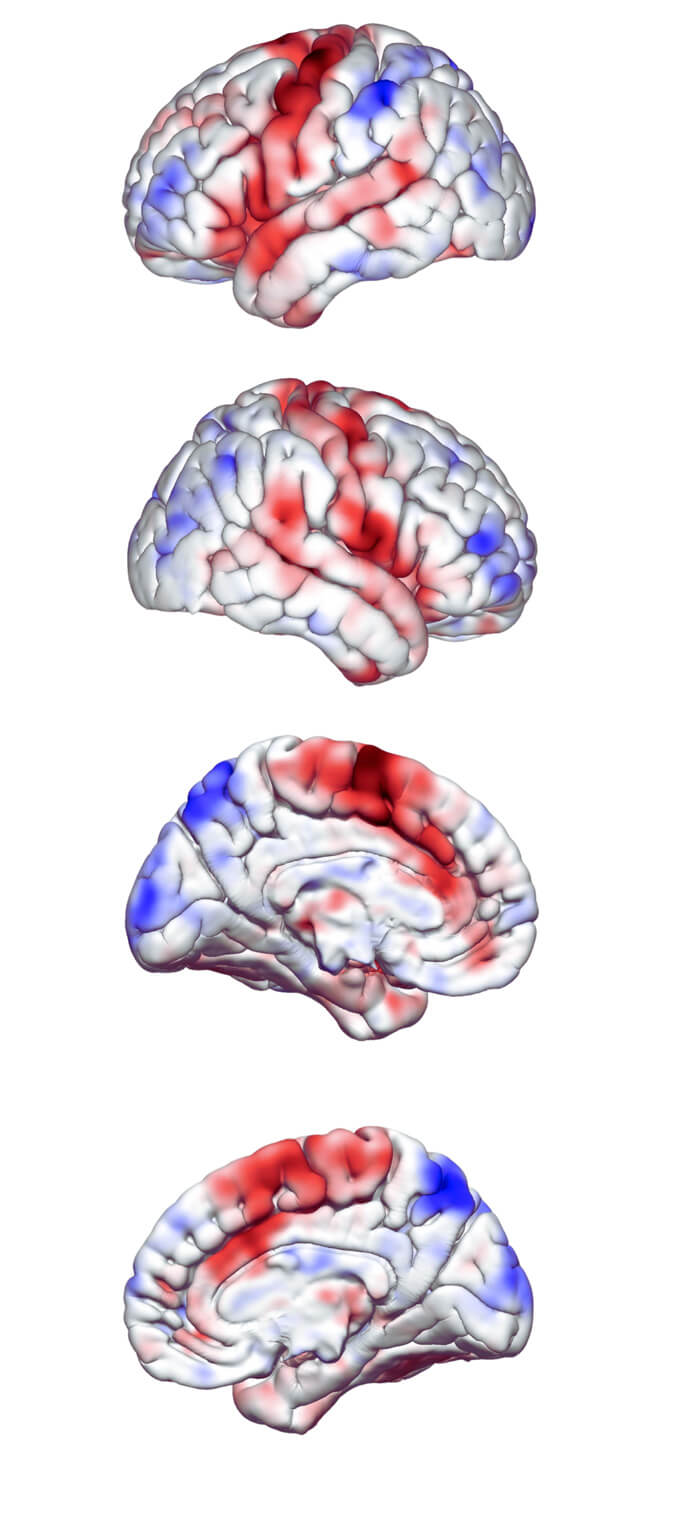
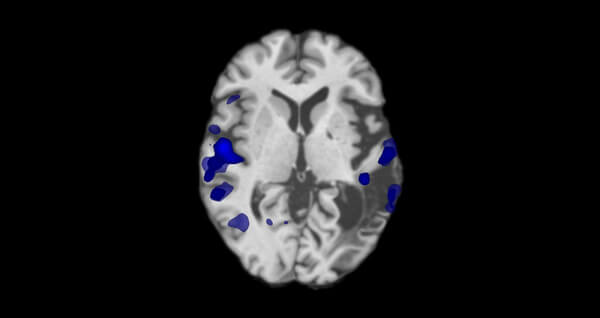
Using neuroimaging data such as functional magnetic resonance imaging (fMRI) scans, Harrington can gauge patients’ resting-state connectivity, which measures how strongly different brain regions are connected to each other, as well as their task-based activation, which measures which regions of the brain are engaged when tapping to a beat.
“So far, we’ve seen really interesting changes,” Harrington says. “We’re noticing increased connectivity between regions that handle motor control and those that process sound and rhythm. That’s a marker of neuroplasticity — the brain rewiring itself through practice.”
Harrington says music offers a unique advantage in stroke recovery because it activates both hemispheres of the brain.
“Where speech or movement are usually controlled on one side, music engages both,” she says. “So if one hemisphere is damaged, the other can help take over. That bilateral activation seems to support recovery in a way traditional therapy doesn’t always achieve.”
 To analyze the patients’ progress, Harrington has access to some of the most advanced facilities in the Southeast through the collaborative Center for Advanced Brain Imaging (CABI). The facility is part of the Georgia Research Alliance’s Core Exchange, which allows university researchers to share cutting-edge scientific resources.
“CABI is such an incredible resource,” Harrington says. “It’s entirely dedicated to brain imaging and neurobiology research, with everything from a 3T MRI to advanced computing clusters for data analysis. What makes it really special is the supportive staff and the collaborative environment. They help you design experiments, interpret results and connect with other researchers across Georgia State and Georgia Tech.”
Healing That Feels Like Play
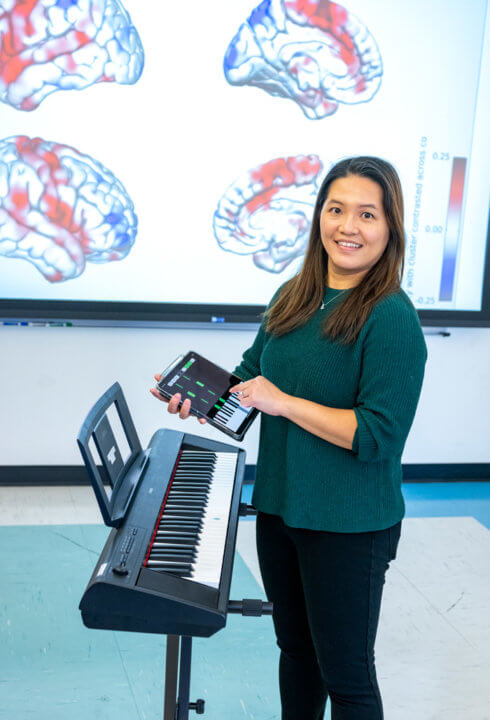
Yi-An Chen, assistant professor of occupational therapy, studies upper-extremity rehabilitation after stroke and develops music-based, home therapy apps to make recovery engaging and effective.
For Chen, who has seen patients struggle through rehabilitation after a stroke, the biggest success isn’t only in the results — it’s in the joy.
“Rehabilitation is hard,” she says. “It’s repetitive and exhausting. Most patients don’t get enough therapy after they leave the hospital because insurance only covers so much. We wanted to create something that people want to do.”
And, she says, it’s working. “One of our participants told us he used to play music with his grandchildren,” Chen says. “Now he practices using the app, and they sing along. It’s no longer a ‘rehab exercise,’ it’s something joyful they share together. That’s what we mean when we say we want rehabilitation to be part of life again.”
Another participant’s spouse told the team she was thrilled she didn’t have to “nag” her husband to practice. “He just wanted to sit down and play,” Chen says. She believes that shift is at the heart of KeyStroke’s potential.
As the researchers continue to collect and review data and refine the app, their findings are promising. They plan to publish a case study of the imaging results, sharing how individual participants respond to the intervention. They’re also seeking new funding to continue to improve the app and reach more stroke survivors.
 “It’s not about ‘curing’ someone,” Chen says. “It’s about making the process more engaging — more human. Even after stroke, you can still enjoy music. You can still create something beautiful.”
IMPROVISATION IN ACTION
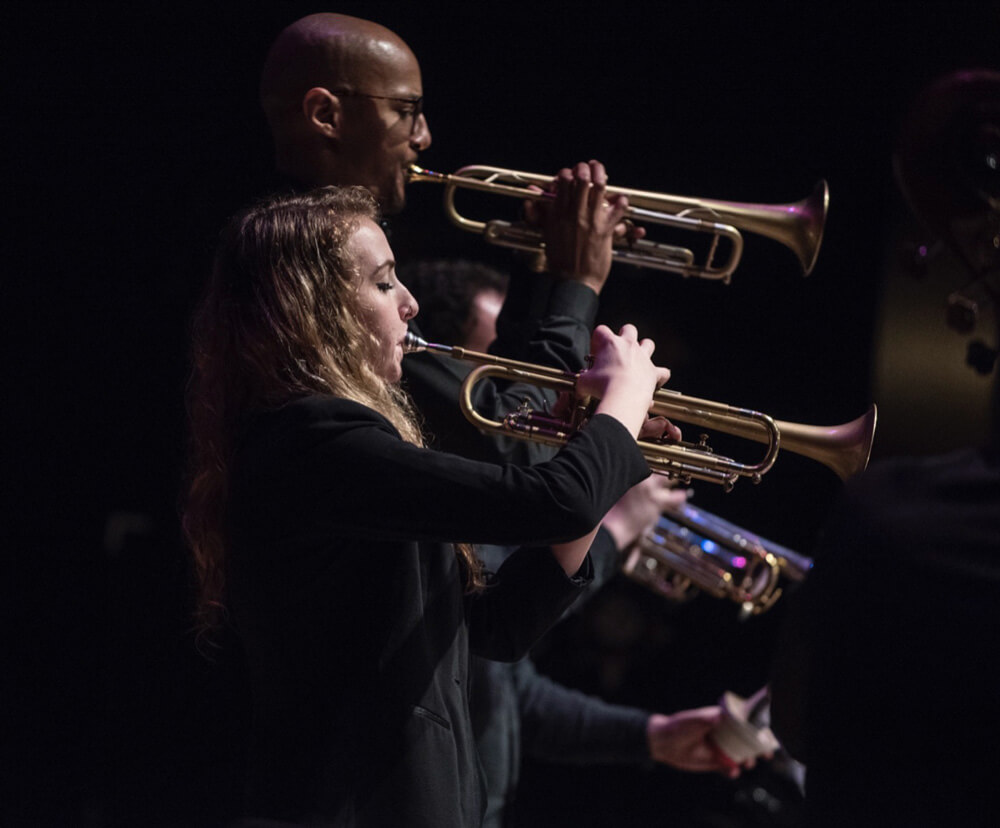
“Music is different from other art forms,” he says. “You can’t pause mid-phrase. It unfolds in real time. That means your brain is constantly predicting, correcting and adjusting. Those same motor loops may be what help retrain coordination after a stroke.”
His research into improvisation has also led to another project: the Developing Jazz Improvisers Database (DJID), a growing archive of student jazz solos that tracks how musical ideas evolve with age and experience. By mapping how young players build “musical vocabulary,” Norgaard hopes to better understand creativity, and maybe even apply those insights to how people recover movement. Learn more about the science behind it.