
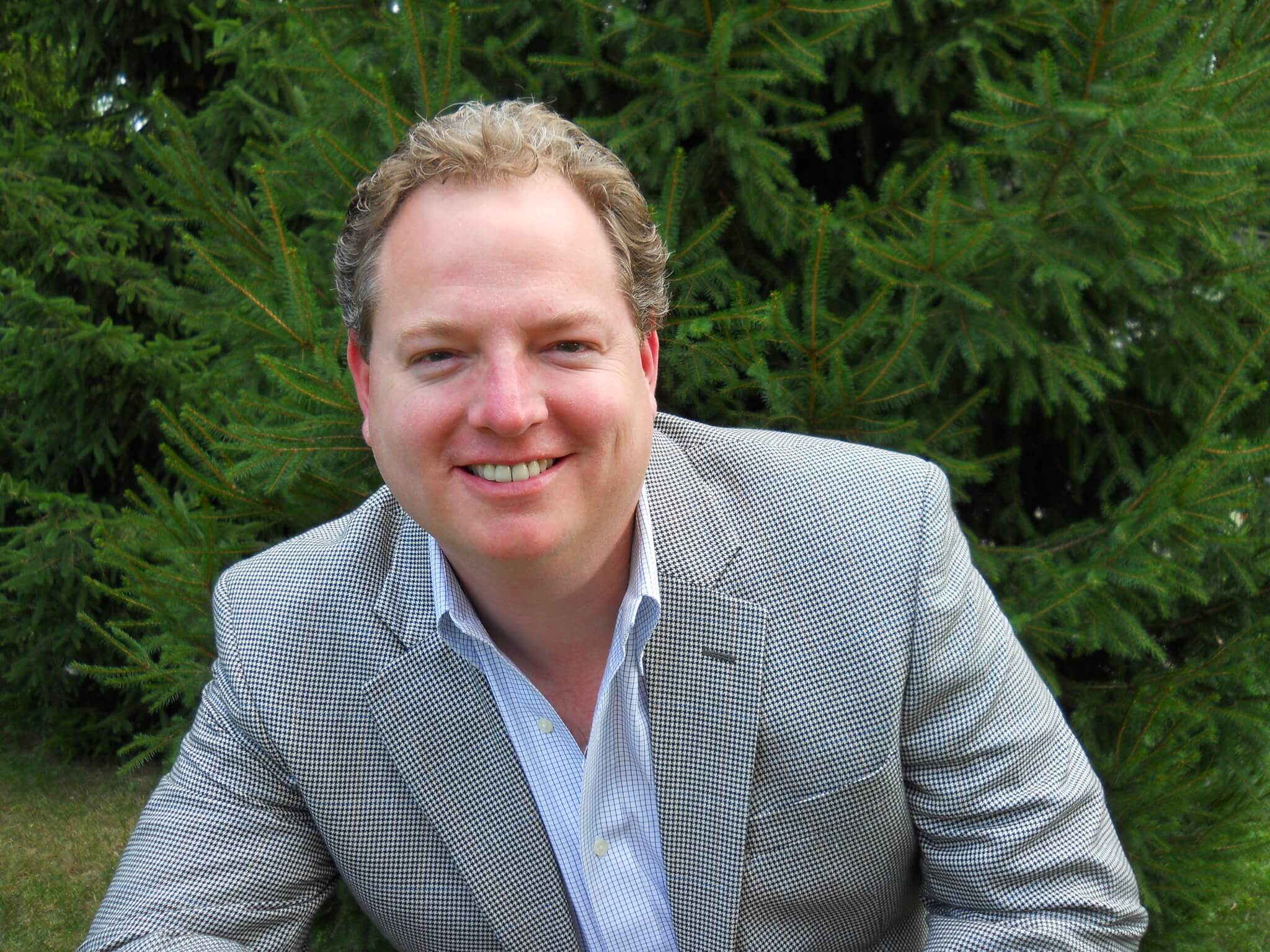
ATLANTA — Grammy-winning tenor Richard Clement, associate professor of voice and voice area coordinator at the Georgia State University School of Music, officially retired in October 2026. His retirement closes a 18-year teaching career at the same university where his own musical journey began.
For generations of Georgia State singers, Clement was more than a voice teacher. He was living proof of where the path could lead: from the Atlanta Symphony Orchestra Choruses to the New York Philharmonic, New York City Opera and the Saito Kinen Festival in Japan — and back home again.
Atlanta Roots
A native Atlantan, Clement sang as a member of the Atlanta Symphony Orchestra Choruses before studying voice at Georgia State, where he graduated cum laude with a Bachelor of Music in performance in 1989. He went on to earn his Master of Music at the Cincinnati Conservatory.
He quickly established himself among the leading lyric tenors of his generation. Clement was a Tanglewood Music Festival Fellow in 1990 and 1991, a member of the Houston Grand Opera Studio in the 1991–92 season and the winner of a 1994 Richard Tucker Music Foundation Jacobson Study Grant.
Grammy-Winning Recordings
Clement sang on two Grammy-winning recordings. He was the tenor soloist on Britten’s War Requiem with The Washington Chorus under Robert Shafer, which won the 2000 Grammy Award for Best Choral Performance. He was also a soloist on Robert Shaw’s recording of Barber’s Prayers of Kierkegaard, Vaughan Williams’ Dona Nobis Pacem and Bartók’s Cantata Profana with the Atlanta Symphony Orchestra and Chorus, which won the 1999 Grammy Award for Best Choral Performance. He also premiered and recorded Christopher Theofanidis’ Grammy-nominated The Here and Now with Robert Spano and the Atlanta Symphony, performing it in Atlanta and at New York’s Carnegie Hall.
His other recordings include Berlioz’s Lélio with the Montreal Symphony Orchestra under Charles Dutoit for Decca, Tchaikovsky’s Pique Dame and Ernst Toch’s Cantata of the Bitter Herbs with the Czech Philharmonic for the Milken Archive of Jewish Music.
A Career on the World’s Stages
On the opera stage, Clement made his New York City Opera debut as Tamino in Mozart’s The Magic Flute during the 1997–98 season, a role he also sang at Belgium’s De Vlaamse Opera, Frankfurt Opera and Wolf Trap Opera. He sang Ernesto in Don Pasquale at Glimmerglass Opera, Vanya in Katya Kabanova at Opera Theatre of Saint Louis and the title role in Albert Herring with The Atlanta Opera. At Boston Lyric Opera his roles included Candide and Fenton in Falstaff, and at Vancouver Opera he sang Don Ottavio, Ferrando, Little Bat in Susannah and Nanki-Poo in The Mikado. He also sang Pedrillo in Die Entführung aus dem Serail with Sir Colin Davis and the New York Philharmonic and Belmonte with Leonard Slatkin and the National Symphony Orchestra.
In concert, he was guest soloist with the Cleveland and Philadelphia orchestras and the Houston, Toronto, San Francisco and Cincinnati symphonies. He collaborated with conductors including Marin Alsop, James Conlon, Charles Dutoit, Christopher Hogwood, Neeme Järvi, Donald Runnicles, Wolfgang Sawallisch, Robert Shaw and Hugh Wolff. Among the most in-demand tenors for Beethoven’s Ninth Symphony, he sang it with more than a dozen orchestras, including the Baltimore, New Jersey, San Diego and Colorado symphonies, the Saint Paul Chamber Orchestra and at both Grant Park and the Hollywood Bowl.
Closer to home, he sang Handel’s Messiah with the Atlanta Symphony Orchestra under Robert Shaw, along with concert performances of John Adams’ Doctor Atomic. He earned particular acclaim in the title role of Elgar’s The Dream of Gerontius with the North Carolina Symphony and the Sacramento Choral Society and Orchestra.
Abroad, Clement made his European concert debut singing Mendelssohn’s Elijah with the City of Birmingham Symphony Orchestra. He sang Bach’s Mass in B minor with Seiji Ozawa at Japan’s Saito Kinen Festival and Mendelssohn’s Die erste Walpurgisnacht and Lobgesang with Kurt Masur and the Israel Philharmonic Orchestra.
What the Critics Said
Throughout his career, reviewers singled out the beauty and control of Clement’s voice:
“Fervor is what characterized the singing of tenor Richard Clement as Gerontius.” — The Sacramento Bee, on The Dream of Gerontius
“Clement’s beautifully produced tenor sailed through the virtuoso requirements of the score.” — The Seattle Times, on Britten’s Serenade
“Sweet is the only word that adequately describes his voice and his control is exquisite.” — Entertainment News Northwest
“Uriel was sung with lightness and expressiveness by tenor Richard Clement.” — Rocky Mountain News, on Haydn’s Die Schöpfung
“The Tybalt of Richard Clement was forceful and far better sung than is frequently the case with this role.” — Opera News
Coming Home to Teach
In 2008, Clement returned to Georgia State to teach voice, later becoming associate professor of voice. For many years he served as voice area coordinator, guiding the voice faculty and shaping how Georgia State trains its singers. He was also deeply involved in the life of the School of Music, serving on its leadership committees.
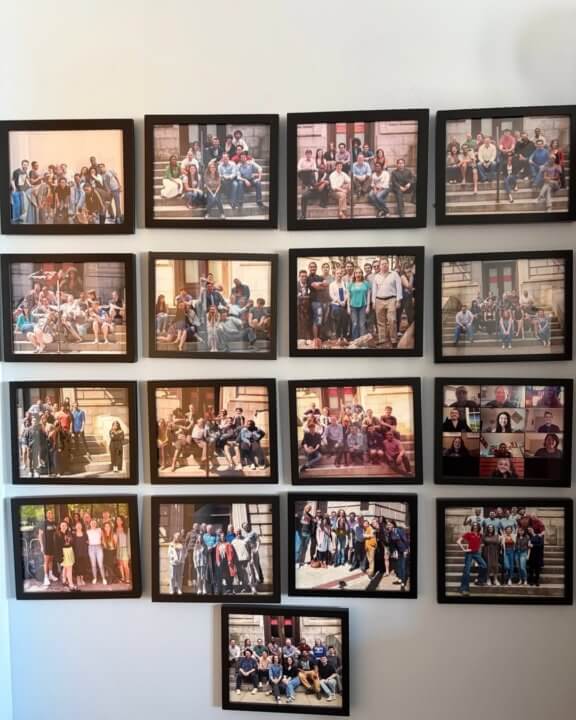
When Clement shared the news of his retirement, the post drew nearly 200 reactions and more than 60 comments from former students and colleagues. Many described carrying his approach to vocal technique into their own teaching, others remembered him as a mentor and friend as much as a teacher, and some recalled the extra time and care he gave them when no one else would. Several fondly recalled a studio tradition: each year, Clement photographed his students together and hung the picture on his studio wall.
 His studio wasopen to more than voice majors: Rolando Salazar, then an orchestral conducting student, studied voice with Clement, who still counts him among his best singers. Salazar has since returned to Georgia State as a visiting instructor and music director for GSU Opera Theater. Colleagues remembered his collaborative spirit, including co-teaching with the saxophone studio and swapping students between voice and saxophone.
A Legacy of Student Success
Clement’s greatest legacy may be the singers he trained. Asked which students he is proudest of, he didn’t hesitate.
“I think I’m the most proud of Maria Valdes, John Irvin and Natalie Almeter in terms of their making the most of their talent,” Clement said. “But I’m proud of a lot of students who have been successful in their lives.”
Soprano Maria Valdes (B.Mu. ’12) went on to become an Adler Fellow with San Francisco Opera, where she sang Gilda in Rigoletto, and was featured with the Atlanta Symphony Orchestra in a PBS documentary.
Tenor John Irvin (B.Mu. ’10) has appeared with the Metropolitan Opera and the Royal Opera House, Covent Garden, in Thomès Adès’ The Exterminating Angel and is an alumnus of Lyric Opera of Chicago’s Ryan Opera Center.
Soprano Natalie Almeter (M.Mu. ’22) placed second in Mobile Opera’s Madame Rose Palmai-Tenser Scholarship Competition in 2022, while still at Georgia State. She has since performed with the Cincinnati Symphony Orchestra and sang in Cincinnati Opera’s world-premiere staging of Paul McCartney’s Liverpool Oratorio. She is now pursuing her doctorate at the University of Cincinnati College-Conservatory of Music — Clement’s own alma mater.
The next generation is already making its mark. Mezzo-soprano Bella Chaney and Max Clements, who both earned their Bachelor of Music in vocal performance in 2025, are among Clement’s most recent graduates. Chaney won the 2024 Brumby Concerto and Aria Competition, sang the title role in Carmen at Georgia State and is singing on the Atlanta Opera Studio Tour this season. Clements went on to the Graduate Vocal Arts Program at the Bard College Conservatory of Music.
Baritone John Tibbetts, who studied with Clement as an undergraduate, has since sung Figaro in The Barber of Seville with Kentucky Opera and Schaunard in La Bohème with Cleveland Opera Theater.
What’s Next
In retirement, Clement plans to travel the world, with plenty of fine wining and dining along the way.
The School of Music thanks Professor Clement for 18 years of artistry, mentorship and service, and wishes him the very best in this next chapter.