
Media Contact
Sam Fahmy
Director of Communications
School of Public Health
[email protected]
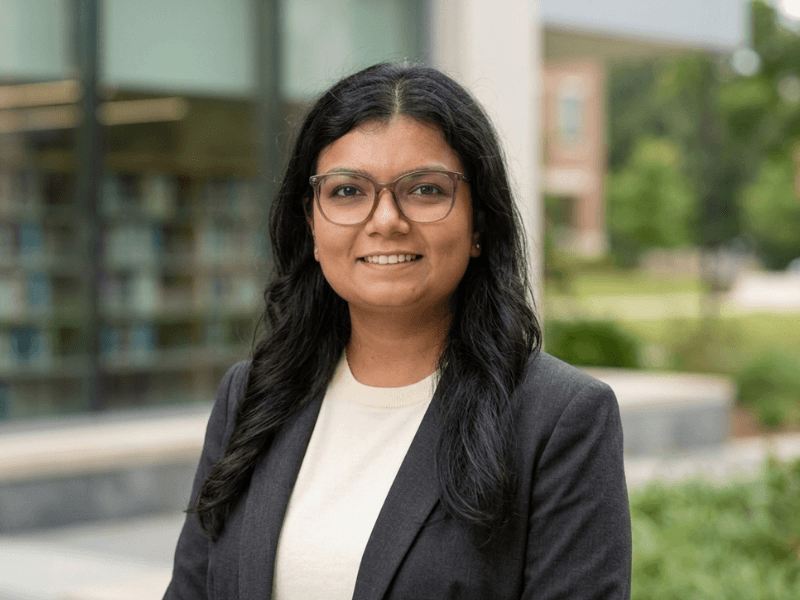
MPH student Jaimini Hitendra Gajjar is combining her medical training in obstetrics and gynecology with epidemiology to address pressing population health challenges. Through research, teaching and public health practice, she is working to advance evidence-based solutions in maternal and infant health while preparing for a career in epidemiology and data science.
Name: Jaimini Hitendra Gajjar
Hometown: Vadodara, Gujarat, India
Undergraduate degree and institution:
Bachelor of Medicine, Bachelor of Surgery, Maharaja Sayajirao University; Diploma in Obstetrics and Gynecology, College of Physicians & Surgeons of Mumbai
Expected date of graduation: Fall 2026
Why did you choose the Georgia State School of Public Health?
Coming from a medical background with specialized clinical training in obstetrics and gynecology, I knew I wanted a program that would help me shift my focus from treating individual patients to impacting entire communities. Georgia State immediately caught my attention because of its location right in the heart of Atlanta’s public health hub, its diverse student community and the hands-on research opportunities available. Being able to learn directly from faculty who are actively doing ground–level work made choosing Georgia State an easy decision.
Which MPH concentration did you choose, and why?
I chose Epidemiology. During my clinical work in obstetrics and gynecology, I constantly saw how broad health disparities affected my patients’ everyday lives. I wanted to dive into the data side of health, learning how to track disease patterns, analyze complex datasets and use statistics to pinpoint root causes to prevent health issues before people end up in the clinic.
What has been your favorite class in the SPH so far, and why?
My favorite class so far has been “Public Health Research Methods.” In that course, I learned how to properly design research studies and write a complete academic manuscript, step-by-step. Getting that hands-on experience with academic writing and learning how to structure research for journal publication was incredibly empowering.
What advice would you give undergraduate students considering pursuing an MPH at Georgia State?
Don’t be afraid to put yourself out there and explore opportunities outside the classroom! Reach out to professors about research, apply for teaching or research assistantships and connect with local health organizations. The MPH program at Georgia State gives you a solid academic foundation, but the real growth happens when you apply those tools to hands-on projects, present at conferences and build a network with people who share your passion.
Tell us about your extracurricular involvement.
I have had incredible opportunities to apply my learning through research and community engagement! As a Graduate Teaching Assistant at Georgia State, I mentor students in biology and population health courses.
On the research side, I worked on a global maternal mortality modeling study and presented research on the intravaginal use of tobacco during pregnancy at the Georgia State symposium, with an upcoming presentation at the American Public Health Association.
During my graduate internship with the Georgia Department of Public Health, I completed an environmental scan of Sudden Unexpected Infant Death for DeKalb and Fulton counties. I presented these findings to both the DeKalb and Fulton County Board of Health, at the Injury Prevention Research Center at Emory, and to the non-profit organization First Candle. Moving forward, I am excited to present this work at the CityMatCH conference alongside First Candle to share insights from my internship.
What’s your favorite place on campus, and why?
The quiet study lounges in the Urban Life building are my go-to spot between teaching assistant duties and classes to catch up on data analysis, prep for presentations or just grab a quick moment with classmates to catch up.
What’s your career aspiration?
I aim to work as an epidemiologist and data scientist in the public or private sector, leveraging clinical and quantitative data to solve complex health challenges. My goal is to combine my medical background with advanced epidemiological research, biostatistics and data linkage to lead surveillance efforts, inform health policy and drive evidence-based interventions across population health initiatives.