
Creating Solutions Together
Creating Solutions Together
By Sam Fahmy
Since its founding in 2024 with a lead gift from the Henson family, Georgia State University’s Center on Health and Homelessness has been grounded in the principle that research is most powerful when it addresses problems identified by communities and produces findings that enable evidence-based decision-making. That approach is helping meaningfully improve health and well-being in Atlanta and beyond.
“Our partnership with the Center on Health and Homelessness was ideal. It was a dream partnership,” said Joy Monroe, founder and CEO of the nonprofit Single Parent Alliance and Resource Center. “It was resources. It was support. It was thought partnership. It was boots on the ground. It was innovation. It was validation.”
“We were a team from day one,” added family advocate Sue Sullivan.
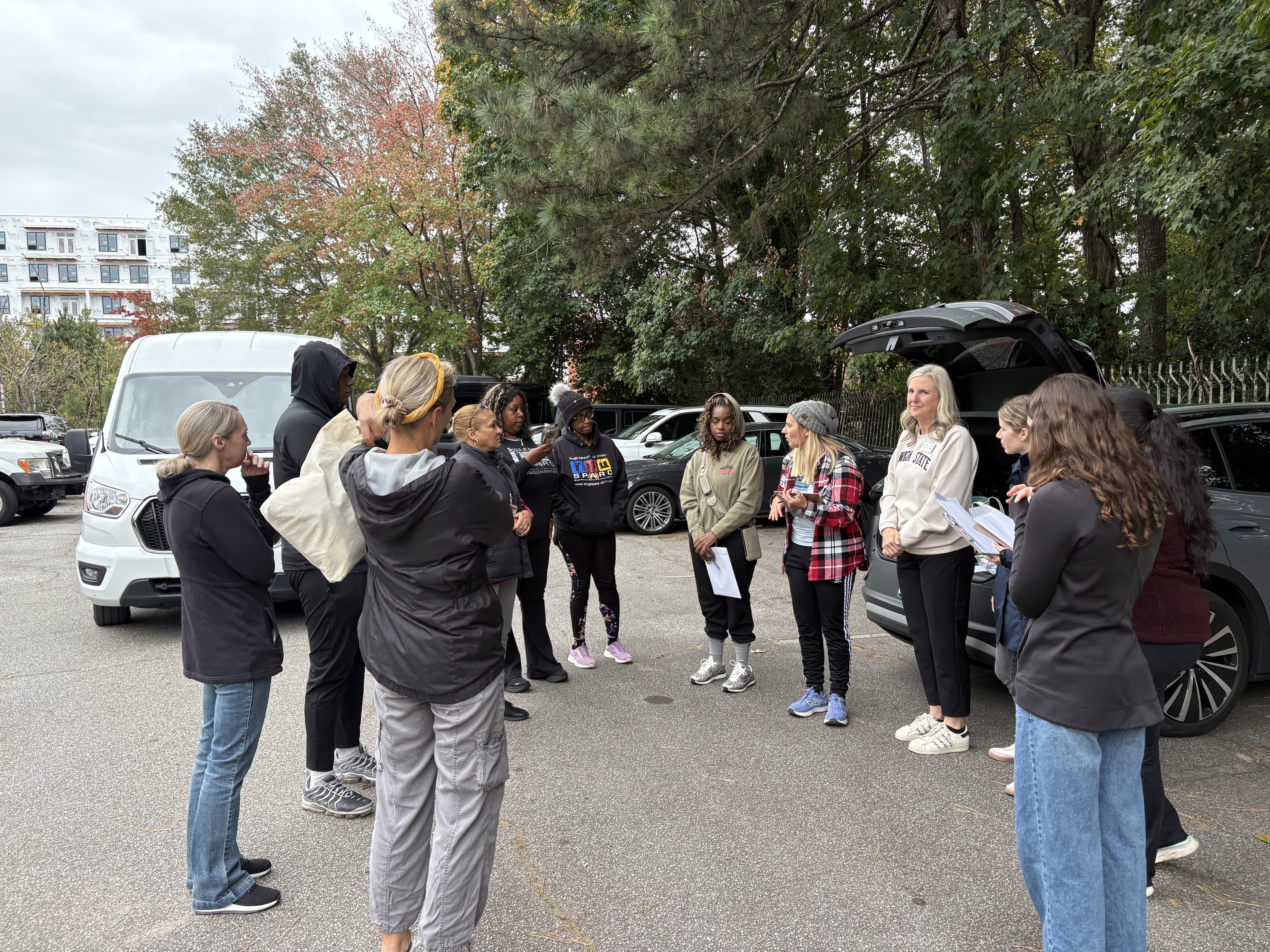
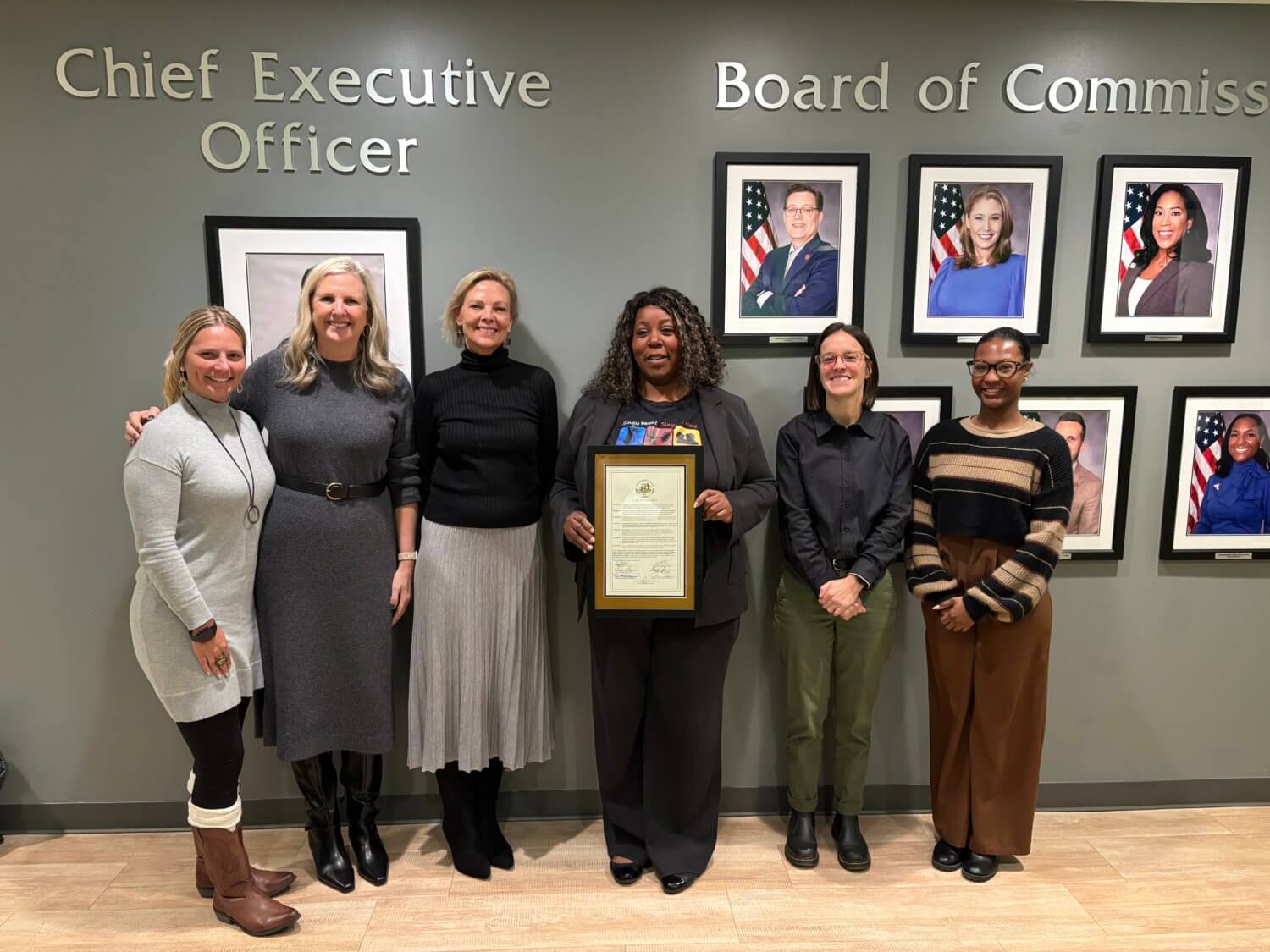
Monroe, Sullivan and a team of School of Public Health faculty, staff and student volunteers knocked on more than 3,500 doors to conduct the first large-scale assessment of families living in extended-stay hotels in DeKalb County. The findings, which were presented to the DeKalb County Board of Commissioners, informed the county’s decision to house 60 families in Park 500, a transitional housing development.
“For me, the most rewarding part is seeing research make a difference in people’s lives,” said Distinguished University Professor Shannon Self-Brown, who co-leads the center. “When our work helps a community identify a problem, brings people together around a solution and ultimately changes a policy or practice, that’s the kind of impact we want our research to have.”
Guided by a new strategic plan, the center is poised to expand its collaborations, provide technical assistance to strengthen partner organizations, and produce policy and practice recommendations that can be used by local and national homelessness initiatives.
“Our goal is to build on what we’ve learned and deepen our partnerships with communities to identify opportunities to prevent homelessness,” said Assistant Professor April Ballard, who also co-leads the center. “We want to generate research whose findings are relevant for decision-makers, help our community partners strengthen their work, and translate evidence into policies and practices that keep people healthy and housed.”
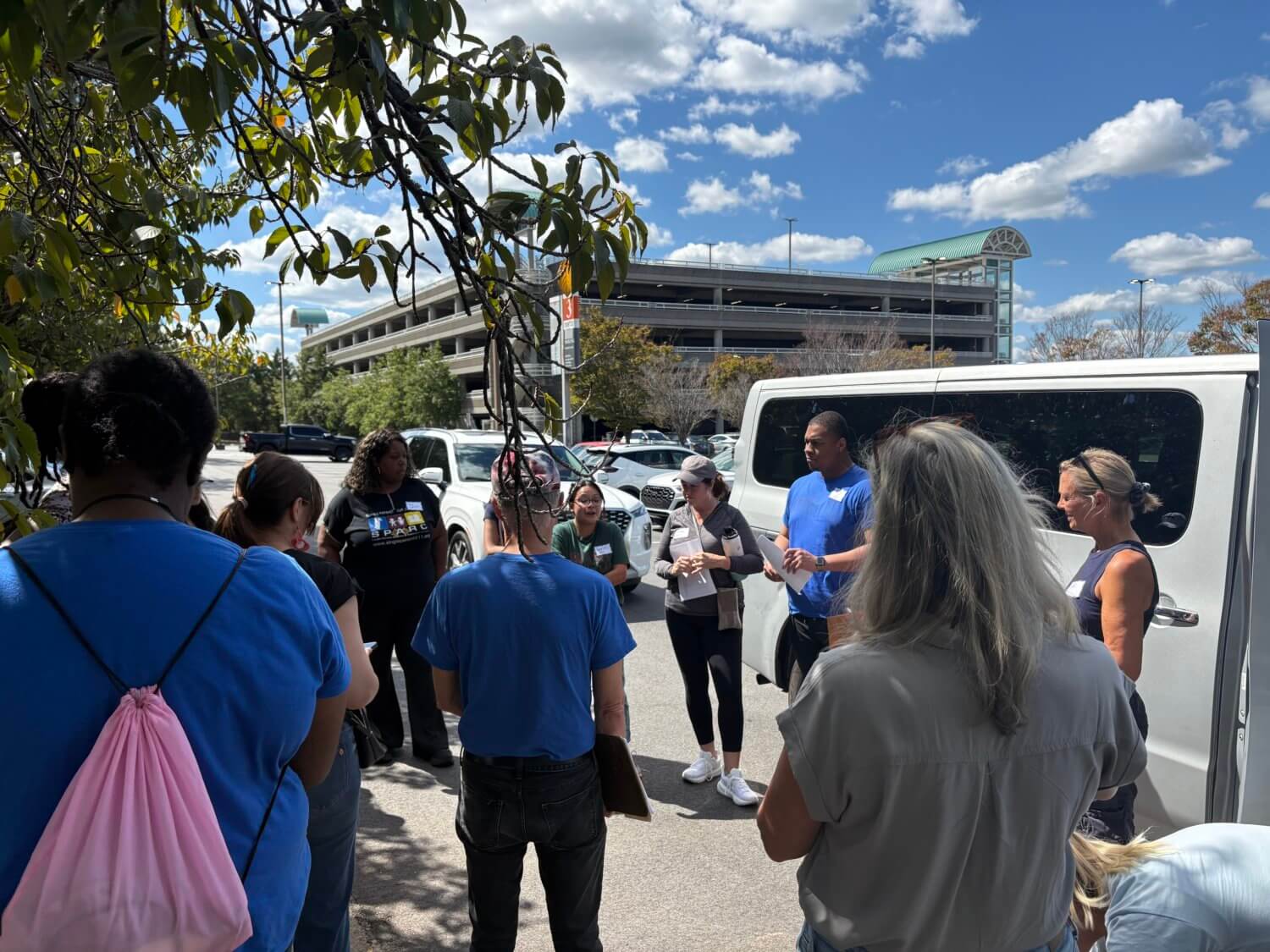
One of the Center’s earliest projects was the first large-scale assessment of families living in extended-stay hotels in DeKalb County. Funded by DeKalb County, the project was conducted in partnership with Sullivan and the Single Parent Alliance and Resource Center.
A team of 50 Georgia State and community volunteers conducted door-to-door surveys at 42 hotels, collecting information about household composition, income, living conditions, educational impacts and barriers to permanent housing. The research revealed that extended-stay hotels are functioning as a shelter of last resort for more than 4,600 people in the county, including 2,004 households and 1,635 children.
“Our data show that these families are working hard to keep a roof over their heads — with many working multiple jobs — and in many cases are paying more each month for an extended-stay hotel than the average rent in DeKalb County,” Self-Brown said. “The housing instability they face takes a toll on physical and mental health, disrupts children’s education and makes it harder for adults to maintain stable employment.”
The project demonstrated how community relationships can make research more actionable. In addition to informing DeKalb County’s decision to house 60 families in Park 500, the extensive local and national media coverage the report generated helped bring greater attention to the challenges associated with living in extended-stay hotels.
The center’s work on public restroom access is another example of partnership driving impact. A team of faculty and student researchers led by Ballard visited 262 locations across Atlanta to conduct the city’s first comprehensive public toilet audit.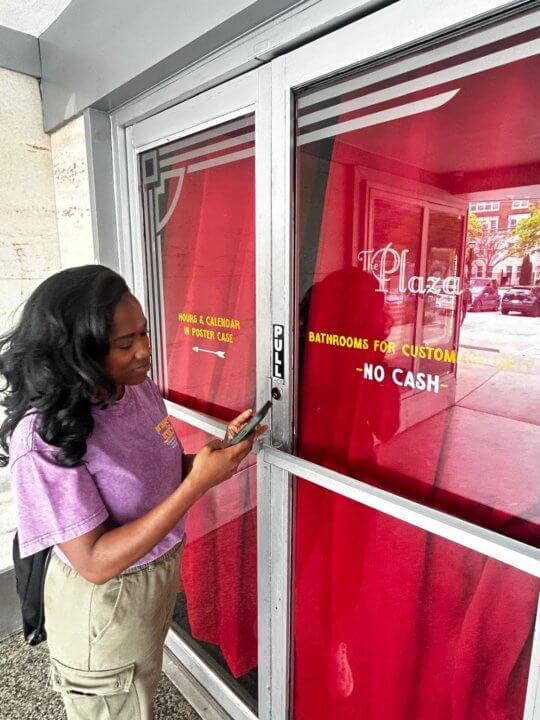
“Most of us have experienced the frustration of needing a bathroom and not being able to find one,” Ballard said. “But for some people, public restrooms are their only option. Access to sanitation is a basic need, and our cities and public infrastructure should reflect that.”
Even using a broad definition that included government facilities as well as restrooms in private businesses, 55% of the locations audited were inaccessible to the public. Ballard and her Center on Health and Homelessness colleagues worked with the Atlanta-based Central Outreach and Advocacy Center to share preliminary findings with city leaders. That partnership contributed to the city’s installation of 12 new Throne Labs public restrooms in key areas of the city ahead of the 2026 FIFA World Cup.
The DeKalb County extended-stay count and toilet-audit projects reflect a broader strategy outlined in the center’s Vision 2030 Strategic Plan: to become a national leader in community-based public health research addressing health and homelessness while serving as a trusted resource for solutions that prevent homelessness and improve health.
“Our work seeks to identify where people encounter barriers to stable housing and help determine which interventions are most effective at keeping families and young people housed,” Self-Brown said. “A lot of public health is about prevention, and we’re taking a prevention-focused approach to homelessness.”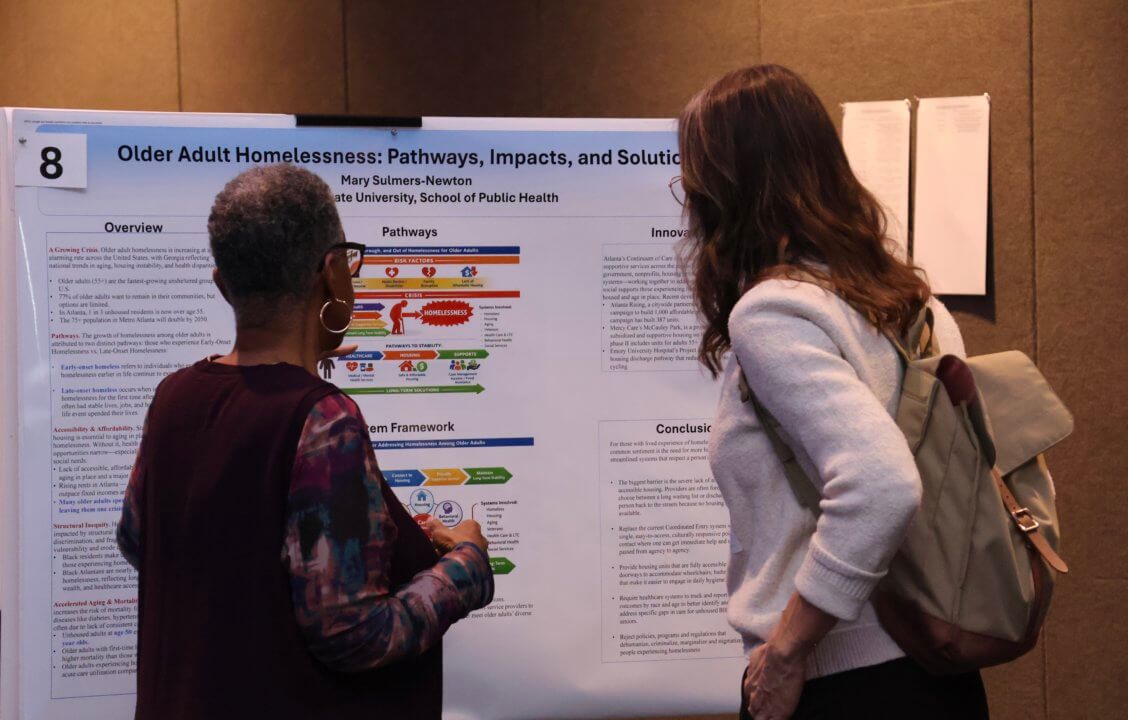
For young people leaving foster care, finding a safe and stable place to live can be one of their biggest challenges as they transition to adulthood. The center is currently working to understand how rental assistance can help. Funded by the Georgia Power Foundation, the center is studying the Foster Youth to Independence voucher, a federal program that helps young adults who are leaving or have recently left foster care afford housing. By talking directly with young people who use the vouchers — as well as the people who administer and support the program — the research team aims to identify what helps young people find and keep stable housing, as well as the barriers that stand in their way.
Upcoming projects include an expansion of the hotel study to additional metro Atlanta counties, and the center also plans to deepen its partnerships with public agencies and nonprofits. The goal is to help them evaluate programs, develop effective policies and strengthen their capacity to serve people at risk of homelessness.
As the Center on Health and Homelessness looks toward 2030, it will continue to build the partnerships, evidence and capacity needed to ensure that research informs actions that prevent housing instability from escalating to homelessness and its health consequences.
“The relationships we build make it easier for us to identify the issues that matter most to communities, and they also make it easier to turn our research findings into effective policies and practices,” Ballard said.
All of the center’s work, Ballard and Self-Brown emphasized, is in service of its broader vision: a future in which every person is healthy and has a safe and stable place to call home.