
Media Contact
Sam Fahmy
Director of Communications
School of Public Health
[email protected]
New School of Public Health research reveals critical gaps in access to urban sanitation — with implications for cities across the country
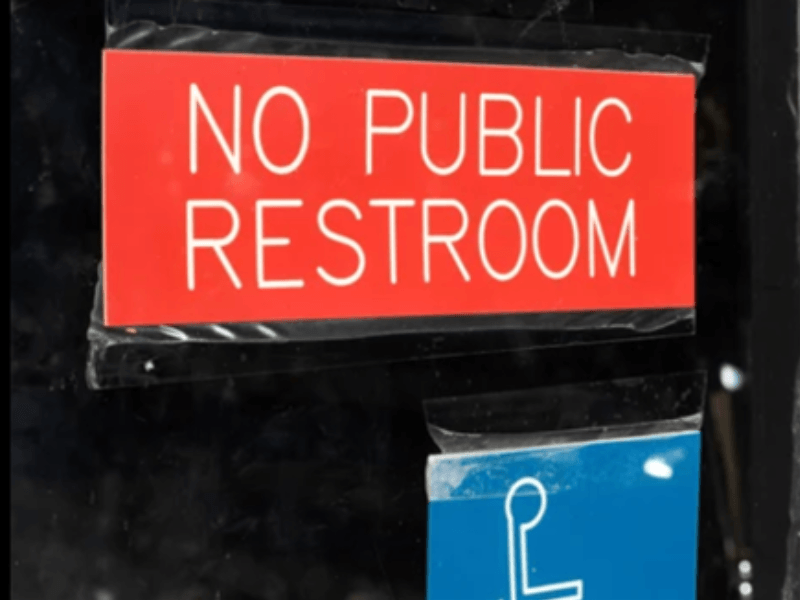
ATLANTA—More than half of publicly accessible restrooms in key areas of Atlanta are unavailable to the public, according to a new study by researchers at the Georgia State University School of Public Health.
The consequences of inadequate public sanitation are more than just an inconvenience, said Assistant Professor April Ballard, who co-leads the school’s Center on Health and Homelessness.
“Most people have probably been out somewhere and have been unable to find a bathroom when they’ve needed it at some point in their life,” Ballard said. “But some people rely on that public infrastructure as their sole access point. Our cities and infrastructure should reflect the universal needs that people have.”
The study, published in the journal PLoS Water, examined public restroom availability in 15 areas across Atlanta, including downtown, transit hubs, parks and neighborhoods frequented by tourists. The researchers used an expansive definition of publicly accessible restrooms that included both government-funded
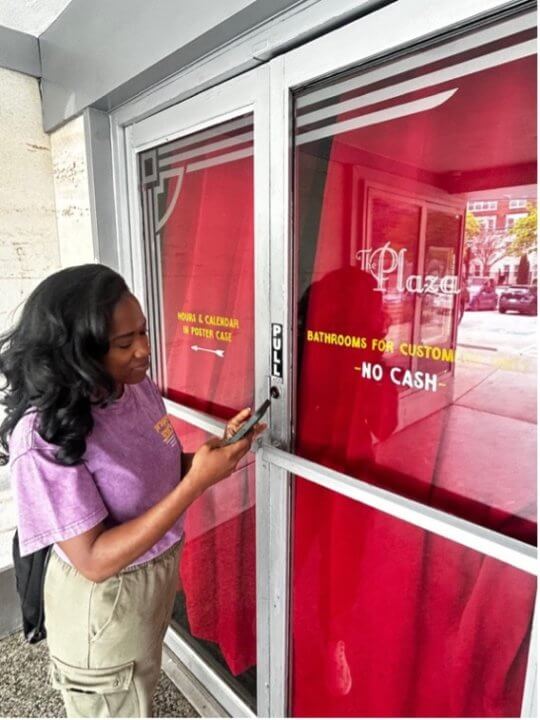
MPH student Marlene Ehirim was part of a team of faculty and students who audited the availability of public toilets at more than 260 locations across Atlanta.
facilities and restrooms located in private businesses such as gas stations, restaurants and retail stores. Even with that broad definition, more than half of all facilities identified were inaccessible when audited by a team of faculty and student researchers.
The researchers visited a total of 262 locations and found that 55% had restrooms were not open to the public, restricted to customers only, or were locked or occupied for more than 10 minutes. The audits were conducted during normal business hours, which means that actual restroom availability is likely even lower during evenings, weekends and holidays. The study also found that privately funded bathrooms were more common than government-funded bathrooms, comprising 57% and 43% of locations, respectively.
Seeking Solutions and Expanding Access
The study has already helped inform local efforts to improve public sanitation infrastructure. In partnership with the Atlanta-based nonprofit Central Outreach and Advocacy Center, the researchers shared their preliminary findings with city leaders, who later announced the installation of 12 Throne Labs public restrooms ahead of the World Cup.
“Guided by data, cities can make real progress to improve sanitation for both visitors and residents,” Ballard said. “Adequate sanitation is critical for health and well-being, as well as the dignity of our neighbors and the vibrancy of our neighborhoods.”
The researchers say the findings point to several policy opportunities, including clarifying responsibility for public restroom infrastructure within municipalities, dedicating funding for maintenance and expansion, and developing sanitation standards for major events that bring large numbers of visitors into the city.
“As Atlanta continues to grow and attract major events, public restroom access should be viewed as essential infrastructure,” Ballard said. “Cities that want to be healthy and welcoming must ensure people have access to clean and reliable sanitation.”
In addition to Ballard, co-authors on the paper are:
- Marcus Cain, GSU Master of Public Health graduate
- Thomas Daymude, MPH student, GSU School of Public Health
- Kylie DeBoer, Research Associate, GSU Center on Health and Homelessness
- Marlene Ehirim, MPH student, GSU School of Public Health
- Shannon Self-Brown, Distinguished University Professor, Department of Health Policy and Behavioral Sciences and co-lead, Center on Health and Homelessness
- Brandie Banner Shackelford, Emory University Rollins School of Public Health Ph.D. student
- Christine Stauber, Professor, Department of Population Health Sciences
- Adriana Williams, GSU MPH graduate