
Media Contact
Sam Fahmy
Director of Communications
School of Public Health
[email protected]
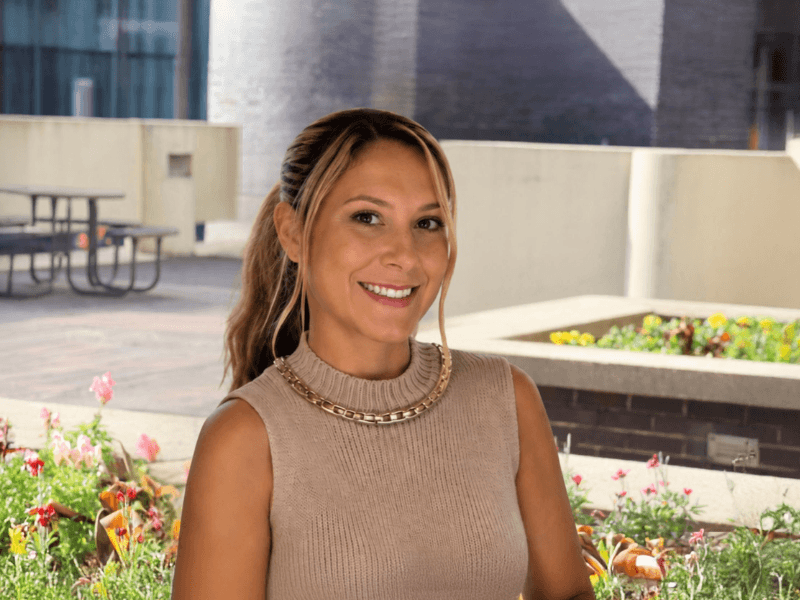
Julianna Capobianco’s research is dedicated to reducing health disparities and enhancing access to preventive healthcare for minority populations. She chose the School of Public Health’s Ph.D. program for its steadfast commitment to health equity, community engagement and interdisciplinary collaboration.
Name: Julianna Capobianco
Hometown: Glen Cove, New York
Undergraduate and master’s degrees and institutions:
I earned my B.A. in psychology with a minor in women’s and gender studies from the University of South Florida and my M.A. psychology and data science from the University of South Florida.
Expected date of graduation: Spring 2027
Ph.D. concentration: Health Promotion and Behavior
Dissertation advisor: Dr. Laura Salazar
Why did you choose the Georgia State School of Public Health?
I chose the School of Public Health as I was looking for a program with a strong commitment to health equity, community-engaged research and interdisciplinary collaboration. I was particularly drawn to the opportunity to work with Dr. Laura Salazar, whose expertise in intervention development and health equity research closely aligned with my own research interests. Her mentorship, along with the supportive and collaborative environment within the School of Public Health, made Georgia State an ideal place to grow as a researcher.
Tell us about your research:
My research focuses on reducing health disparities and improving access to preventive healthcare among minority populations. My dissertation, Pride in Prevention, is a sexual and gender affirming digital intervention aimed at promoting cervical cancer prevention education among sexual and gender minority individuals with a cervix. The project is focused on increasing knowledge about HPV vaccination and cervical cancer screening while addressing barriers to care and information that is affirming and tailored to sexual and gender minorities with a cervix. Currently, I am actively recruiting participants for my research. Sexually and gender expansive people with a cervix aged 18-35 are encouraged to participate through in-person “Research & Relax” sessions or a virtual option to provide feedback that will help shape future versions of the intervention. More broadly, I'm interested in how we can develop and implement interventions and medical training that is culturally responsive and rooted in the intersectional needs and experiences of the communities they are intended to serve.
What’s been your most memorable experience so far in the Ph.D. program?
One of the most meaningful experiences has been witnessing my dissertation evolve from an initial concept into a fully developed project. I have been particularly excited to integrate my training as a yoga teacher and sound healer into my research, developing a novel approach that enables research teams to incorporate health promotion and grounding exercises while creating a meaningful safe space for community feedback. I also have truly valued the relationships I have built with my mentor, Dr. Salazar, and fellow students who I have been privileged to learn from and work alongside. Being part of a community committed to improving health and advancing equity during a particularly challenging and uncertain time has made this experience especially meaningful. Despite the obstacles facing public health and marginalized communities, I've been continually inspired by the people around me who have remained dedicated in their commitment to advocacy, community partnership and the unwavering determination to support populations that have historically been underserved. Their willingness to continue showing up and pushing forward has reinforced my own commitment to health equity and is a constant reminder of why this work matters. Witnessing this has been one of the most rewarding aspects of my Ph.D. journey.
What’s your career aspiration?
I aspire to become an independent researcher focused on health promotion and intervention development. I hope to continue working with underserved communities, particularly sexual and gender minority populations, to develop and evaluate programs that improve access to preventive care and address health disparities. I also aspire to become a strong leader and mentor to future researchers, as I would not be where I am today without the guidance, support and investment of incredible mentors throughout every stage of my academic career.