

More than 250 health law professionals from over 90 law and graduate schools around the world attended the 49th American Society of Law, Medicine & Ethics (ASLME) Health Law Professors Conference hosted by the Center for Law, Health & Society (CLHS) at Georgia State University College of Law.
From the beginning the conference has served as the preeminent gathering space for health law scholars, and this year’s event arrived at an especially consequential moment. The group gathered to discuss rapidly changing federal health policies, the growing influence of artificial intelligence in health care, legal practice and education, along with classroom-tested methods to prepare future lawyers for the complex landscape of health law.
Hosting the conference underscored Georgia State Law’s role as a national leader in health law education and scholarship. CLHS boasts the No. 2 health law program in the nation and has long served as a hub for interdisciplinary collaboration among legal scholars, health professionals and policymakers.
“Hosting this conference is truly a milestone for our institution,” said Georgia State Law Dean Courtney Anderson. “We're proud of our role as a public institution dedicated to providing high-quality legal education that is accessible and affordable, which is exactly how our community envisions the future of health care.”
Health law scholars today confront a shifting federal landscape that affects health laws and policies, sometimes varying state to state in an unpredictable and fractured legal environment. The plenary session at the conference created space for experts to discuss the immediate and ongoing effects of those changes, the role of academic institutions and legal scholars in responding to them and defining the way forward.
Professor Leslie Wolf, director of the CLHS, Distinguished University Professor and Ben F. Johnson Jr. Chair in Law at Georgia State, moderated the plenary session.
“The ripple effects of these and other changes may last for years,” said Wolf. “No matter what area of health law you work in, your work is undoubtedly affected by these changes, which go beyond the traditional shifts that occur between administrations with different priorities."
Another recurring theme across different conference sessions was how artificial intelligence is influencing legal education and practice alongside changes in health care delivery. Scholars are simultaneously working through what these technologies mean for legal accountability in health care law and in the classrooms where educators are learning how to incorporate AI to prepare future practitioners.
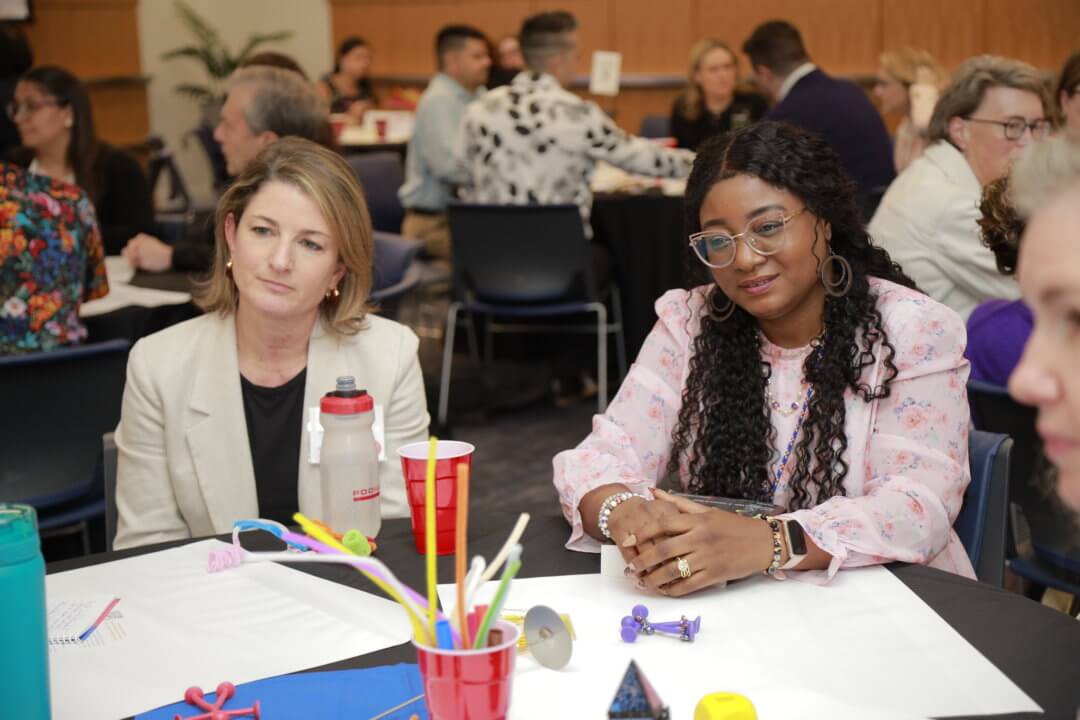
Health law professors work in small groups during the Jay Healey Teaching Workshop to share classroom-tested methods for promoting reflective practice among their students.
Through these sessions, the conference afforded opportunities for attendees to share their research, develop their ideas and engage with colleagues from around the world. Their conversations continued beyond formal presentations, helping to strengthen individual scholarship while contributing to collective knowledge that ultimately influences the future of legal education, policy discussions and professional practice.
“...Representing one of the few European institutions on this year's lineup, I found a community incredibly eager to engage with international and comparative perspectives,” said Teresa Maria Stella Zagra, visiting scholar at the Catholic University of America, Columbus School of Law. “What I experienced was a generous, inclusive, and intellectually open academic space where comparative law was treated as a valuable tool to challenge assumptions, sharpen arguments, and broaden horizons. I am especially grateful for the quality of the exchange that followed my presentation. Those conversations, both inside and outside the conference room, were a powerful reminder of why comparative law matters.”
While most sessions addressed one or more challenges facing health law today, the conference also included the annual Jay Healey Teaching Workshop, named for one of the original organizers of the conference known to many as a “teacher’s teacher.” The session connected veteran health law professors and junior faculty to collaborate and share knowledge about best practices in the classroom.
Georgia State Law Assistant Professor Allison Whelan was one of seven professors from different institutions who facilitated the session this year. In this role, Whelan honored the legacy of the late Professor Emerita Charity Scott, founding director of CLHS, who led the Jay Healey Teaching Workshop for many years.
"This year's focus on reflective practice—how to teach students to become self-directed, lifelong learners—sought to equip faculty with new exercises, formats and frameworks they can bring back to their home institutions,” said Whelan. “These cross-institutional conversations accelerate the collective learning curve for faculty at every career stage. When an attendee returns to their home institution with even one new idea, the ripple effect reaches every student in their courses, and over time, these incremental exchanges add up to a richer, more intentional health law curriculum across the country.”
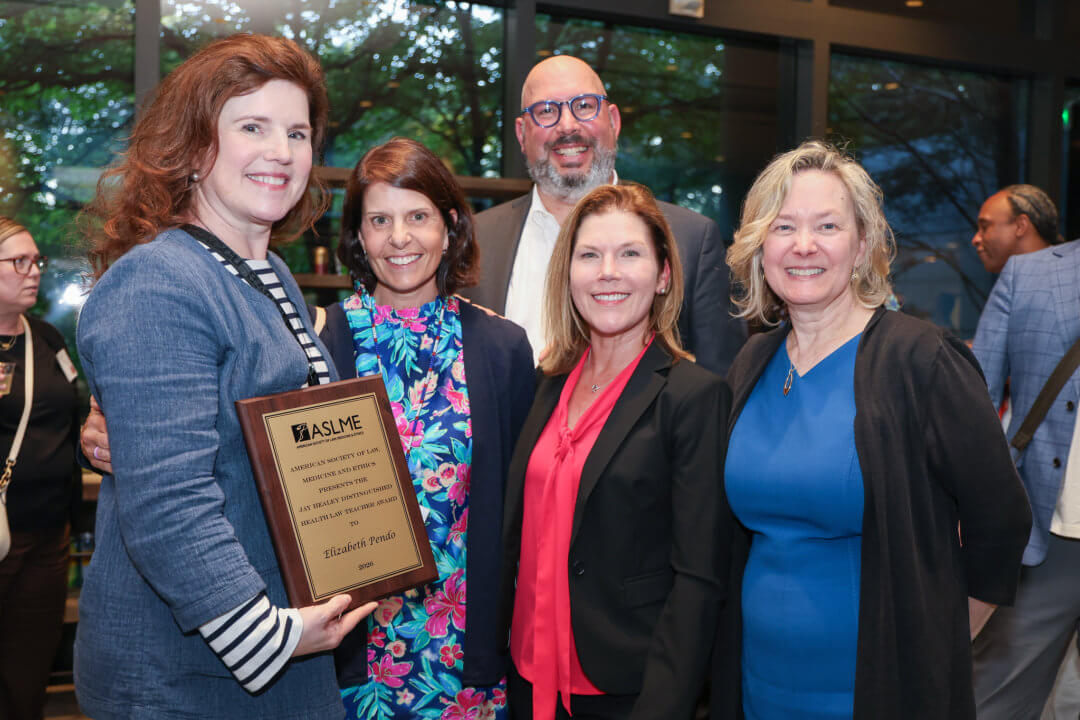
Elizabeth Pendo (left) receives the 2026 Jay Healey Distinguished Health Law Teacher Award.
To honor a commitment to teaching, the ASLME awarded the annual Jay Healey Teaching Award to Elizabeth Pendo, the Kellye Y. Testy Professor of Law and senior associate dean for Academic Administration at the University of Washington School of Law. The award is given to a health law professor who best embodies the legacy of its namesake through their passion for teaching, their mentorship and their inspiration to colleagues and students.
Georgia State Law Professors Emeriti Paul Lombardo and the late Charity Scott are previous recipients of the award.
“It was a privilege to continue that tradition by hosting our health law colleagues,” said Wolf. “We appreciate the generous support of our sponsors and the efforts of our faculty, staff and students for making the conference a resounding success.”