
Media Contact
Sam Fahmy
Director of Communications
School of Public Health
[email protected]
Interdisciplinary training experience emphasizes coordinated, culturally competent and family-centered care for children and their families
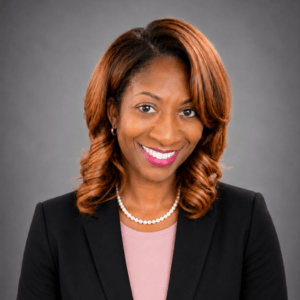
Akilah Heggs
When Akilah Heggs was working as a pediatric audiologist, she quickly realized that the children and families she served weren’t just navigating health care — they were simultaneously managing early intervention, education systems and services that rarely coordinate with each other.
“What stood out to me wasn’t just the clinical needs, but the gaps between systems and how much families were left to figure out on their own,” she recalled. That recognition led her to the Georgia Leadership Education in Neurodevelopmental and Related Disabilities program — and, ultimately, to a career built on closing those gaps.
GaLEND, which marks its 15th anniversary this year and is housed in Georgia State University’s Center for Leadership in Disability, has shaped more than 300 maternal and child health professionals since its founding. The one-year training experience combines graduate-level courses, clinical experiences, community-based activities and research projects—all designed to cultivate the next generation of disability leaders.
“What LEND allows us to do uniquely is bring together lots of folks from across academic spaces and disciplines — future doctors and nurses and social workers and speech language pathologists and psychologists — to learn to work together with people with disabilities and their families to get to good outcomes,” said Mark Crenshaw, Assistant Director of the CLD and its Director of Interdisciplinary Training.
Kathleen Baggett, Director of the Mark Chaffin Centers for Healthy Development and Professor in the School of Public Health, highlighted the program’s strength in its truly interdisciplinary model. It spans more than 20 disciplines across six Georgia State colleges, the Emory University School of Medicine, Emory’s Rollins School of Public Health and the Morehouse School of Medicine. Faculty, including those with lived disability experience, mentor trainees in moving knowledge into action in practice and participatory research that co-creates more inclusive environments and drives systems-level change in disability and public health.
Erin Vinoski Thomas, CLD Director and Research Associate Professor in the School of Public Health, noted that GaLEND was among the first programs to engage people with disabilities and their family members as trainees and program faculty.
“Across the network of 60 LEND programs, ours is a recognized model for promoting authentic family and community partnerships,” Vinoski Thomas said. “Our staff provide technical assistance to other programs as they work to ensure individual, family and community perspectives are reflected in all aspects of the training experience.”
From the Clinic to the Systems Level
Heggs, who completed the program in 2014 and now teaches at the University of Massachusetts Amherst School of Public Health, said GaLEND fundamentally shifted her approach.
“I approach my work with a stronger emphasis on coordination of care, advocacy and connecting families to resources across systems,” she said. “Whether in clinical leadership, early intervention or public health roles, I prioritize supporting families in ways that recognize their lived experiences and the broader context in which they are navigating care.”
The experience also deepened her understanding of the policy landscape shaping disability services. “GaLEND was a pivotal experience that shaped the trajectory of my career,” she said. “It expanded my vision beyond direct clinical care and positioned me to pursue leadership roles in public health, policy and program development.”
That sense of expanded vision is by design. GaLEND trainees include advanced master’s and doctoral students, early career professionals, community practitioners, people with developmental disabilities and family members. The program’s interdisciplinary structure means a future psychologist might spend a year learning alongside a social worker, a nurse and a disability self-advocate — with all of them learning from families directly.
A New Generation of Disability Leaders
For Julie Eshleman, who completed the program in 2026, the pull toward GaLEND
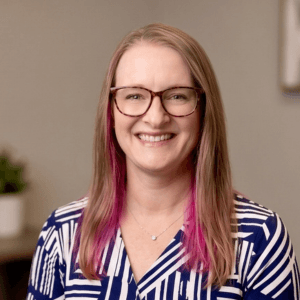
Julie Eshleman
came from a similar place — years spent working directly with children and families as a special education teacher and board-certified behavior analyst, coupled with a growing conviction that individual clinical work wasn’t enough.
“I realized that my true passion was in systems-level change,” Eshleman said. “I wanted to dive more deeply into neuro-affirming practices and learn how to best advocate for environmental supports rather than relying on the traditional medical model of changing the person.”
Eshleman’s GaLEND experience took her to Washington, D.C., where she and fellow trainees met with congressional staff from the offices of Senators Warnock and Ossoff to discuss policies affecting the disability community.
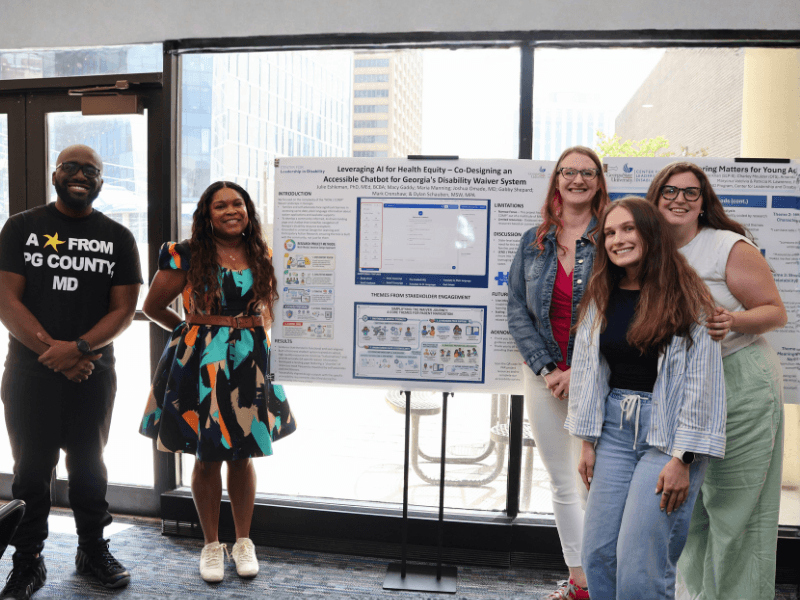
“It was really empowering to take our local advocacy to a national level,” she said. Back in Georgia, she channeled the program’s research component into developing an AI chatbot aimed at helping families navigate Georgia’s Medicaid waiver application process.
“GaLEND helped me transition from individual service provision to thinking about architecting better access on a larger, macro level,” said Eshleman, who is currently a postdoctoral research fellow at Georgia Tech. Her research now focuses on the ethical application of AI and assistive technology in the disability community. “It solidified my professional identity as an AI and disability researcher who is really dedicated to making communities better.”
As GaLEND marks its 15th year, both alumni reflect on what makes the program distinct: not just the skills it builds, but the community it creates and the values it instills.
“GaLEND really stays with you,” said Heggs. “It’s not just a program. It’s an experience that continues to influence your work and your purpose long after it ends.”
Julie Eshleman, a researcher who was part of the 2025 – 2026 GaLEND cohort and whose work focuses on AI and disability, says the program helped her transition from individual service provision to thinking about architecting better access for people with disabilities on a larger, macro level.
What inspired you to enroll in the GaLEND program?
As a former special education teacher and board-certified behavior analyst, I have spent years working directly with kids and families. While I enjoyed some aspects of clinical practice, I realized that my true passion was in systems-level change! I was inspired to join Georgia LEND because I wanted to dive more deeply into neuro-affirming practices and learn how to best advocate for systems change and environmental supports rather than relying on the traditional medical model of changing the person. I knew that GaLEND would give me the perfect platform to merge my background in education with my current research, allowing me to make a much bigger, more positive impact!
Which GaLEND experiences have been most impactful for you?
I think that there were two parts of my GaLEND experience that were equally high impact. One of them was getting to attend the disability policy seminar in Washington, D.C., which was an absolutely incredible experience. Getting the chance to travel to the capital as a LEND fellow and actually sit down with the amazing congressional staff from the offices of Senators Warnock and Ossoff was unforgettable. It was really empowering to take our local advocacy to a national level and have meaningful conversations about the policies that directly impact the disability community. I also thoroughly enjoyed helping my really important participatory action research group meet some tough deadlines and produce some incredible deliverables! I think we made so much progress in such a short time because of how we divided tasks, and it got me really excited about that line of research.
How has GaLEND changed the way you support the children and families you work with?
I think GaLEND has given me permission to completely transform my approach. My focus is now on prioritizing autonomy, assent and real code design alongside the disability community. It’s also heavily influenced the practical tools that I build. For example, because of what I’ve learned, I’ve been using the participatory action research to help further develop an AI chatbot. My goal is to ensure that this tool authentically and easily helps families navigate the Georgia Medicaid waiver application process. I think it’s all about creating accessible neuro-affirming supports that genuinely empower families on their own terms.
Has GaLEND changed the way you approach your career more broadly? If so, how?
Oh, absolutely! This experience has completely broadened my horizons! GaLEND helped me transition from individual service provision to thinking about architecting better access on a larger, macro level. It solidified my professional identity as an AI and disability researcher who is really dedicated to the ethical application of assistive technology and AI to make communities better. I now look at my entire career—whether I’m presenting research, applying for grants or stepping into advisory roles—through the lens of systemic inclusion. It’s given me the tools and confidence to push for real, systems-level change, so that systems do not interfere as much with people's outcomes.
Is there anything else you’d like to add or say in summary?
I think just a massive and enthusiastic thank you! I'm so excited that it is the 15th anniversary of GaLEND! Being part of this program has been one of the most fulfilling chapters of my professional journey. The connections I've made with brilliant mentors, peers and advocates are absolutely priceless. I’m so excited to see how the program continues to grow in champion the disability community over the next 15 years, and I'm really excited to be a part of that trajectory.
Akilah Heggs, a lecturer at the University of Massachusetts Amherst School of Public Health who completed the GaLEND program in 2014, credits it with positioning her to pursue leadership roles in public health, policy and program development.
What inspired you to enroll in the GaLEND program?
At the time, I was working as a pediatric audiologist and seeing children and families navigate really complex systems, health care, early intervention and education all at once. What stood out to me wasn’t just the clinical needs, but the gaps between systems and how much families were left to figure out on their own.
I knew I wanted to do more than provide clinical care. I wanted to understand how systems worked, how policies were shaped and how we could improve access and coordination for families. GaLEND felt like the perfect space to grow in that way, especially because of its focus on leadership and interdisciplinary collaboration.
Which GaLEND experiences have been most impactful for you?
One of the most impactful parts of GaLEND was simply being in a room with people from so many different disciplines. It really changed how I think about care. I started to see how each field brings a different lens and how much stronger our work is when we collaborate.
I also really valued the emphasis on family-centered care and those with lived experiences. Listening to families, learning from people with disabilities and their experiences, and recognizing them as true partners in care was something that stayed with me. And the exposure to policy and systems-level thinking helped me connect the dots between what we see on the ground and the bigger picture of how services are designed and delivered.
How has GaLEND changed the way you support the children and families you work with?
GaLEND fundamentally shifted my approach from a primarily clinical lens to a more holistic, systems-oriented perspective. It also deepened my understanding of how policies, service systems and access barriers impact families. As a result, I approach my work with a stronger emphasis on coordination of care, advocacy and connecting families to resources across systems. Whether in clinical leadership, early intervention or public health roles, I prioritize supporting families in ways that recognize their lived experiences and the broader context in which they are navigating care.
Has GaLEND changed the way you approach your career more broadly? If so, how?
Absolutely. GaLEND was a pivotal experience that shaped the trajectory of my career. It expanded my vision beyond direct clinical care and positioned me to pursue leadership roles in public health, policy and program development.
Following GaLEND, I moved into roles that allowed me to influence systems at a larger scale, serving in leadership positions in early intervention, academic programs and federal public health agencies. The program reinforced my commitment to advancing health equity for children with disabilities and their families and gave me the tools to translate research into policy and practice. It also strengthened my identity as a leader who works across disciplines to drive meaningful change in maternal and child health systems. It also solidified my commitment to health equity and to improving systems of care for children with disabilities and their families.
Is there anything else you’d like to add or say in summary?
Looking back, GaLEND was truly transformative for me. It shaped how I lead, how I teach, and how I approach my work every day. Even now, I still carry those core values with me: collaboration, family-centered care, and a commitment to equity. And I think one of the most special parts is the community. Being part of a network of people who are all working toward the same goal to improve outcomes for children and families has been incredibly meaningful.
GaLEND really stays with you. It’s not just a program. It’s an experience that continues to influence your work and your purpose long after it ends.