
Media Contact
Sam Fahmy
Director of Communications
School of Public Health
[email protected]
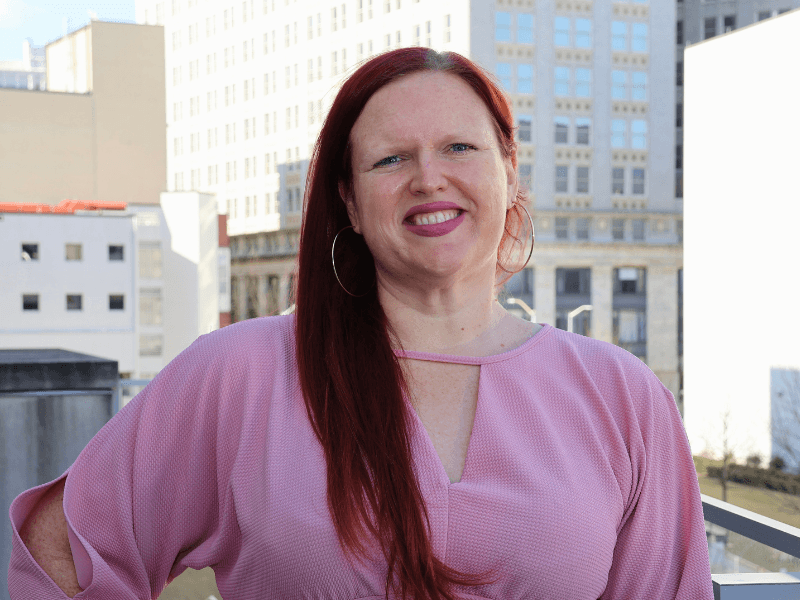
Denice Wade says she chose the School of Public Health’s DrPH program because of its outstanding reputation for producing leaders who are equipped to tackle pressing challenges in the field of public health.
Name: Denice Wade
Hometown: Mountain Home, Idaho
Undergraduate and master’s degrees and institutions:
I earned my undergraduate degree in sociology from the University of Idaho and my MPH from Walden University.
Tell us about your current position and role in public health:
I currently serve as a Senior Program Associate within The Carter Center’s Rule of Law Program, where I support the implementation and management of the Policy, Awareness and Investment for Alternative Response and Decarceration (PAIReD) Project. Launched as a collaborative effort between the center’s rule of law and mental health programs, PAIReD addresses the systemic crisis of disproportionate incarceration among individuals facing mental health challenges, substance use and homelessness.
My role involves managing the project’s workplan and guiding the coordination of strategic goals to reduce the overrepresentation of Black men in Georgia’s carceral system. Ultimately, I am proud to contribute to a project that redefines public safety as public health. By partnering with organizations like the Policing Alternatives and Diversion Initiative, I work to ensure that Georgia’s most vulnerable residents are met with care resources rather than the trauma of the legal system.
What led you to choose the Georgia State School of Public Health’s DrPH program?
My decision to join the School of Public Health’s DrPH program was driven by a combination of professional peer influence and the program’s unique academic focus. I first became interested in the program after seeing the success of a colleague who is a GSU DrPH alum. Their ability to translate complex public health theory into high-impact and practical leadership was a powerful testament to the program’s quality. Furthermore, the School of Public Health has an outstanding reputation for producing leaders who are equipped to tackle the most pressing challenges in the field.
What truly solidified my choice, however, was the program’s explicit focus on public health in an urban context. Being based in Atlanta, I am deeply passionate about addressing the specific health disparities that affect urban populations, including housing insecurity, the criminalization of mental health and the need for robust community-based care. Georgia State offers the perfect environment to study these issues at the intersection of policy and practice, allowing me to apply what I learn in the classroom directly to my work in the metro Atlanta community.
Tell us about some of your most valuable experiences in the DrPH program.
One of the most valuable aspects of the DrPH program has been the opportunity to grow alongside a cohort of fellow public health leaders. My classmates aren’t just students; they are seasoned professionals who bring an incredible diversity of perspectives to every discussion. The relationships I’ve built within my cohort have created a collaborative learning environment where we learn as much from each other’s professional challenges and successes as we do from the lectures.
Furthermore, the faculty here have been an invaluable resource. They bring a wealth of real-world knowledge and years of frontline public health experience to the table. Learning from instructors who have managed large-scale health initiatives and navigated complex policy landscapes has been transformative. They don't just teach theory; they provide the practical real-world context necessary for leading systemic change. These interactions with both my peers and the faculty have truly sharpened my leadership lens and expanded my understanding of what is possible in public health.
How is the DrPH program at Georgia State helping prepare you for leadership roles in public health?
The program is providing me with the strategic toolkit necessary for executive leadership. By deepening my expertise in policy implementation, program evaluation and public health financing, the program has shifted my focus from day-to-day practice to long-term systemic change. I’ve gained the specific leadership skills needed to champion a health in all policies approach, allowing me to address social determinants of health through intentional cross-sector collaboration. Most importantly, the program has bolstered my professional confidence, giving me the evidence-based foundation and the leadership voice required to drive meaningful and equitable impacts in the public health landscape.