
Media Contact
Sam Fahmy
Director of Communications
School of Public Health
[email protected]
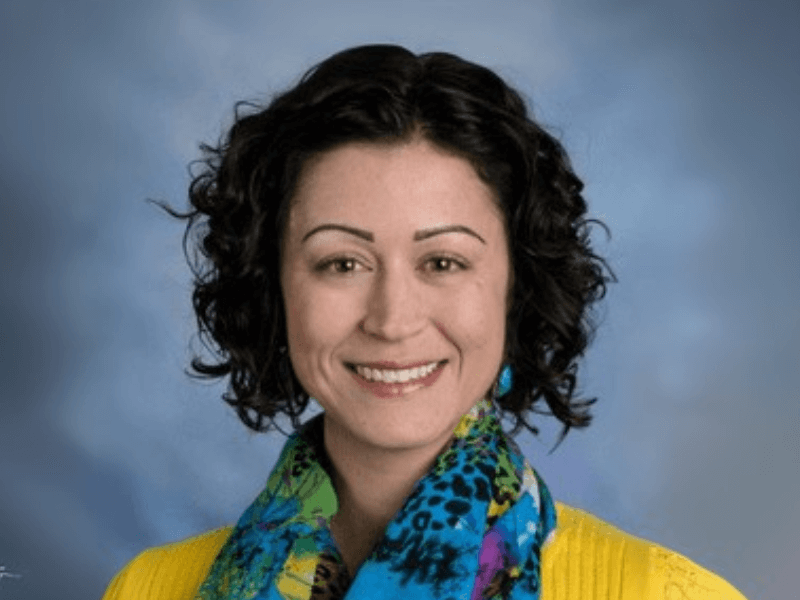
ATLANTA—Ashli Owen-Smith, a behavioral scientist who has led several community based research projects, has been named Chair of the Department of Health Policy and Behavioral Sciences at the Georgia State University School of Public Health.
Owen-Smith is a principal investigator of GSU’s Prevention Research Center and co-lead of its core research project. Funded by the Centers for Disease Control and Prevention, GSU’s PRC focuses on the health well-being of residents of the metro Atlanta community of Clarkston. Owen-Smith previously served as the Master of Public Health Program Director for the Department of Health Policy and Behavioral Sciences.
Her research focuses on the mental health needs of underserved populations, and she has authored more than 100 peer-reviewed journal articles. She has received several honors over the course of her career, including the School of Public Health’s Excellence in Research Award and its Outstanding Faculty Award, as well as GSU’s Outstanding Faculty Achievement Award.
“Dr. Owen-Smith excels in all three of the School of Public Health’s interconnected missions—teaching, research and community engagement,” said Dean Rodney Lyn. “Her record of excellence makes her uniquely positioned to lead the Department of Health Policy and Behavioral Sciences as it educates students and contributes solutions to local and global public health challenges.”
A Q&A with Owen-Smith is below:
I was drawn to public health because it is both interdisciplinary and deeply connected to people’s lives. The field allows us to bring together perspectives from medicine, psychology, sociology, policy and beyond to address the complex factors that shape health and well-being. I was especially inspired by the opportunity to work with historically marginalized communities and to focus on equity—ensuring that every person, regardless of background, has the opportunity to thrive.
One of the most meaningful parts of my career is mentoring students. I believe that mentorship is one of our most important responsibilities as faculty. In my teaching and advising, I encourage students to bring their whole selves to the work of public health and to think critically about how they can make a difference in their communities. My role is to provide both knowledge and guidance, but also to create an environment where students feel supported, valued and inspired to grow as professionals and as people.
I usually explain my research as focusing on how mental health and physical health are deeply connected, and how we can design interventions that support people as whole individuals. Much of my work looks at how stress, social connection and cultural context affect health outcomes, and how we can partner with communities to develop practical, compassionate solutions. In simple terms, I study ways to improve health by paying attention to both the mind and the body, and by making sure interventions are relevant and accessible to diverse populations.
My top priority is to listen—to faculty, staff and students—and to respond in ways that reflect compassion, respect and care. I want our department to be a place where people feel supported not just professionally, but also in terms of their well-being and work-life balance. I am committed to cultivating a culture where collaboration, interdisciplinary thinking and innovation can thrive. By centering heart and humanity in leadership, I believe we can build a department that is both academically excellent and a model of community and connection.