
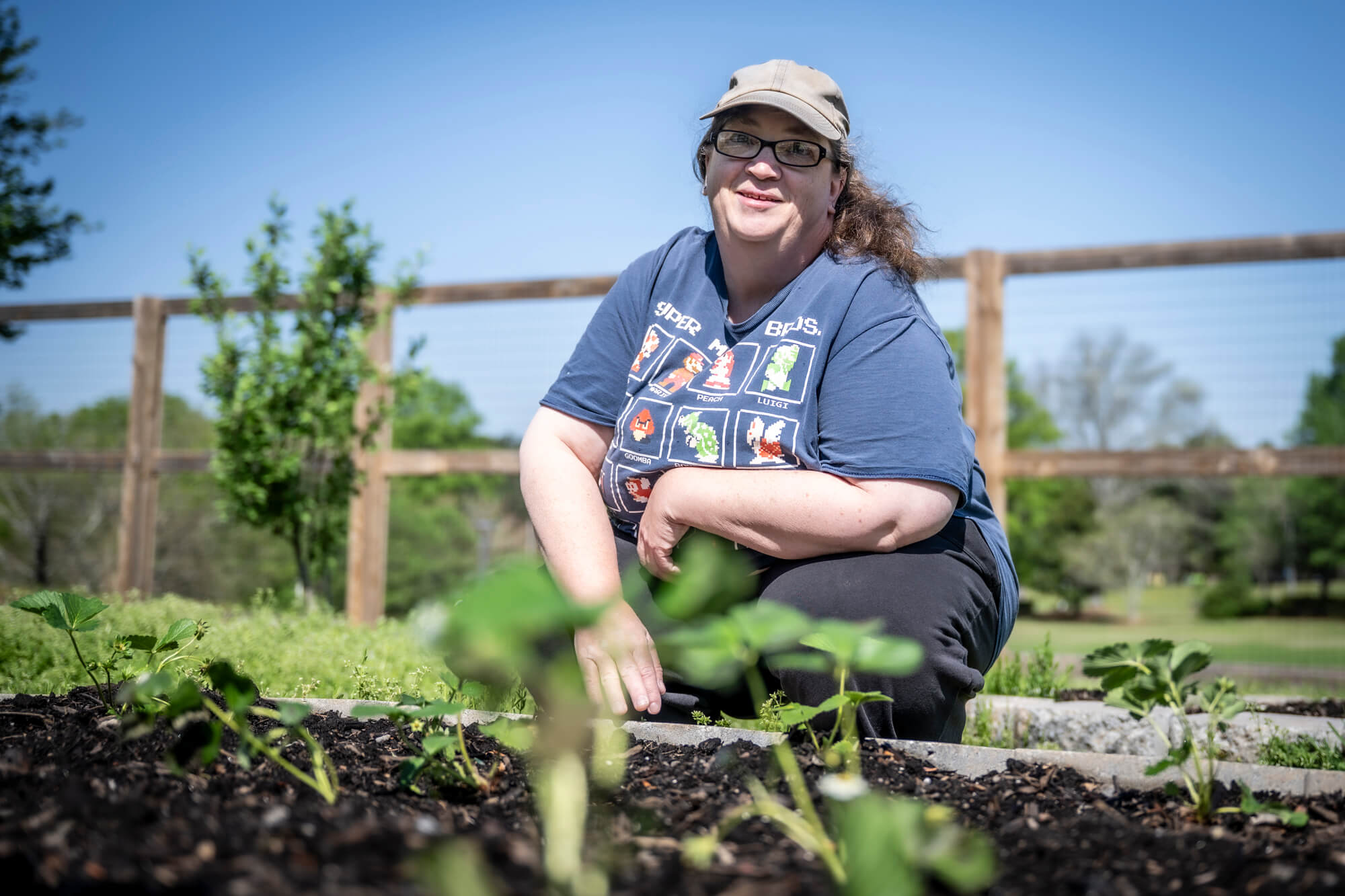
Professor Susannah Lomant has been a faculty member of Perimeter College since 2004, teaching Physics and Astronomy at the Decatur Campus. Originally from Maryland, she moved to Atlanta in 1996 to be near family, briefly leaving to complete her master’s degree before returning to Atlanta in 1999. Beyond the classroom, Lomant manages the Decatur Campus Community Garden, a thriving 9,000-square-foot space. Under her leadership, the garden grows an impressive array of fruits and vegetables—from kale to peaches—and has received three consecutive grants from Food Well Alliance to support its mission of fostering community and horticultural therapy.
Professor Lomant finds joy in gardening, appreciating the connection with nature and the opportunity to share its bounty with others. Her talents extend beyond teaching and gardening; she enjoys drawing, crafting, home improvement, and repairing everything from cars to appliances. A lover of literature, Lomant treasures John Steinbeck’s Cannery Row and is inspired by Albert Einstein’s quote: “Not everything that can be counted counts, and not everything that counts can be counted.” Known for her patience and resilience, she looks forward to welcoming hummingbirds to the garden this summer.
Below we asked Professor Lomant a few questions for a deeper understanding of what drives her passion and professionalism.
How did you get involved with the Community Garden?
I know Tyrie Smith who started the Garden back in 2011 and have participated in it since that time. I started gardening when I was a child, maybe around 6 years old. I had my own space and grew all sorts of things like radishes, cucumbers, corn, sweet peppers and potatoes. Plants bring me comfort and peace of mind. It is a wonderful thing to see the tiny sprouts that emerge from seeds. During the pandemic, I experimented with growing ginger, turmeric, lemongrass and galangal. There were some ups and downs, but I now grow these plants with confidence and have grown them at home to transplant into the Community Garden.
We heard you were recently awarded a grant to help fund the garden.
Can you tell me about that?
Yes, this is the third year we have received a grant from Food Well Alliance, an organization which helps fund community gardens in the metro Atlanta area. Since the Community Garden is in the metro area and we donate food to students, we qualify for the grant. We received $1,500 this year. The grant allows us to purchase plant amendments, plants, soil, seeds and other materials so that we can grow more produce for GSU students.
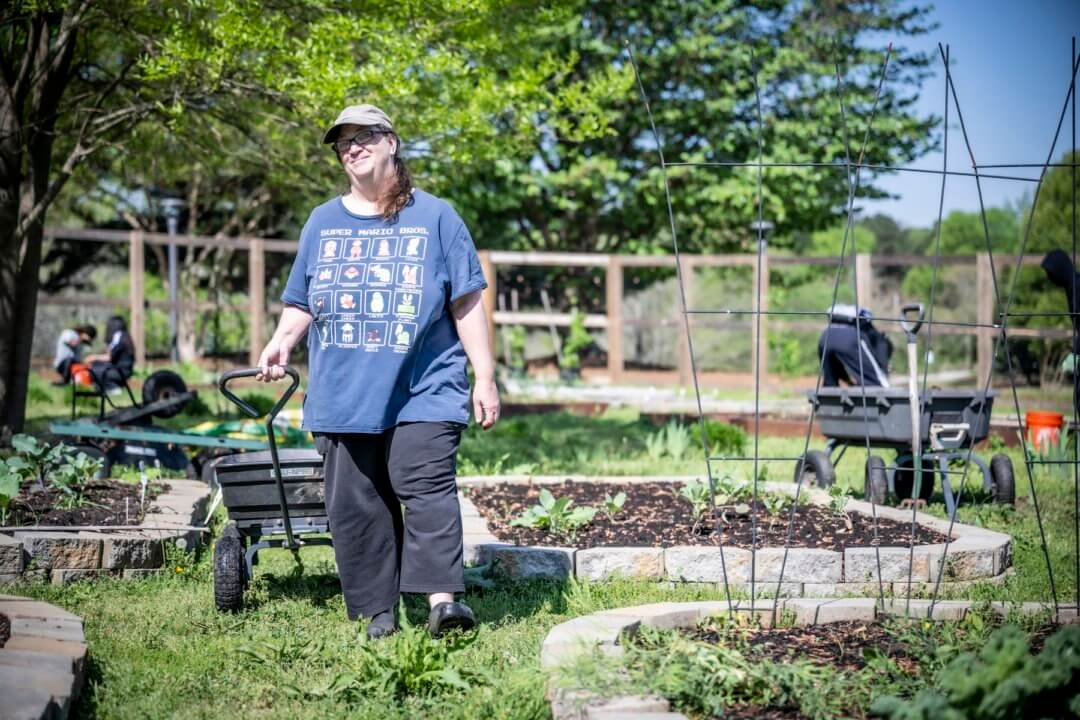
What's currently growing in the garden?
We are transitioning from cool season to warm season crops, so we have a mixture of things like kale, pak choi, carrots, beets, peas, sunflowers, garlic, purple mustard, cabbage, squash, black-eyed peas, cucumber, rosemary, chives, parsley, blueberries, blackberries, apples, peaches, figs, etc.
What are the benefits of gardening? Why do you love it?
It is great stress relief, but it can also be a source of stress when something starts eating your lettuce! I love being outside with Nature and watching the bees, lizards, birds and other creatures in the Garden. I also enjoy watching the plants grow over time (you need to be patient) and sharing their bounty with others.
Do you have advice for new gardeners?
Start small. Planting a lot of plants all at once can be overwhelming, especially if you are not familiar with how quickly they will blossom and produce fruit. Container gardening is a good way to start a small vegetable garden and learn about the needs of certain plants. Consider having one tomato plant, a few lettuce plants and maybe a few herbs and flowers (to attract pollinators). You can keep them in separate pots or a very large container, like a wine barrel. Make sure that your plants will have room to grow. If they are kept in pots that are too small, then they will not flourish. Some plants do well when planted with ‘companion’ plants. For example, basil, chives and onions work well with tomatoes since they help keep certain bugs off the tomato plants. For larger pests, if you live in an area with deer, squirrels or chipmunks, you may want to invest in some hardware cloth or mesh to protect your plants from hungry animals. As with all things, learning a new hobby, such as gardening, takes time and you will not always be successful. Don’t give up. Failing is part of the learning process and you’ll know what not to do the next time you plant. For more advice, you may want to look for local gardening clubs or plant swap groups which are also great for finding new plants.
How can faculty, staff and students get involved with the Community Garden?
Stop by on a Tuesday or Thursday between 10 a.m. to 2 p.m. for our volunteer days or send me an email at [email protected].
Story by Jeria Barnes
Photos by Bill Roa