

Memorial Fellowship Honors Beloved Classmate
Memorial Fellowship Honors Beloved Classmate
Kenneth Henry Lockett III, a tall figure with a beaming smile and gregarious personality, immediately made an impression.
“The first time I met him was in the SGA office,” Varitek says. “This guy is tall, taller than everybody. He’s this guy with this huge smile and he’s friends with everyone.”
Friends say Lockett, who died suddenly in 2022 at just 22 years old and just months before he was set to graduate, showed nearly unlimited promise and potential, and cultivated a deeply held passion for work in journalism, social justice and public service. Now they’re working to help students with those same qualities gain experience and pursue career tracks that honor Lockett’s memory and, in a way, fulfill his legacy.
Founders announced last week the formation of The Kenneth Lockett Foundation, a nonprofit organization that aims to help promising Atlanta-area college students pursue careers in law, journalism and public service through mentoring and leadership development.
The foundation’s flagship program is the K.H. Lockett Truth and Justice Fellowship, which organization leaders plan to kick off in the summer of 2026. Over the course of the 10-week fellowship, rising college juniors and seniors will be placed in a partner site that shares the foundation’s, and Lockett’s, commitment to truth, justice and leadership, gaining real-world experience in law, public service or journalism.
The foundation’s initial fundraising goal, a modest $10,000, will help provide next summer’s fellow a paid experience, which can be a crucial factor making such internships at social justice and public service groups accessible to cash-strapped students when such firms, themselves, are also cash-strapped.
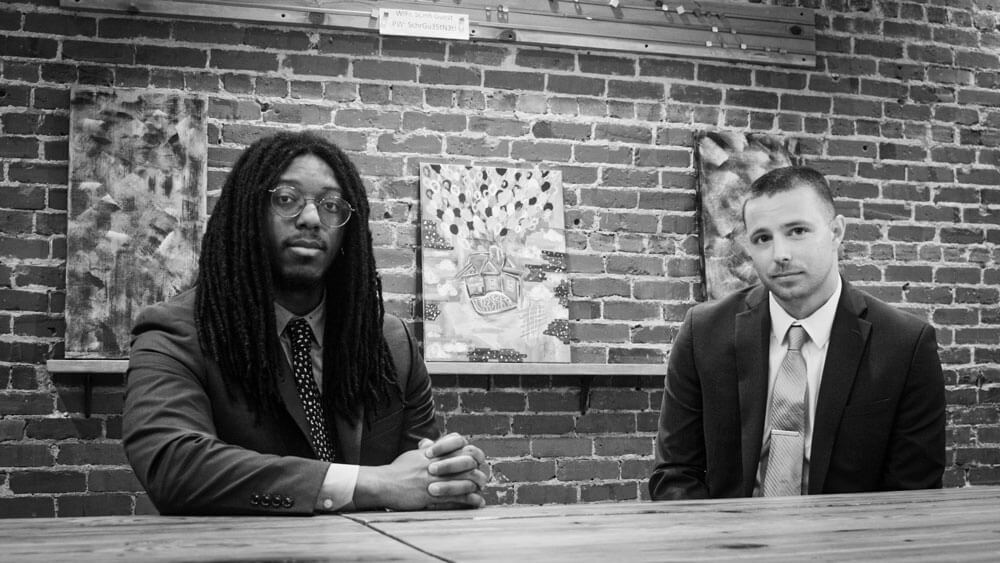
Though Varitek first met Lockett through the latter’s involvement in SGA, the two would be working side-by-side within a couple of years.
At The Signal, Varitek served as editor-in-chief as Lockett came onboard as an opinion writer then as the opinions section editor.
“He went from being a subject we covered to having his own voice in the pages of the student newspaper,” Varitek says. “And I was honored to have the opportunity to be his friend and his editor.”
Lockett, a political science major, used his voice, through the pages of the paper, to make a statement.
Among the pieces Lockett became known for is one, in the wake of former GSU President Mark Becker’s announcement that he was stepping down, calling for the next GSU president to be a leader of color.
Interviewed by The Atlanta Journal-Constitution about the article, Lockett told the paper, “If Georgia State and the University System really want to make a statement, it would make sense.”
It wasn’t the first time Lockett’s words had gained attention. A year earlier, in 2019, Varitek says Lockett was the lead Black author of a Signal editorial calling for then-Atlanta Mayor Keisha Lance Bottoms to relocate a downtown statue of Henry W. Grady.
The open letter to Bottoms, which attracted attention from the AJC and other outlets, including Newsweek, described Grady as a racist whose legacy is “incompatible with Atlanta’s progressive character.”
In 2020, “Mayor Bottoms, tear down this statue!” was awarded first-place Story of the Year honors by the Associated Collegiate Press. Lockett, Varitek and fellow Signal staffer Ada Wood were also invited to the Rialto Center for the Arts to discuss the letter as part of the “Crucial Conversations” series led by Pulitzer Prize-winning writer Doug Blackmon, a professor of practice in Georgia State’s Creative Media Industries Institute.
“They wanted to understand Kenneth’s personal perspective,” Varitek says. “And he navigated it with such grace.”
“Helping to push someone to reach their full potential is an effort worth investing in and taking part in. If KLF had existed while Kenneth was alive, he would have been the perfect student for it.”
– William Holley IV (B.S. ’20) –
In the years since Lockett’s sudden passing, as they’ve worked through the grief that comes from losing a friend, Varitek and others involved now in the Lockett Foundation stayed in touch.
William Holley IV (B.S. ’20) says he and Varitek began having serious conversations about starting the foundation around 14 months ago.
Holley, who was a digital editor for The Signal as a student, is now an Atlanta-based product manager for Warner Bros. Discovery, the parent company of dozens of media brands, including CNN, HBO, HGTV and Food Network.
Varitek, who parlayed a summer internship with The New York Times’ marketing department into a full-time job with the paper, is now a project manager for Verizon based in New York City.
As co-founders of The Kenneth Lockett Foundation, they say their mission is to ensure Georgia’s next generation of lawyers, journalists and public servants has the tools, networks and values to lead with integrity.
“Helping to push someone to reach their full potential is an effort worth investing in and taking part in,” Holley says. “If KLF had existed while Kenneth was alive, he would have been the perfect student for it.”
In setting up the foundation’s advisory board, Varitek and Holley have recruited not only advisers with nonprofit experience but those with personal connections with Lockett as well.
Among them are Evan Malbrough (B.A. ’20), a Georgia State graduate who recently served as a senior economic policy officer for the Consulate General of the Netherlands in Atlanta, and Franklin Patterson (B.B.A. ’19), former president of the Georgia State Student Government Association and now a law student.
Hamza Habibur Rahman (B.A. ’20), who served as a senator with the Student Government Association when Lockett was a freshman liaison, is also a Lockett Foundation board member. After graduating with a political science degree, Rahman was appointed by the Biden administration to the Department of Homeland Security as an adviser for external affairs.
As a member of the Student Government Association, Rahman was a signatory to the “Tear down this statue” letter, and was close with Lockett, Varitek and Holley during their time at Georgia State.
He says as students who didn’t come from wealthy backgrounds, taking unpaid internships wasn’t really an option. The Lockett Foundation will give others the chance to work in spaces that honor their friend’s legacy without having to worry about where the money will come from.
“I’ll always remember Kenneth as someone who wasn’t afraid to be on the unpopular side of history as long as he knew it was the just and fair side of history,” Rahman says. “My joining the foundation is a way to honor Kenneth’s memory and contribute to the world in a way he would’ve liked to see, and in a way he would have done if he could. He got a similar start in life as all of us, but he would have accomplished so much more than all of us. He was absolutely brilliant.”