
Endowed Scholarship Honors Legacy of Discovery
Endowed Scholarship Honors Legacy of Discovery
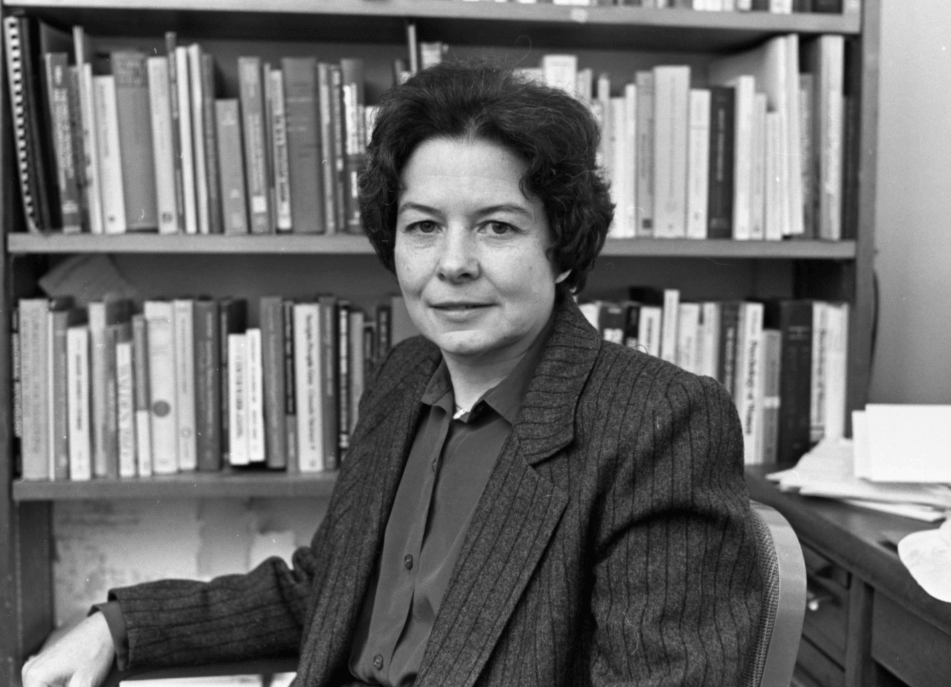
This single word, because of Pauline Rose Clance’s research at Georgia State University, holds deep meaning today across the world. She has helped people, especially women, better understand their insecurities in pressure-filled environments like higher education.
She and her research partner Suzanne Imes first named the imposter phenomenon in 1978, nearly 50 years ago. The discovery was more than a concept. It was a dynamic influencing her life and relationships, especially at GSU. As the Psychology Department grew into a nationally known hub for clinical, research and educational excellence, she mentored younger women faculty who had held themselves back because of the imposter phenomenon.
Now age 87, a professor emerita, Clance looks back with a sense of honor and deep personal resonance, especially with first-generation GSU students from diverse backgrounds who have had to overcome significant hurdles to go to college. The imposter phenomenon “really applies with Georgia State students,” she says.
The imposter phenomenon “has gotten really worldwide attention, but I am not sure that a lot of recent students know about it, and I think it would benefit them if they did … It clicked with people. They had experienced it themselves, and they felt acknowledged, like someone else understands: ‘Yes, I feel this way too.’”
To honor and sustain her mentoring legacy, donors are crowdfunding the Pauline Rose Clance Honors Scholarship. It celebrates the values that she championed: authenticity, resilience and empowerment. The scholarship will support psychology majors at the Honors College who are passionate about dismantling internal barriers to achievement, and ensure her work continues to inspire future generations of scholars, clinicians and changemakers.
Fighting a Misnomer
Clance hopes the scholarship will set the record straight. The imposter phenomenon is an experience that is deeply sensed and dependent on a person’s context. It was never a cluster of symptoms. Never a “syndrome.”
The miswording comes from a 1982 Vogue article headlined “Every Woman’s Secret Fear.”
“It casually uses the term ‘syndrome,’ and that ended up being the term that became more popular over time,” says Kevin Cokley, editor of “The Impostor Phenomenon: Psychological Research, Theory and Interventions" (2024).
The phrasing stuck as the idea caught on and her connection diminished.
“Pauline has contributed to psychology and to popular culture an enduring idea that most people can identify with and have experienced — that will remain with us over the course of time,” Cokley adds. “That's not easy to do.”
‘Don’t Expect to Make It’
Clance grew up in obscurity, in the coal mining tip of Appalachian Virginia, where West Virginia, Tennessee and North Carolina converge.
“Where Pauline grew up, it's very, very rural,” says C. Sue Matthews (Ph.D. ’94), who was raised nearby and completed her doctor’s degree with Clance’s support. Without that mentorship, “I don’t think there is any path from there to Atlanta.”
Clance, whose nickname was “Tiny,” surprised herself by getting elected senior class president then earned her undergraduate degree at Lynchburg College. At the University of Kentucky, she attained her master’s and Ph.D.
“I did not have the educational background of my peers. My faculty and peers did not share my identities. And, more concretely, successful people were telling me not to expect to make it,” she writes in Cokley’s 2024 book.
“Yet, I graduated. I got my Ph.D. Only three or four others in my class of 15 graduated with me. With these statistics, it was also easy to worry about when others would figure out I did not really belong in the academy.”
The imposter phenomenon moved from personal insight to research topic after she joined the Oberlin College faculty and connected with Imes. They began observing female students expressing “considerable doubt about their intellectual abilities, especially when facing exams,” or times and experiences where they had to demonstrate their competence.
High test scores, repeated success and positive feedback from professors — nothing budged the fear of being exposed as “intellectual imposters.”
“This was an experience I understood deeply,” Clance wrote.
She and Imes interviewed more than 150 high-achieving women, including university students, faculty, lawyers and health care workers. The work begun at Oberlin began spreading in 1978, when the journal Psychotherapy: Theory, Research, and Practice published their findings, "The Imposter Phenomenon in High Achieving Women: Dynamics and Therapeutic Intervention."
Today their “IP” work has been cited at least 4,700 times.
Growing Influence
After Clance joined the GSU faculty in 1974, she continued research and advocated for her campus peers.
She developed the Clance Imposter Phenomenon Scale (CIPS) in 1985, now translated into 36 languages and used by researchers in 59 countries.
Her 32 years at GSU coincided with its major growth, including becoming an R-1 research institution, signaling the spending of at least $50 million on research and development and awarding at least 70 research doctorates. Clance helped develop the GSU Psychology Department, now known for training therapists, making research breakthroughs and teaching 2,000 undergraduate psychology majors each year.
“Her groundbreaking research and internationally known scholarship were absolutely instrumental to putting Georgia State on the map as a research institution,” says Lisa Armistead, the inaugural dean of The Graduate School.
Clance worked to bring parity between men and women faculty.
Today, the most recent data show that 51 percent of the 1,488 GSU faculty members are female, by far the highest representation of any of Georgia’s research institutions (Augusta is next at 44 percent). But in the late 1980s, women were only 33 percent of the GSU faculty, and faced barriers to equal pay and adequate parental leave.
Martha Foster, who Clance welcomed to the psychology faculty, shared an interest in women’s issues. Foster remembers carrying her marriage certificate to prove she had a husband. She had kept her maiden name.
“Times were different,” Foster recalls. “Now, faculty put their babies’ pictures on their doors. Back then, it was kind of not to be advertised, and the whole issue of trying to juggle two careers was pretty complicated. Pauline was always interested in supporting women advancing in the academy as well as having a family. Right in the beginning, she and I talked about support for graduate women.”
Mary Morris, a faculty colleague for a decade, says Clance “would invariably raise questions about how changes under discussion might impact our students. She was particularly sensitive to needs and concerns of first-generation students, not surprisingly, given her own personal history.”
‘You Need to Be Protected’
A male-centered academic environment told women that they didn’t belong, which reinforced the imposter phenomenon.
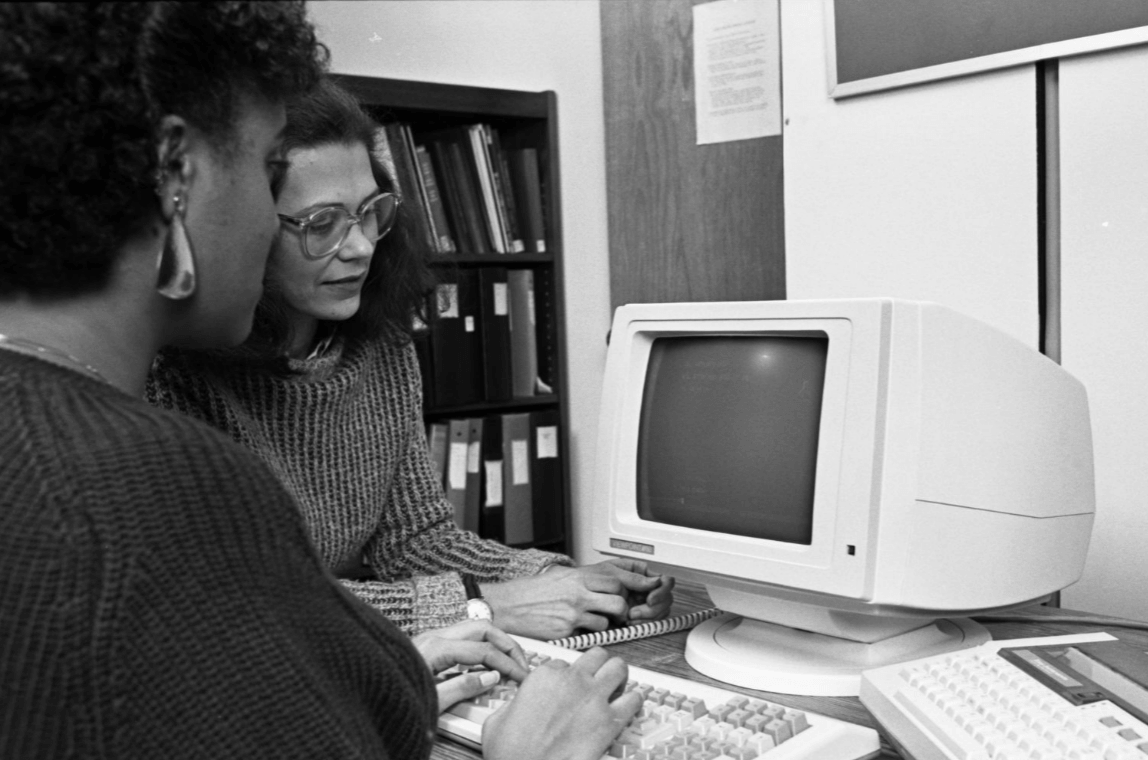
“We were absolutely questioning whether or not we deserve to be there, whether we were going to make it through tenure,” says Armistead, who joined GSU in 1997 after interviewing with Clance. “Pauline was really fantastic at helping women move forward with concrete strategies to succeed.”
As the first Senior Faculty Associate for the Advancement of Women, Clance paved a data-driven path to boosting promotion, tenure and salary for women faculty. Two mentees are now GSU deans.
Honors College Dean Sarah Cook co-taught a class in the late 1990s with Clance, who observed Cook’s increasing load of new courses — a red flag for anyone chasing tenure.
When Clance got fired up, she would make her right hand into a fist, with her thumb pushing the air. “‘You need to be protected,’” Cook remembers Clance saying before taking action. “Pauline saw something that might need attention, so she alerted someone.”
Clance “gave me tips on the kind of information to save for my promotion and tenure dossier,” Armistead recalls. “She was a great role model in how I approached students, even more so in how I approached junior faculty or pretenure faculty, and how to help them come up through the ranks.”
Living With More Courage, Integrity, Beauty
As IP made global waves, Clance quietly extended her legacy through relationships at GSU.
In clinical instruction, “she was passionate and fearless, as if she was making art right in front of us and teaching us how to do it, too,” Matthews says. “She was a master therapist who eased suffering and helped people know themselves and live with more courage, integrity and beauty.”
When Matthews lost her mother, Clance delivered. “Grief is exhausting,” she counseled, urging Matthews to focus on sleeping and eating well.
“Pauline is deeply rooted and grounded in real, basic life,” Matthews says.
Clance said her advocacy for others is a personality trait. This investment is constantly returned by friends’ calls and unfailing birthday messages. “That felt good,” she says. “It meant that they still felt a connection with me.”
Asked for advice to students today and in the future, Clance returns to IP. For those affected, she hopes they will seek therapy, talk to a trusted professor and read her work.
For psychologists to effectively treat people with IP, she advised them: “Listen carefully to the unique ways each client tosses away their success.”
“Through shared liberation, we can co-create spaces where self-worth and performance are never linked and all are free to grow and embrace lives that reflect one’s values and motivations,” she wrote in the 2024 book.
Meanwhile, the relevance of IP continues to spread.
“Minorities still have experiences that make them feel like they don't belong, that make them feel like they’re still only there for reasons other than their own merit,” Cokley says.
“Their feelings of imposterism are not going to suddenly disappear, especially in this environment.”
A GSU Scholarship Legacy
The imposter phenomenon links Clance to each high achiever at GSU who experiences internal barriers to belonging, who didn’t come from a place where achievement is expected and who weren’t supposed to make it this far.
Their stories are her story.
The Clance Scholarship will invest in GSU Honors students with the potential to build on her research. They could identify — and discover solutions to — persistent psychological hurdles.
“Pauline really characterizes many of our students’ lives,” says Cook. “She’s on brand for GSU.”