



DRIVING MOMENTUM
CENTENNIAL YARDS. SOUTH DOWNTOWN. THE STITCH.
In a city known for constant change, there seems to be no shortage of developments and redevelopments set to bring people to downtown — and keep them there. And right alongside those mammoth downtown projects, and other smaller ones like those aimed at increasing housing options and putting the city’s best foot forward in time for the World Cup spotlight, Georgia State University is undergoing a transformation on a scale the institution has not seen in decades.
As Atlanta changes, so too does Atlanta’s university.
Rising from the Gulch — an underdeveloped crater of parking lots and railroad tracks surrounded by some of the city’s premier large-scale venues — Centennial Yards is bringing $5 billion of residential, retail, hospitality and entertainment development to downtown. And it’s all within a half-mile of the western edge of Georgia State’s Atlanta Campus.
The developers behind South Downtown are reimagining 57 buildings across 16 acres as a new center of city gravity, with shops, restaurants, galleries and an outpost of the Atlanta Tech Village, which offers mentorship and workspaces for startups and entrepreneurs. The renaissance is underway just five blocks south of Georgia State.
Leaders envision the Stitch linking downtown to Midtown with 17 acres of new, elevated park space capping the Downtown Connector just a mile north of the center of Georgia State.
And as these projects take shape, the university is transforming its own urban campus into a “College Town Downtown” with an array of efforts to create and recreate vibrant, people-centric spaces for faculty, staff, students and neighbors that define and animate the Georgia State experience.

CENTRAL CAMPUS
Among the most ambitious projects ever undertaken by Georgia State, College Town Downtown is a series of nine initiatives set to remake the look and feel of the university’s Atlanta Campus.
The activity is concentrated around Hurt Park, at the core of the Atlanta Campus, with improvements and connections that span all the way to Woodruff Park, creating destinations for students, faculty, staff, community members and visitors.
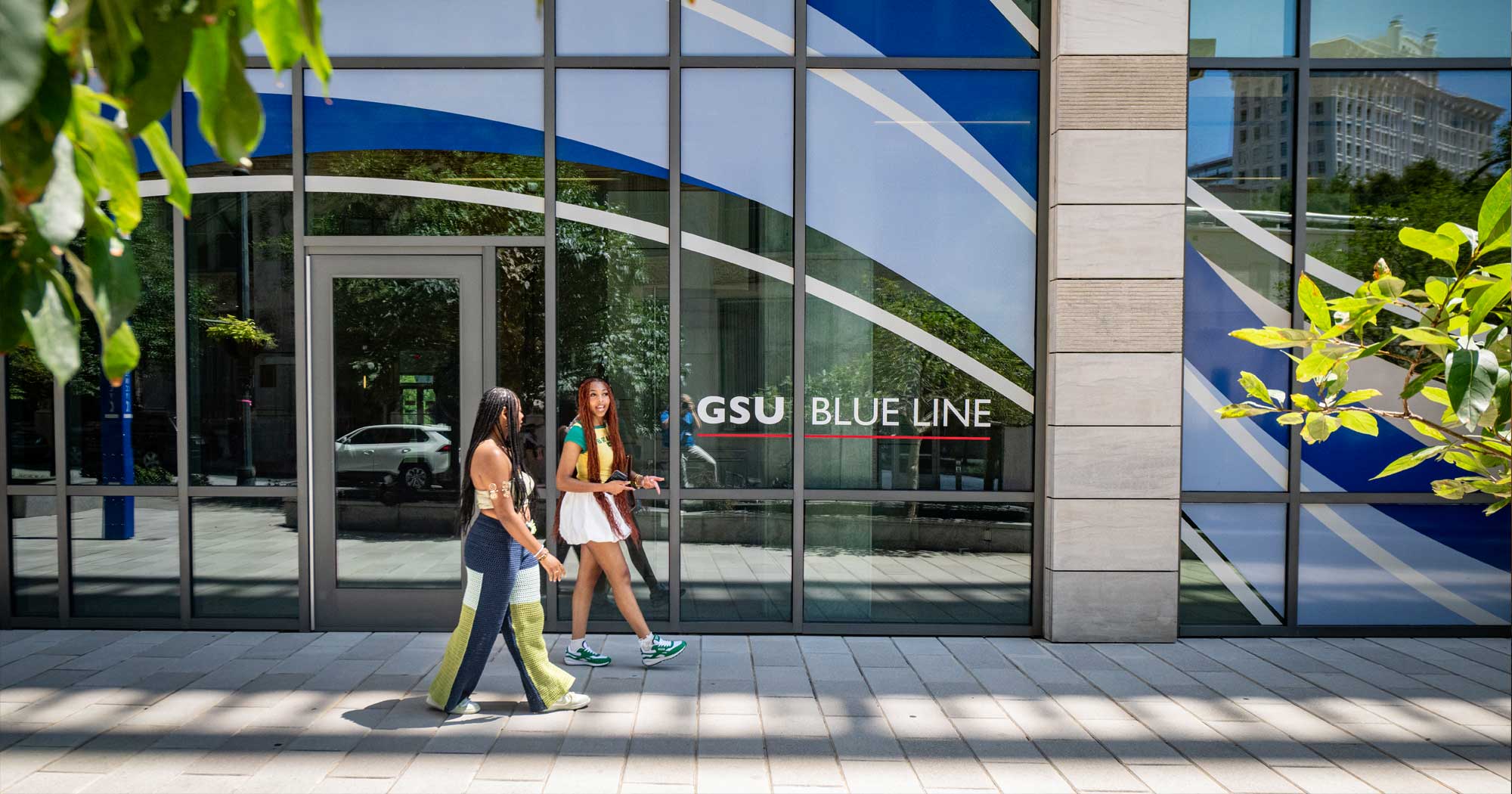
With the planned closure of Gilmer Street on Hurt Park’s south side and the removal of Sparks Hall — constructed in 1955 and the first structure purpose-built to meet the needs of the growing university — Georgia State’s existing Campus Greenway will integrate with the park space to create the Panther Quad, a defining feature of what will be known as the Central Academic Quad. The Central Academic Quad, itself, is one of five larger quads, or neighborhoods, across the Atlanta Campus stitched together by the GSU Blue Line, a 3.7-mile marked walking path that offers a safe, cohesive and distinct way to move among the university’s dorms, libraries, research centers and classroom buildings.
The GSU Blue Line, like other facilities improvements, is aimed at fulfilling the promise of one of the central pillars of Georgia State’s 10-year BluePrint to 2033 strategic plan. The Identity, Placemaking and Belonging pillar seeks to create inviting, accessible, sustainable, safe and rewarding places for members of the GSU community.
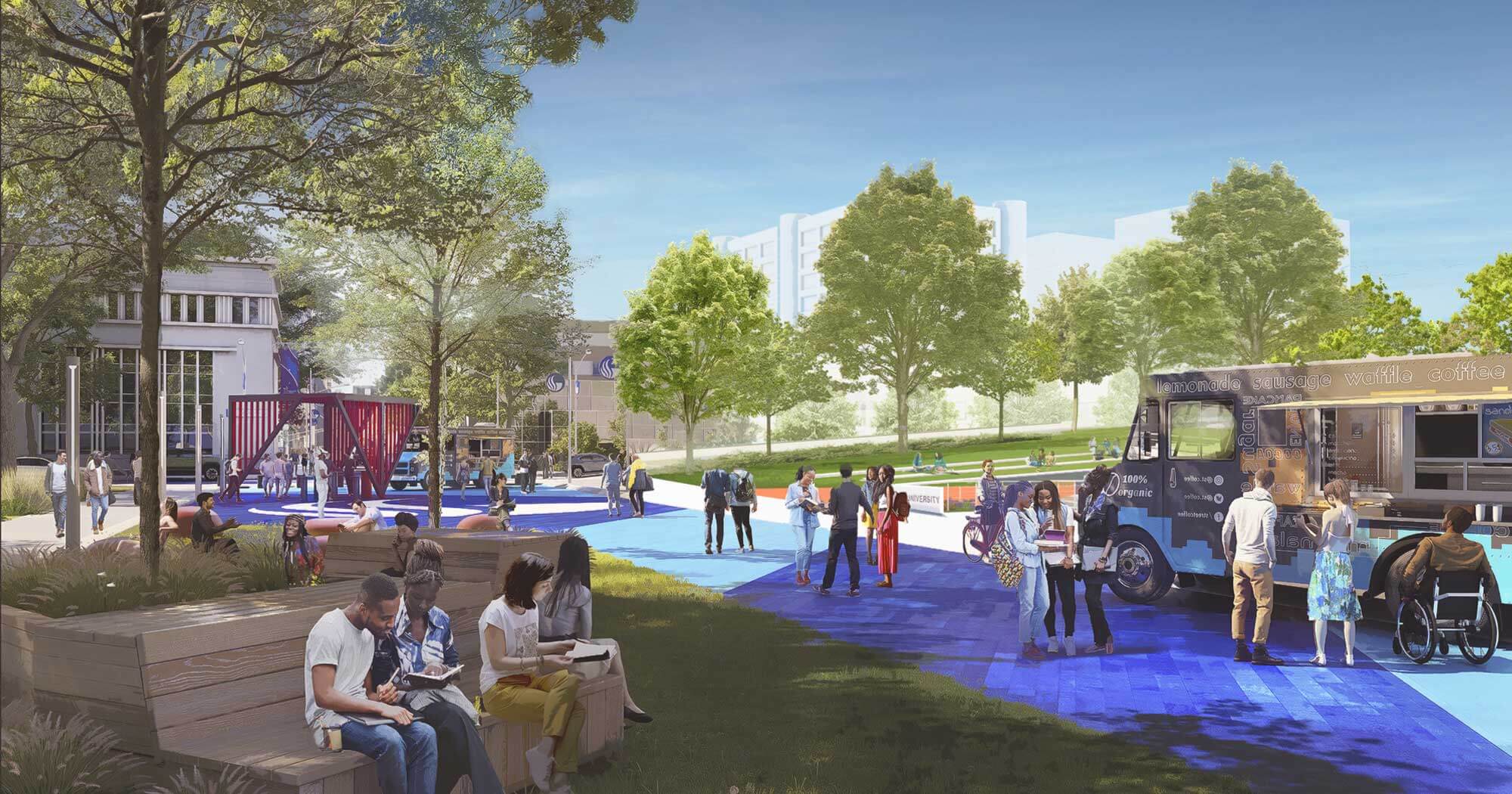
The reimagined outdoor space making up the Panther Quad will include an elevated plaza, enhanced walkways and a vegetated buffer along Courtland Street.
On the park’s north side, the 100 Edgewood Ave. building will be reactivated with a dining area and gathering space, confirming its presence as a cornerstone of the new campus core. The work will also include a single-story building addition with a rooftop terrace providing GSU community members views over the Panther Quad. Renovations to the first four floors of 100 Edgewood will provide up-to-date classroom space and interconnecting stairways for improved circulation.
The Arts & Humanities Building, which will overlook the Panther Quad once the Campus Greenway expansion is complete, will get a 20,000-square-foot addition and a new, more contemporary façade.
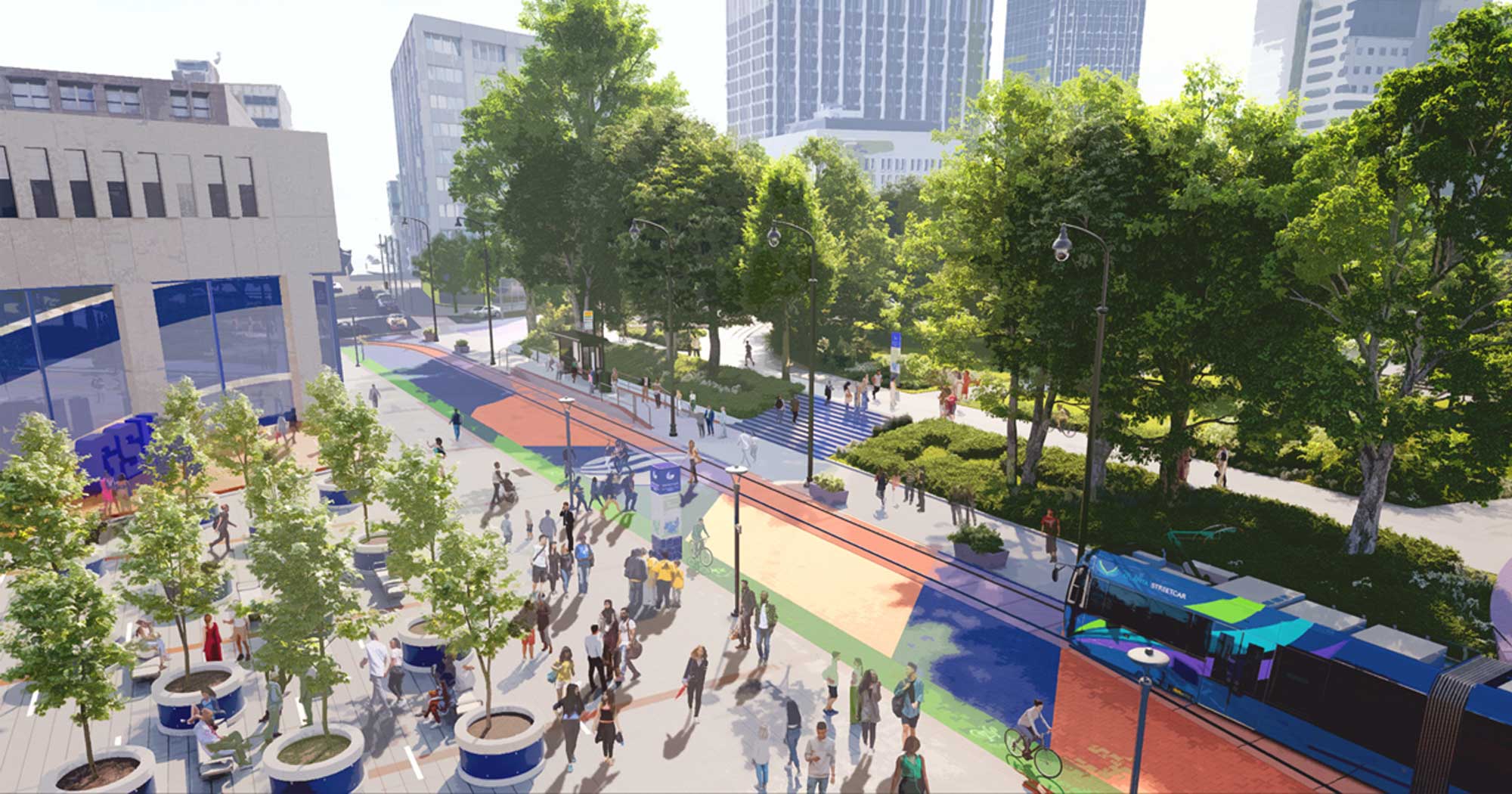
At Woodruff Park, new sidewalks, a realigned streetcar platform, façade improvements to the 25 Park Place building and plaza, and other pedestrian-oriented features will provide connection to Broad Street and the Aderhold Learning Center west of Woodruff, cementing the park’s standing as a landmark for students and visitors and a connector to Georgia State’s western campus facilities.
“The idea is to create this very comfortable walk between our 25 Park Place plaza and the Aderhold Building,” says Georgia State Executive Vice President and Chief Operating Officer L. Jared Abramson. “We want to make Woodruff Park a true community space that’s even more open and welcoming to students.”
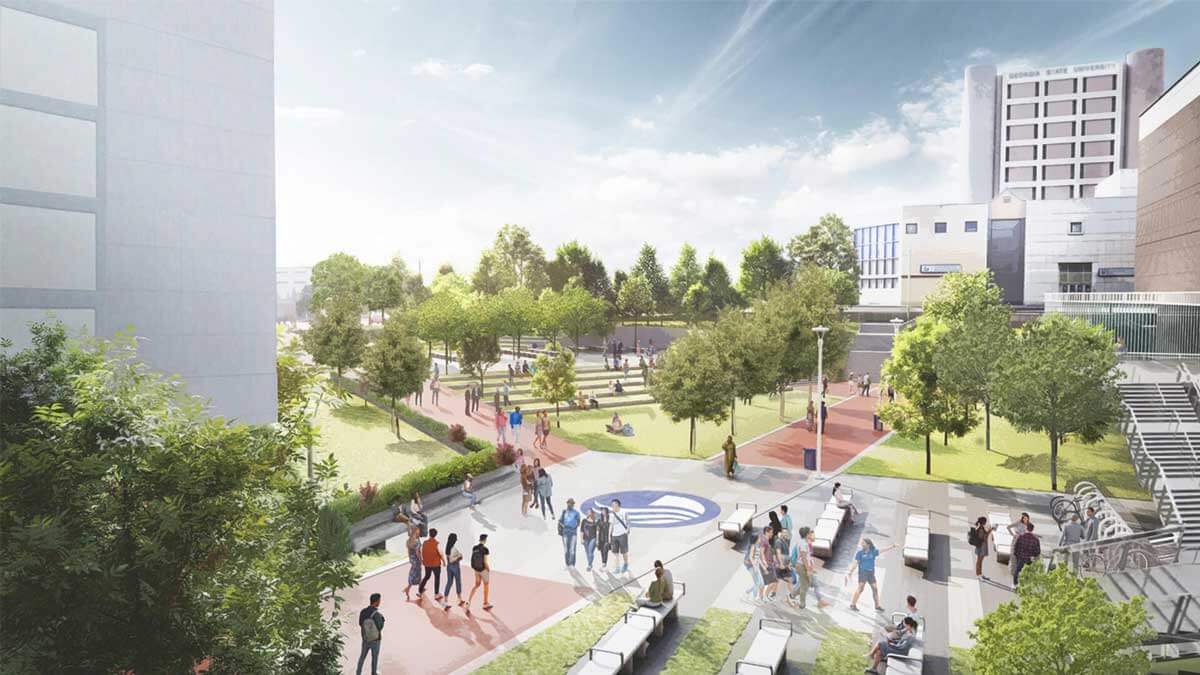


Top Left: The expanded Campus Greenway, as seen in a view toward Courtland Street, will feature a terraced area and a walkway connecting to Gilmer Street. Top Right: A view from the Gilmer Street Pedestrian Streetscape looks over the Greenway expansion to the University Library on the left. The renovated Arts & Humanities Building — with a food truck in front — is seen on the right. Bottom Left: Edgewood Avenue, connecting the Panther Quad to Woodruff Park, will also be improved. The GSU Blue Line branding will be added to the T-Deck parking garage, and a new glass façade will be added to the 58 Edgewood Building. Plans also call for streetscape improvements. Bottom Right: At Woodruff Park, new sidewalks, a realigned streetcar platform, façade improvements to the 25 Park Place building and plaza, and other pedestrian-oriented features will provide connection to Broad Street and the Aderhold Learning Center. The streetcar stop will be moved a few meters to the south, making the stairway entrance to the park more open and inviting.
Top Left: The expanded Campus Greenway, as seen in a view toward Courtland Street, will feature a terraced area and a walkway connecting to Gilmer Street. Top Right: A view from the Gilmer Street Pedestrian Streetscape looks over the Greenway expansion to the University Library on the left. The renovated Arts & Humanities Building — with a food truck in front — is seen on the right. Bottom Left: Edgewood Avenue, connecting the Panther Quad to Woodruff Park, will also be improved. The GSU Blue Line branding will be added to the T-Deck parking garage, and a new glass façade will be added to the 58 Edgewood Building. Plans also call for streetscape improvements. Bottom Right: At Woodruff Park, new sidewalks, a realigned streetcar platform, façade improvements to the 25 Park Place building and plaza, and other pedestrian-oriented features will provide connection to Broad Street and the Aderhold Learning Center. The streetcar stop will be moved a few meters to the south, making the stairway entrance to the park more open and inviting.
‘CONFIDENCE IN DOWNTOWN’
The $107 million College Town Downtown projects, also called the Building Pathways for Success Initiative, are getting a hefty show of support from one of downtown’s most prominent champions. In 2024, Georgia State announced the Robert W. Woodruff Foundation’s $80 million contribution to the project — at the time the largest philanthropic gift in University System of Georgia history — and an opportunity to dream big ahead of the 2026 FIFA World Cup.
When approached by the Woodruff Foundation in spring 2024, Georgia State President M. Brian Blake found himself with an enticing challenge: How could the foundation help facilitate Georgia State’s highest strategic ambitions and the university’s next big thing? And what could be done before the World Cup shines its spotlight on the city in the summer of 2026?
“We were confronted with an opportunity to dream a dream,” Blake says. “We were asked, ‘What could you do in two years?’”
It’s as though momentum is begetting momentum in downtown.
Metro Atlanta Chamber of Commerce President and CEO Katie Kirkpatrick urged Blake to jump at what was seen as an unprecedented opportunity and a show of support for the future of downtown, and Kirkpatrick’s group itself recently signaled its commitment to downtown by renewing its lease at the iconic 191 Peachtree Tower for a dozen more years.
“As a 166-year-old organization rooted in shaping metro Atlanta’s future, it’s important for us to be located in the center of the region,” Kirkpatrick says in a statement, as reported by the Atlanta Business Chronicle. “This renewed commitment to 191 Peachtree reflects our confidence in downtown’s continued momentum and our role in helping it strengthen.”
CENTER OF SUCCESS
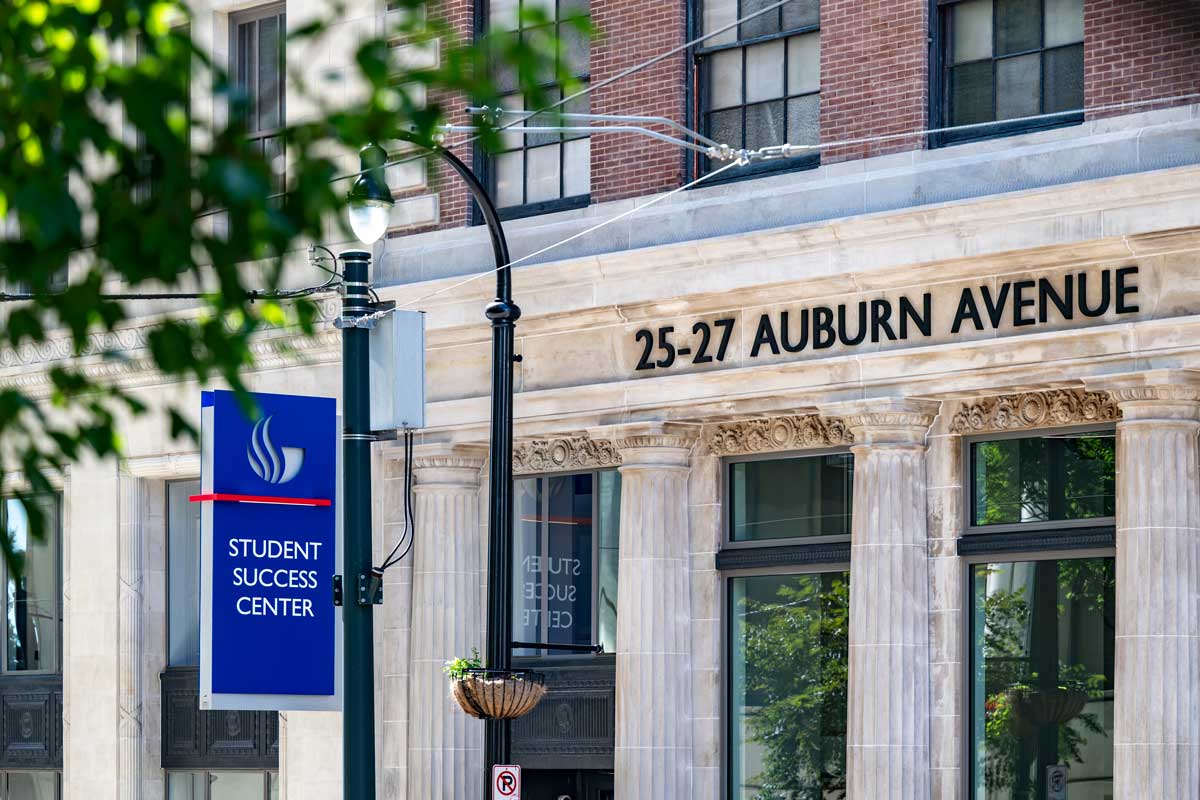
It’s not the first time the Woodruff Foundation has demonstrated, through its largesse, its support for Georgia State’s efforts to further define and secure its footprint in downtown Atlanta. In 2021, the foundation made what was then one of the largest-ever gifts to the university — $15 million — to help fund the adaptive reuse of a pair of historic, side-by-side buildings that today have been transformed into the Student Success Center.
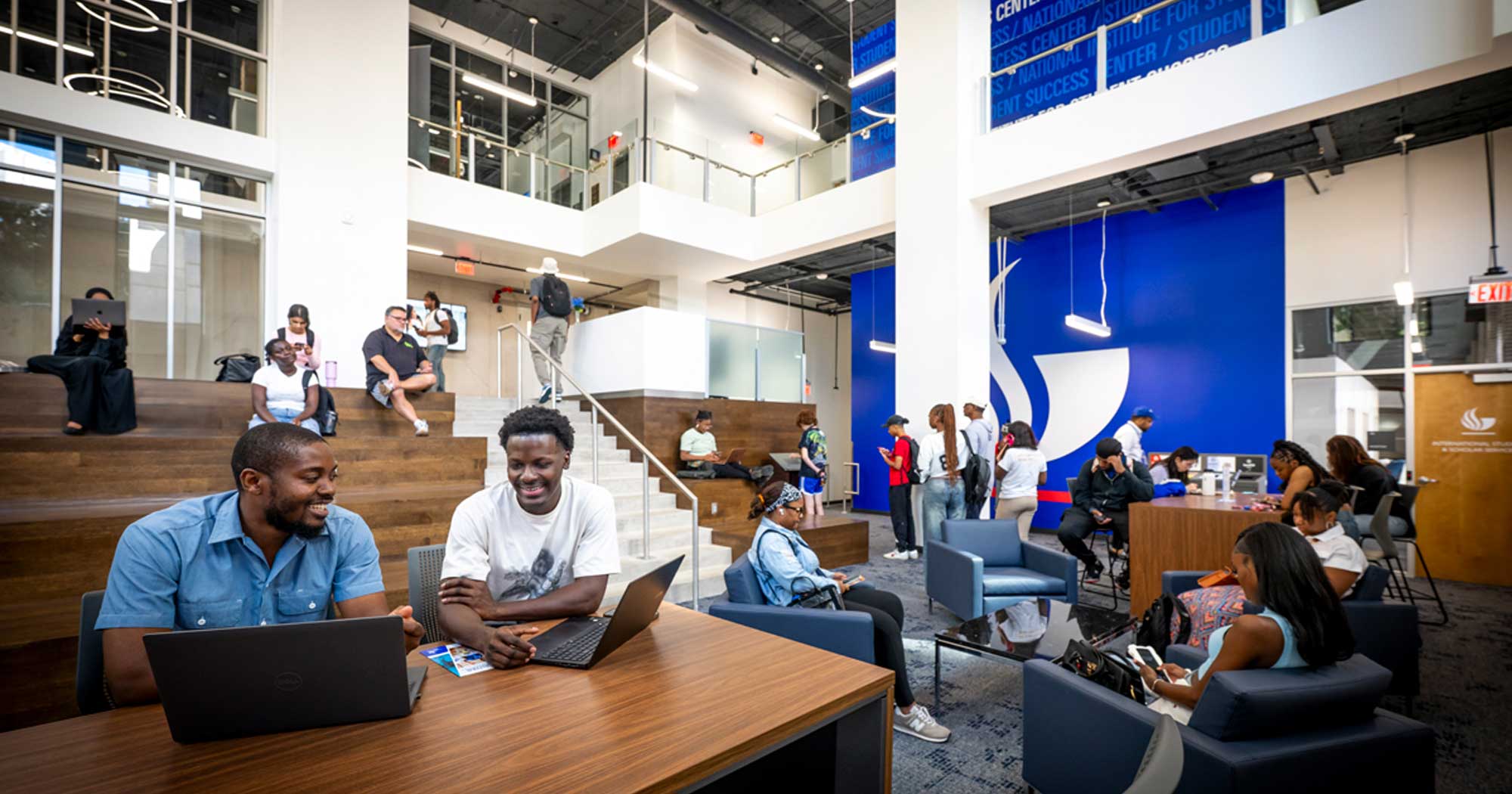
The turn-of-the-last-century 25 and 27 Auburn Ave. buildings were erected to house the massive switchboard operation needed to connect Atlanta residents and businesses in the early days of the telephone. Now also the new home of the National Institute for Student Success, the Student Success Center likewise connects and consolidates the Georgia State divisions and departments that work to ensure students learn what they need to so they can go on to earn at their full potential.
Also known as the Bell buildings, the pair sit just off Woodruff Park and represent a gateway to a corridor that served as the main artery of Atlanta’s Black life prior to and through the Civil Rights Movement. The “Sweet Auburn” corridor was home to the Top Hat Club, the Atlanta Daily World, offices for the NAACP, the Masons and the National Urban League, and Alonzo Herndon’s Atlanta Life Insurance Co. Georgia State adapted the latter into Centennial Hall for use as offices of university leaders, including Blake and Abramson, as well as its Honors College. The corridor remains home to Ebenezer Baptist and Big Bethel African Methodist Episcopal churches.
The Georgia State Foundation acquired the Bell buildings in 2007 with the purchase of the 25 Park Place complex from SunTrust. Mostly vacant since the 1980s, the first of the two structures was built in 1907 by Southern Bell Telephone and Telegraph Company, with an expansion to the building’s east added in 1922.
Thanks in part to the $15 million gift from the Woodruff Foundation, the buildings are gaining new life through a $37.8 million renovation project that keeps in place vestiges of their past, including important architectural features, such as staircases, windows and a three-story lobby.
“It’s been boarded up for 30 years, and it’s nice to be able to reclaim a building,” says Allison Calhoun-Brown, Georgia State’s senior vice president for Student Success and chief enrollment officer. “But more than that, we’re able to create purpose and serve students in the building, so we’re excited about that.”
With a grand opening slated for Oct. 7, many of Georgia State’s student-facing offices have moved to the Student Success Center, including the enrollment and registration arms of the Registrar’s Office, the Student Financial Management Center, International Student and Scholar Services, and Supplemental Instruction. Additional student support services, such as University Career Services and two floors dedicated to student advisement in the 25 Park Place building, the 28-story former SunTrust tower, are within less than one block of the Student Success Center. The annex of the SunTrust tower itself, which looks onto Woodruff Park, became Georgia State’s Creative Media Industries Institute in 2017 thanks to another transformational $22.8 million gift from the Woodruff Foundation. It was an investment in workforce development to serve Georgia’s growing entertainment industry, and an investment in downtown itself.
As 80 percent of Georgia State’s graduates remain in the state to live and work, the Student Success Center, likewise, is an investment in the students who will make up Georgia’s future workforce and in an historic downtown structure. The consolidation of student-facing administrative units there also means many of the ways students interact with Georgia State — instead of being spread across seven different buildings — are either under the same roof or merely across the street, creating a student-focused hub on the university’s sprawling Atlanta Campus previously unknown.
“A lot of times students would have to do what we call the ‘Panther Shuffle’ going back and forth between offices,” Calhoun-Brown says. “Now that won’t be the case.”
SITED FOR IMPACT
The National Institute for Student Success (NISS), created in 2021, grew out of Georgia State’s pioneering and nationally renowned work to increase completion rates and erase achievement gaps based on race, ethnicity and income.
Created in response to overwhelming demand from college leaders across the country looking to emulate Georgia State’s student success strategies, the NISS has since partnered with more than 130 colleges and universities, including all University System of Georgia institutions, to help them identify and eliminate institutional barriers to college completion.
“At GSU, we found that we can be our own worst enemy. Many of the administrative and bureaucratic structures we have in place are the very reason a lot of students wind up dropping out,” says Timothy M. Renick, the founding executive director of the NISS and former head of Georgia State’s Student Success division.
“At the NISS, we work with colleges and universities to identify their administrative barriers, develop a playbook with customized recommendations for addressing these bottlenecks and then partner with them for one to three years offering implementation support.”
Some of Georgia State’s and the NISS’ most well-known student supports include a big-data approach to proactive advising, with staff reaching out to offer struggling students additional resources often before they even know they’re struggling. Georgia State also pioneered for higher-education the use of predictive analytics and AI-enhanced chatbots to help students navigate processes like financial aid and registration.
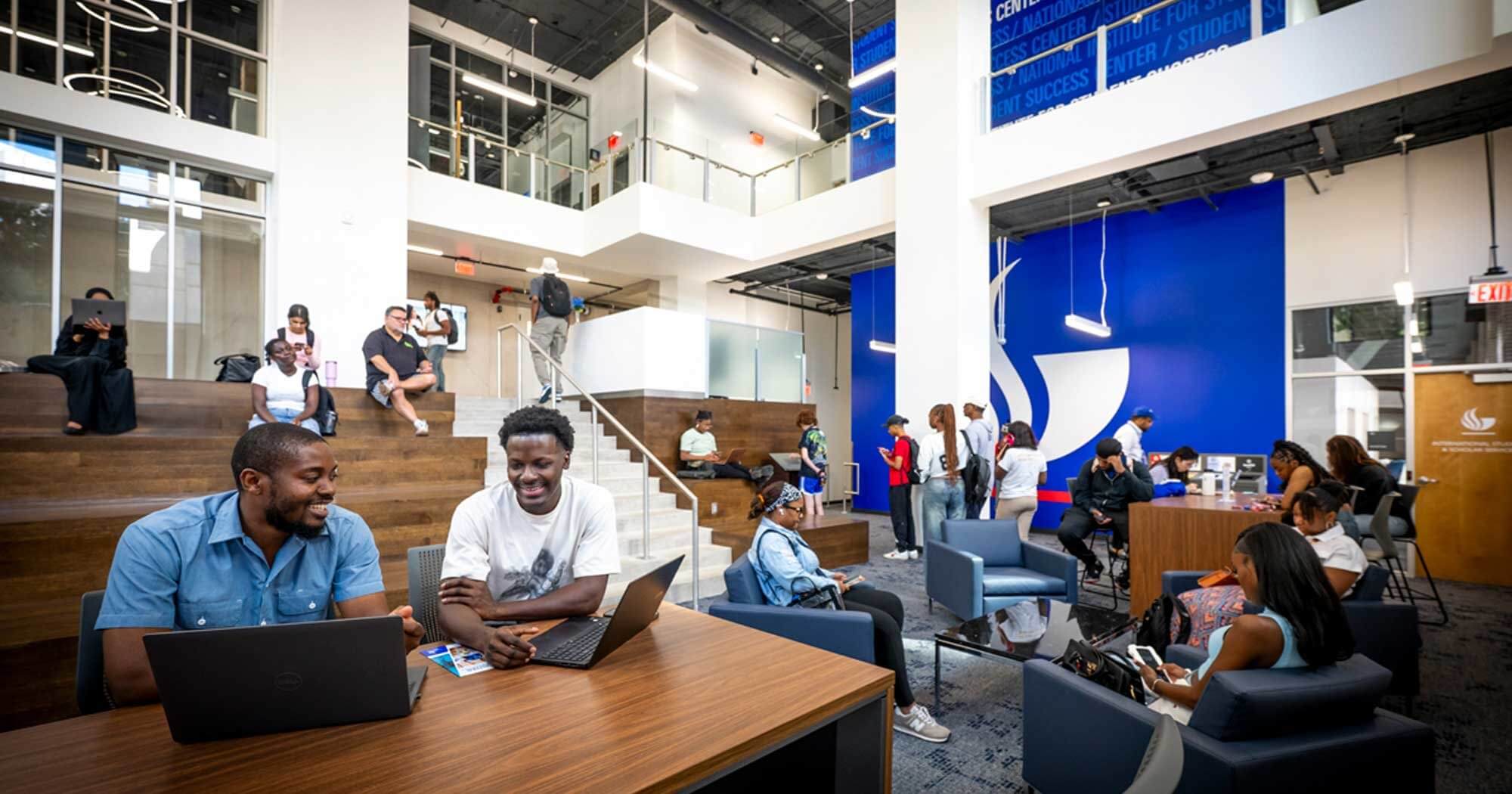
Renick says space in the new Student Success Center — under the same roof as the organizations serving Georgia State students on a day-to-day basis — will allow the NISS to develop, test and promulgate nationally the next generation of tools and strategies that will help students get to and across the finish line.
“What more fitting place to have the NISS headquartered than on Auburn Avenue,” he says.
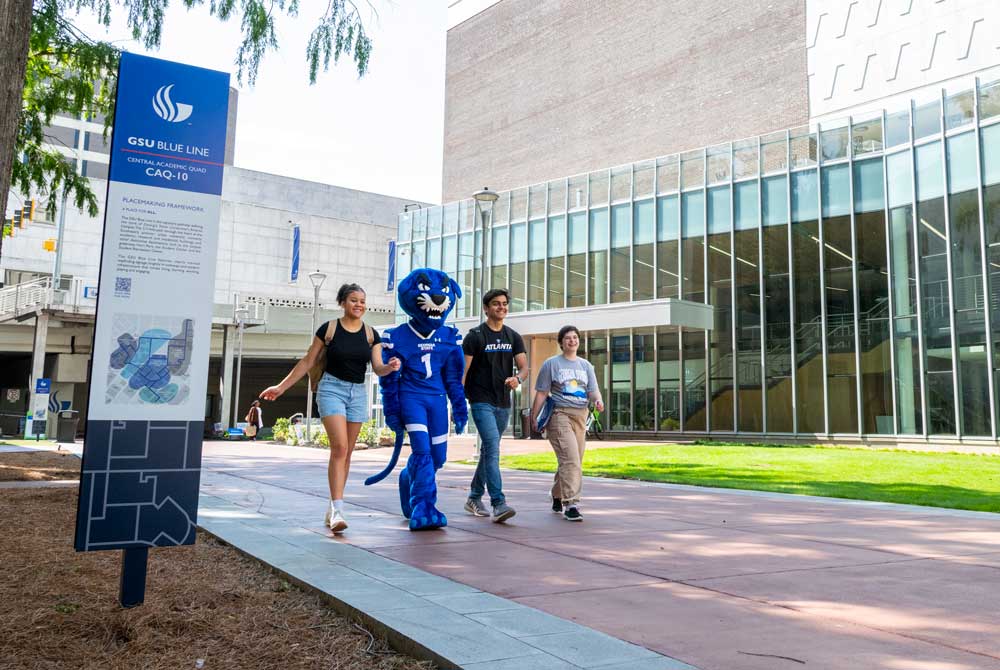
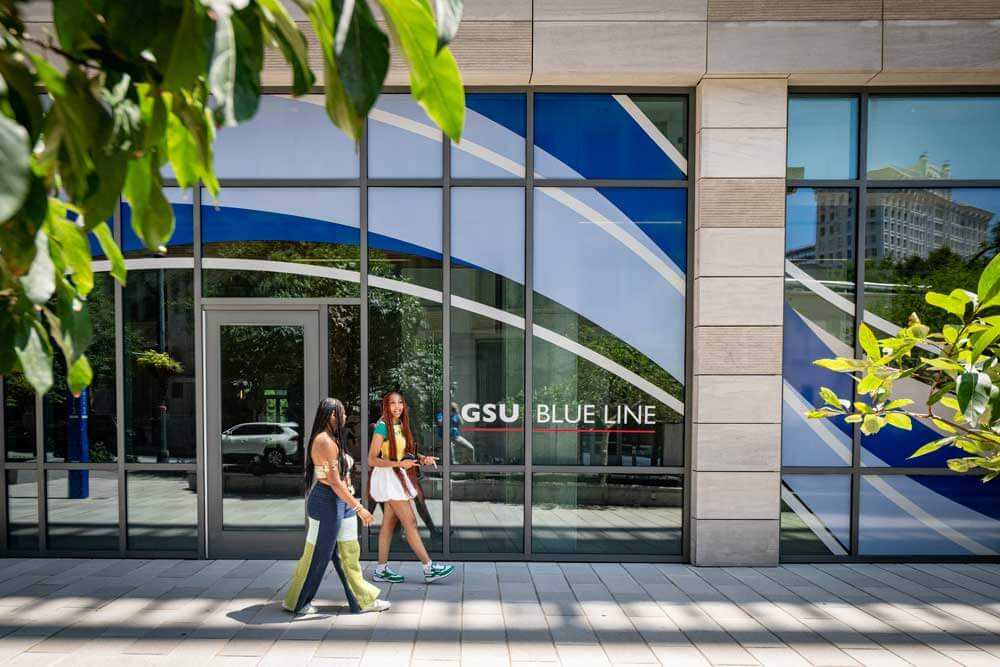
Left: The Campus Greenway serves as both a connection among important campus buildings, like the University Library seen on the right, and a destination for socializing, studying and building community. Right: Waves of Georgia State blue mark the path along the GSU Blue Line, indicating an enhanced experience that includes wayfinding tools and monitoring technology.
Left: The Campus Greenway serves as both a connection among important campus buildings, like the University Library seen on the right, and a destination for socializing, studying and building community. Right: Waves of Georgia State blue mark the path along the GSU Blue Line, indicating an enhanced experience that includes wayfinding tools and monitoring technology.
DEFINING THE CORE, ENHANCING SAFETY
Part of just the first phase of a raft of security and infrastructure enhancements, the GSU Blue Line acts as a thread tying together Georgia State’s myriad projects, from the triangular-shaped Hurt Park to the College of Law on the north end and the Science-Sports Quad on the south end.
Along the path are waves of Panther blue splashed across GSU building windows, signposts with maps, directions and QR codes to highlight points of interest and to help with wayfinding, and enhanced lighting and emergency call boxes.
“And we’re not done,” Abramson says. “Phase 2 enhancements are in the works, including branded crosswalks and sidewalks, so you always know when you’re on campus and your experience is monitored and secured by these recent infrastructure investments.”
Georgia State is in the process of adding new monitoring technology, including license plate readers and noise-detection devices, and upgrading more than 1,100 campus security cameras with artificial intelligence-enhanced technology that will yield faster response times for police and security personnel. The cameras include motion- and object-detection capabilities, crowd-size detection, and features that allow for heat mapping and people counting to help with occupancy management.
The cameras will work in tandem with Panther Places — designated spaces open and staffed 24/7 — along with other recent updates to access-control systems, lighting and other resources, to promote a safe environment along the GSU Blue Line and on campus at-large.
According to GSU Police Chief Anthony Coleman, the GSU Blue Line and campus safety initiatives undertaken in the past two years have led to a marked drop in campus incidents.
“The campus security and infrastructure upgrades have helped reduce the number of crimes around campus, particularly in our residential areas,” Coleman says. “When incidents are observed or reported, our improved systems and collaboration with the city and neighboring business partners allow for a quicker and more effective response.”
EXPANDING A SPORTS COMPLEX

As Georgia State works to transform its downtown footprint, it’s simultaneously transforming an area south of Interstate 20 into a three-sport athletic complex. And one of the newest additions to the Summerhill neighborhood will, for the first time in nine years, bring baseball to the former home of Braves country.
With plans to break ground soon on the new 1,000-seat baseball park along Summerhill’s Pollard Boulevard, GSU will be reimagining and, in a sense restoring, the site formerly home to Atlanta-Fulton County Stadium. Demolished following the Centennial Olympic Games, it’s where the Braves played from 1966 to 1996 before moving to Turner Field, which had been built initially as a venue for the Games, including its opening and closing ceremonies.
Atlanta-Fulton County Stadium is also where batting legend Hank Aaron bested Babe Ruth’s homerun record, smacking his 715th career homer April 8, 1974.
Since its 1997 implosion, the site has been used for parking.
The GSU baseball park, with a budget of $15.85 million, will be funded by Panther Athletic Club gifts and reserves, and Georgia State University Foundation funds and gifts, and include facilities for concessions, restrooms and a press box. The lighted, artificial turf field will be easily accessible via Panther Express shuttle bus service for GSU students, faculty and staff, and allow the Panthers to bring baseball in from its current Panthersville home 12 miles east.
In doing so, the baseball team will join Panthers football and men’s and women’s basketball as part of a three-part sports complex embedded in and revitalizing the Summerhill community.
GSU head baseball coach Brad Stromdahl and his team are abuzz about the new facility, which he says has already proven to be a tool in wooing prospects and retaining players on his current roster.
“We’ve got a top-25 recruiting class that can take us into the new stadium. We’re expecting to build on the success we’ve had the last couple of years, and our goal is to take the excitement of the new stadium and go to an NCAA regional. We want to have a watershed moment,” he says.
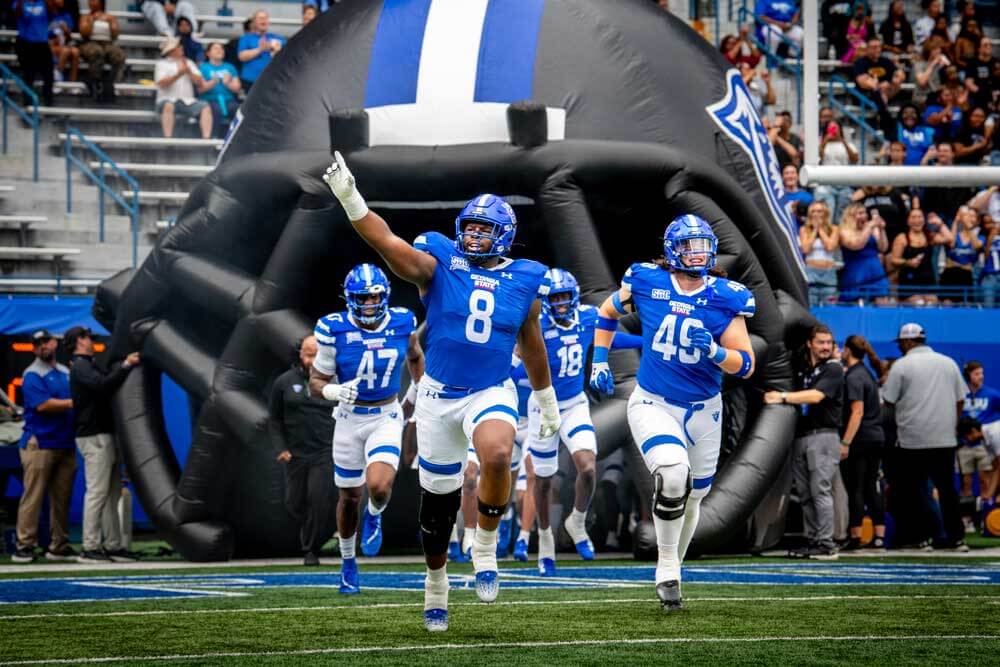
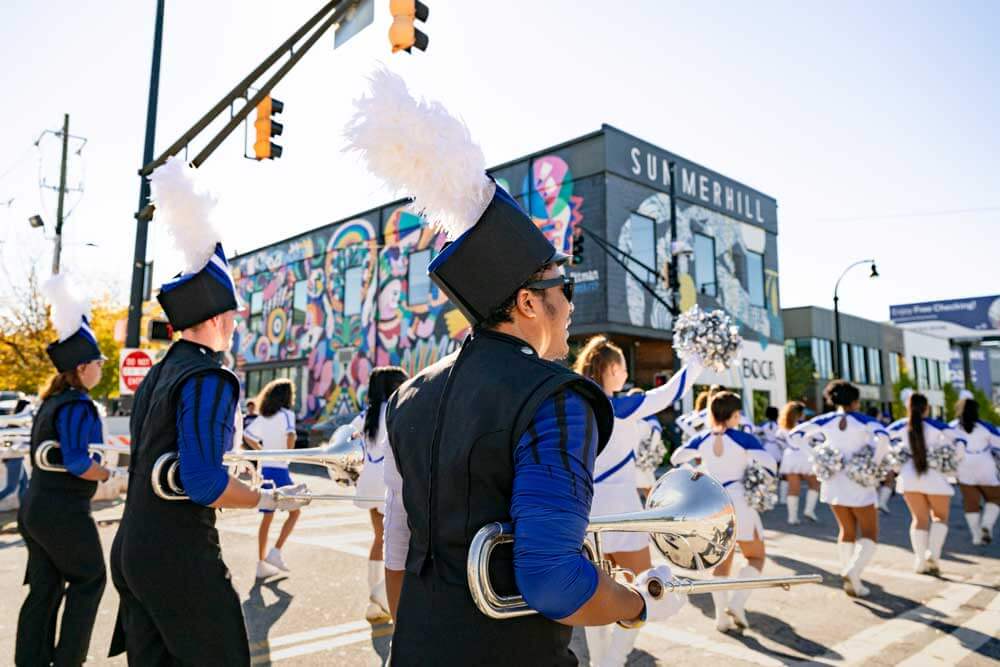
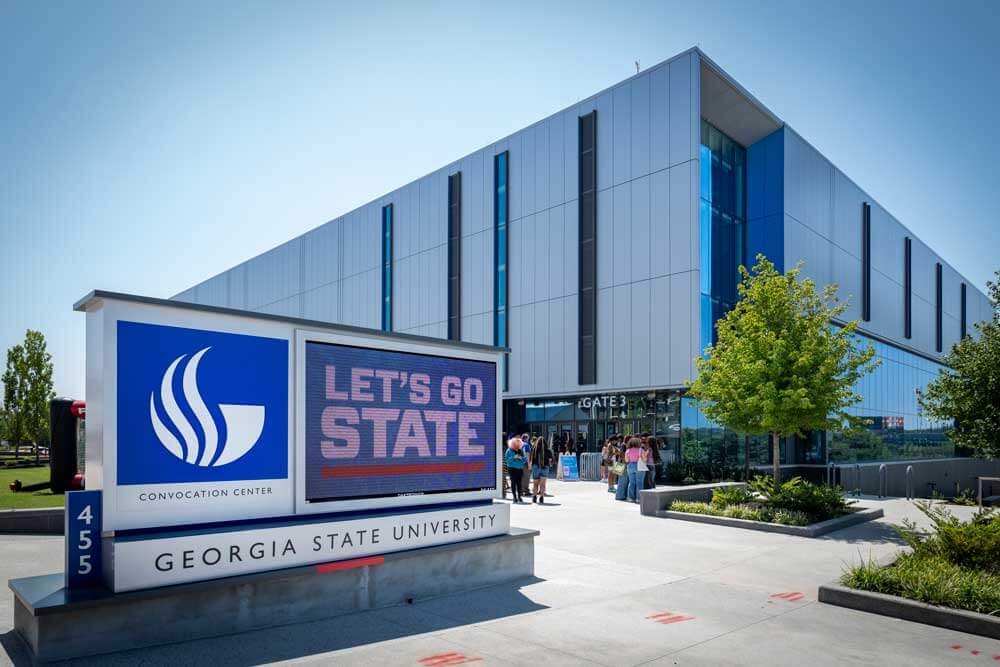
Top left: The Georgia State Panthers run out onto the field at Center Parc Stadium, which Georgia State acquired from the Atlanta Braves and reimagined as a football stadium and anchor point in the Summerhill community. Top right: The Panther Band brings the Georgia State experience to Summerhill. Bottom left: Just north of Center Parc Stadium, Georgia State opened its 8,000-seat Convocation Center in 2022. Bottom right: As Georgia State's presence in Summerhill has expanded, residential and commercial investment has followed.
Top left: The Georgia State Panthers run out onto the field at Center Parc Stadium, which Georgia State acquired from the Atlanta Braves and reimagined as a football stadium and anchor point in the Summerhill community. Top right: The Panther Band brings the Georgia State experience to Summerhill. Bottom left: Just north of Center Parc Stadium, Georgia State opened its 8,000-seat Convocation Center in 2022. Bottom right: As Georgia State's presence in Summerhill has expanded, residential and commercial investment has followed.
Building a new home for Panthers baseball won’t be GSU’s first effort at repurposing a former home of the Braves or completing an adaptive-reuse project in Summerhill.
In 2016, Atlanta’s beloved navy and scarlet-red home team moved out to the suburbs of Cobb County, to what’s now Truist Park, leaving famous Turner Field up for grabs. Eyeing an opportunity to grow its campus presence and help revitalize the Summerhill neighborhood, GSU teamed up with Atlanta-based real estate investment and development firm Carter to purchase the storied MLB facility, along with more than 65 surrounding acres. Turner Field became a 25,000-seat stadium for GSU football starting with the 2017 season, and the headquarters for the university’s athletic program.
GSU kept the momentum going, transforming a 6-acre lot (part of the previous 65-acre acquisition) just north of its new football turf into the 8,000-seat Convocation Center. The event venue, opened in 2022 on a site once home to a collection of Georgia Department of Driver Services mobile offices, is the new arena for men’s and women’s basketball, as well as important university events, like commencement and First-Year Convocation.
In 2020, the football stadium became Center Parc Credit Union Stadium as part of a 15-year naming rights agreement, while the university recently announced it’s exploring potential naming-rights partners for the Convocation Center.
“This naming opportunity for our Convocation Center is the next step in strengthening our nationally recognized brand with a corporate partner who shares our vision for community engagement, urban development and economic impact,” says Abramson. “Georgia State is Atlanta's university. And I’ll quote the great Ambassador Andrew Young: ‘If you know Atlanta, you know Georgia State.’”
Baseball’s upcoming addition will mark the third installment in what has become a sports complex for the university — and a catalyst in Summerhill’s ongoing metamorphosis. Co-locating three of its NCAA Division I varsity teams minutes from its downtown campus is just more evidence of the Identity, Placemaking and Belonging initiatives in GSU’s 10-year strategic plan at work.
Like football and basketball, GSU foresees its home baseball games (35 to 37 per season) driving more people to Summerhill, which has been a magnet for new restaurants, retail and foot traffic in the past eight years. The increased activity will also increase opportunities to engage students and the local community in the Panther culture, with a shared sense of pride.
“Athletic events create a presence in the neighborhood, they help highlight GSU branding and visibility, and they provide an opportunity for faculty, staff and students to interact in more informal settings,” says Georgia State Athletics Director Charlie Cobb. “And that’s when placemaking starts to really make sense.”
SCIENCE-SPORTS QUAD
Back on the GSU Blue Line, placemaking efforts are at work even in the creation of what will be a triumvirate of state-of-the-art research facilities situated on a single parcel of land, the final piece of which is already under construction.
The Science-Sports Quad, comprised of the Petit Science Center and the Research Science Center along with Georgia State’s Sports Arena and Beach Volleyball Complex, anchors the GSU Blue Line in the Piedmont/Decatur Street area, and will soon be home to the university’s newest structure, the nine-story Research Tower.
The $100 million building, representing a crucial step forward in another of Georgia State’s strategic plan pillars — Innovating Research, Scholarship and Creative Activity — will deliver 155,000 square feet of updated laboratories, core facilities and modern teaching environments. The completion of the structure will establish a research-oriented complex that will generate not only new discoveries, but a sense of community.
“We’re not just adding a building,” Abramson says. “We’re also being very intentional about aligning our work to the Identity, Placemaking and Belonging pillar of our BluePrint to 2033 strategic plan. So the complex will include an inner courtyard featuring a comfortable greenspace in line with the strategic goals of expanding research and creating a sense of space and belonging for one of the nation’s fastest-growing research portfolios.”
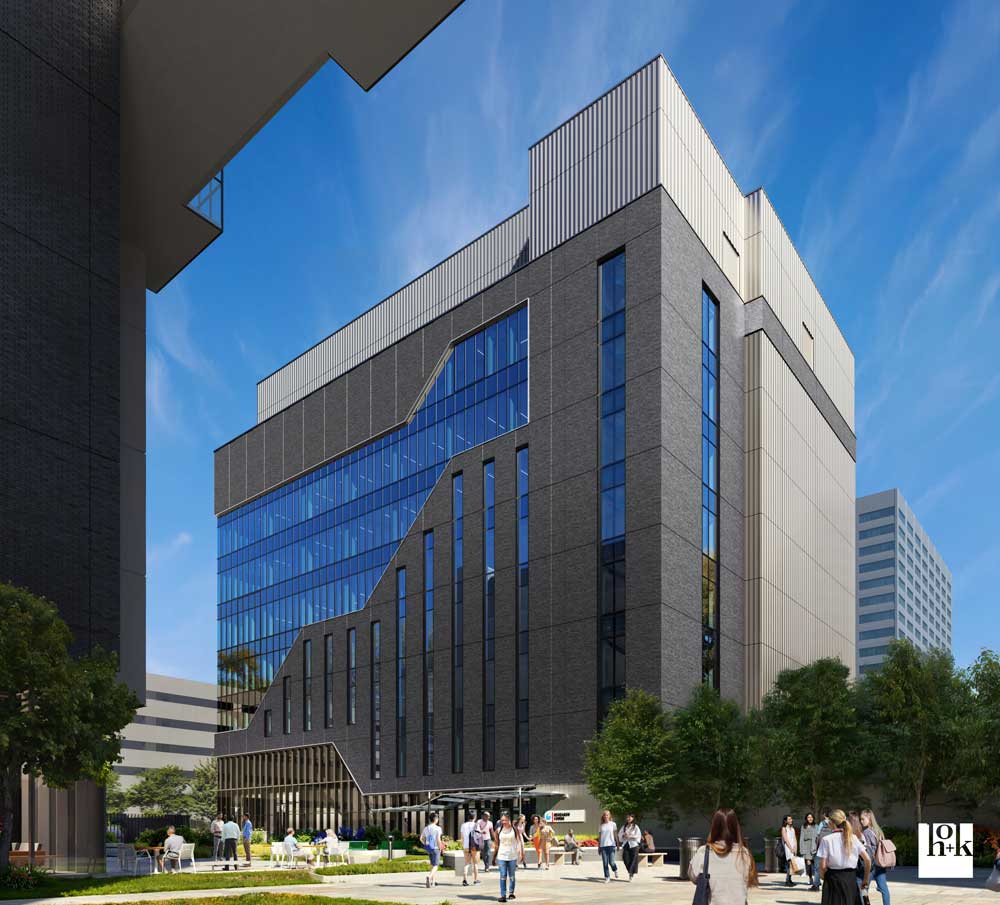
Left: A rendering of the nine-story Research Tower shows a ground-level courtyard aimed at enhancing a sense of community and collaboration among Georgia State's world-class research faculty and staff. Right: The $100 million Research Tower is well underway and will complete a three-facility research complex positioning Georgia State to investigate and solve society's biggest challenges.
Left: A rendering of the nine-story Research Tower shows a ground-level courtyard aimed at enhancing a sense of community and collaboration among Georgia State's world-class research faculty and staff. Right: The $100 million Research Tower is well underway and will complete a three-facility research complex positioning Georgia State to investigate and solve society's biggest challenges.
Rated by the Carnegie Classification of Institutions of Higher Education as an R1 university, with “Very High Research Spending and Doctorate Production,” research expenditures at Georgia State have more than doubled in recent years, growing from just over $91 million in 2012 to over $215 million in 2022.
“We are deeply committed to growing infrastructure that serves our students, faculty and research community,” Provost and Executive Vice President for Academic Affairs Nicolle Parsons-Pollard says. “This facility represents the next step in providing the resources needed to excel in a rapidly changing world.”
Donald Hamelberg, who was recently appointed vice president for Research and Economic Development, noted the university’s research community is a driver of economic growth and job creation in the state of Georgia, and helps make the state a competitive research and innovation environment.
“The Research Tower expands both our facilities and our potential for impact,” he says.
And realizing Georgia State’s potential — the potential of its students, of its research discoveries and of the creative endeavors of its community — is the driving force behind the university’s every step. From creating and re-creating physical spaces to curating and enhancing experiences to preparing its students for the future they’ll shape, the university is expanding its impact on a rapidly changing Atlanta and a rapidly changing world.
— Maya Kroth, Torie Robinette Durham and Amanda Dobbs contributed to this article.