

CREATING SPACES
The development of six Panther Quads — one each on Georgia State’s Atlanta Campus and five Perimeter campuses — is among the 20 initiatives outlined as part of the university’s BluePrint to 2033 strategic plan.
The Panther Quad on Perimeter’s Clarkston Campus (above) is the first to be completed — this month — while the Panther Quad on the Atlanta Campus is already underway with the demolition of Sparks Hall.
“Our strategic plan calls on us to intentionally create spaces across all our dynamic campuses that strengthen connection and foster a true sense of belonging for every student,” Georgia State President M. Brian Blake said April 22 at the ribbon-cutting event marking the completion of the Clarkston Panther Quad. “This commitment is reflected in ‘Identity, Placemaking and Belonging,’ one of the central pillars of our strategic plan. These are spaces designed to encourage learning, studying, collaboration and community, and to create environments where people truly want to spend time.
“This Panther Quad reflects our commitment to the plan in action. This quad space was designed to be a welcoming place where students gather between classes, study together under the magnolia trees, celebrate milestones, gather before performances, host numerous events and build lasting memories for generations to come.”
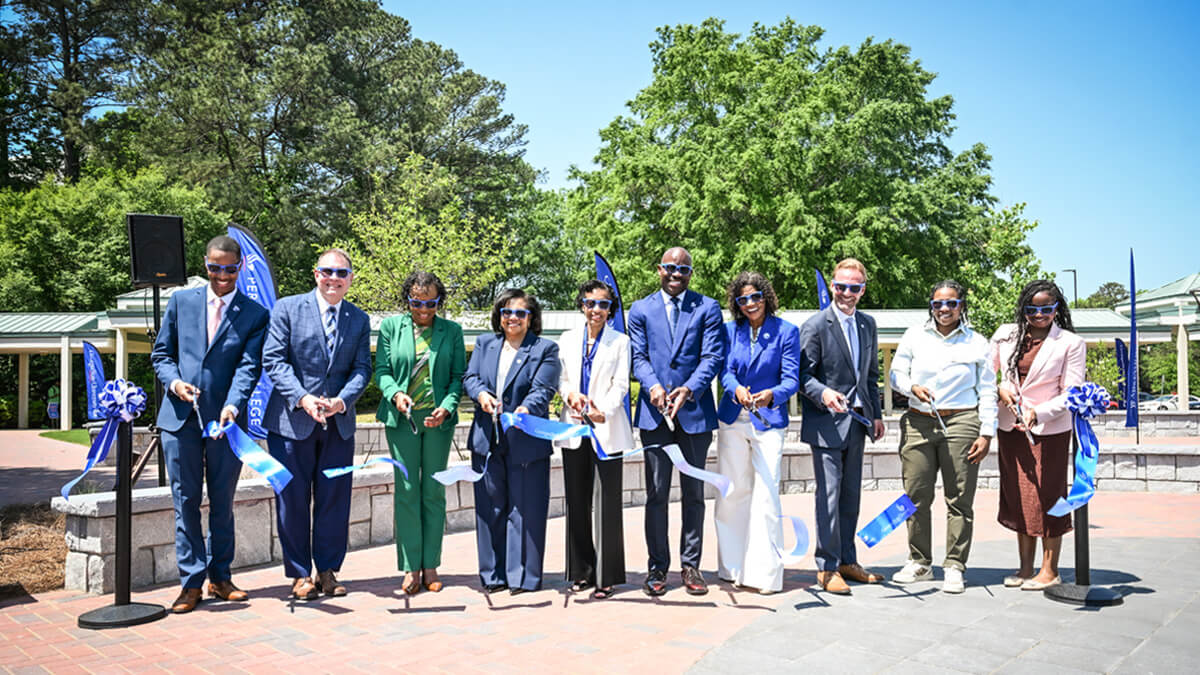
The Panther Quad on the Clarkston Campus, between the CF and CE buildings, features a number of long, curved knee walls to provide plenty of seating, along with outlets for powering laptops and mobile devices. The quad also features new landscaping and lighting enhancements, and wiring for sound, lights and a stage.
“The goal of the Identity, Placemaking and Belonging pillar of our 10-year strategic plan is to create inviting, accessible, safe and rewarding spaces on our campuses for members of our community — places they are comfortable learning, studying, working and connecting,” said L. Jared Abramson, Georgia State’s executive vice president and chief operating officer.
“Developing the Panther Quads will help us achieve that goal by providing central community gathering spaces where placemaking and community-building happen.”
The work on the Clarkston Campus was done in conjunction with another project to enhance the campus’ north entrance, north of the CF Building.
“The new Panther Quad on the Clarkston Campus reflects our commitment to fostering an engaging environment where students feel connected to campus life,” Perimeter College Dean Barbara J. Johnson said. “The space was designed to enhance the overall student experience by providing a welcoming gathering place where students can collaborate, build meaningful relationships and strengthen their sense of belonging. I am so excited about the many ways that the Panther Quads will support learning, spark creativity and cultivate a deeper, more vibrant campus experience for students, faculty and staff.”
University officials are developing conceptual designs for Panther Quads on the Alpharetta, Dunwoody, Decatur and Newton campuses.
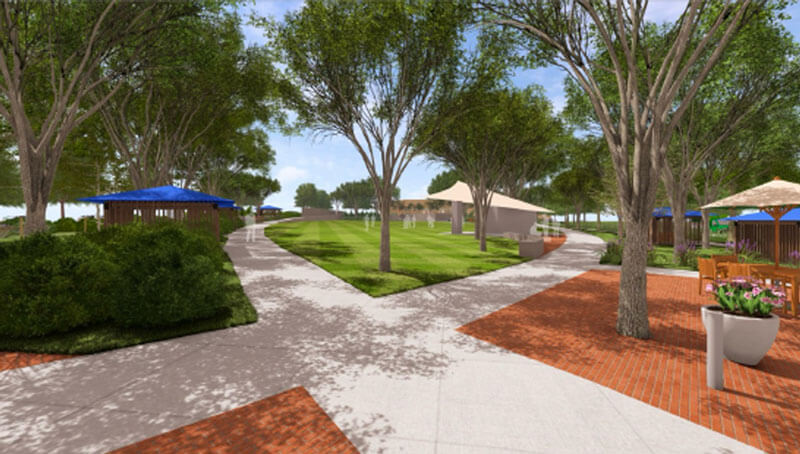
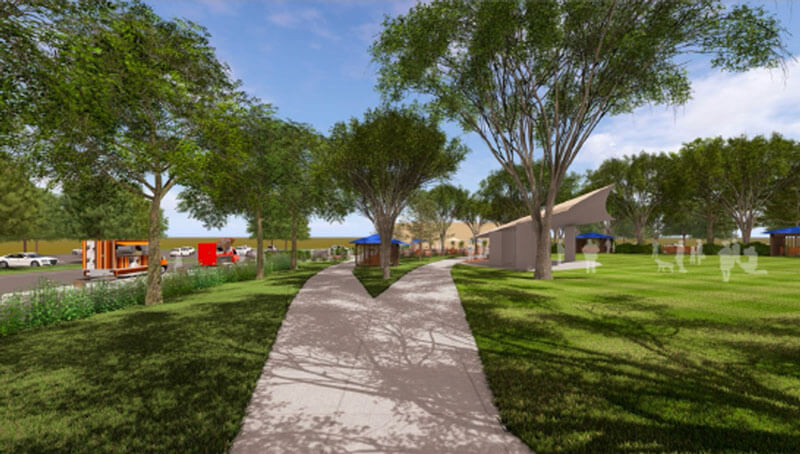
Each Panther Quad will be uniquely Georgia State, with consistent signage and other features — notably, a Bronzie statue for each Perimeter campus to replicate the Panther mascot overlooking the Atlanta Campus Student Center — but university officials are also working with leaders in the communities surrounding each Perimeter campus to reflect the personalities of those communities.
The Panther Quad on the Atlanta Campus will be a focal point of the Central Academic Quad, one of five neighborhoods across Georgia State’s 100-acre downtown footprint stitched together by the GSU Blue Line.
The Central Academic Quad provides connection among the University Library, Langdale Hall, Georgia State’s Arts & Humanities Building and the Student Center.
At the heart of it, the Panther Quad is taking shape as Sparks Hall is removed.
“We’re taking a phased approach to the downtown Panther Quad,” Abramson said. “We have to be strategic, because we want to maintain areas for our students to gather and socialize now, while the project is ongoing. But there will be visible progress when students return to campus in fall 2026.”

The removal of Sparks Hall, Georgia State’s first purpose-built building, signals a turning point in the university’s evolution and progress. Built in 1955, the building was also the first in the University System of Georgia to incorporate air conditioning, and in 1960 was named for George M. Sparks, who served as president of the institution from 1928 to 1957. Until Sparks Hall was completed, Georgia State had taken over and converted numerous buildings downtown as its enrollment expanded, a legacy that continues into the 21st century with adaptive reuse projects like the 25-27 Auburn Ave. building, which is now the Student Success Center.
With Sparks Hall removed, Georgia State’s Campus Greenway will connect across Gilmer Street to Atlanta’s Hurt Park, which Georgia State renovated and reopened in 2022 and continues to maintain and program.
A signature feature of the Atlanta Campus Panther Quad will be the Sparks Column, a freestanding monument constructed of the white Georgia marble panels that once clad the building. The monument is designed to pay homage to the man and the building where generations of students learned.
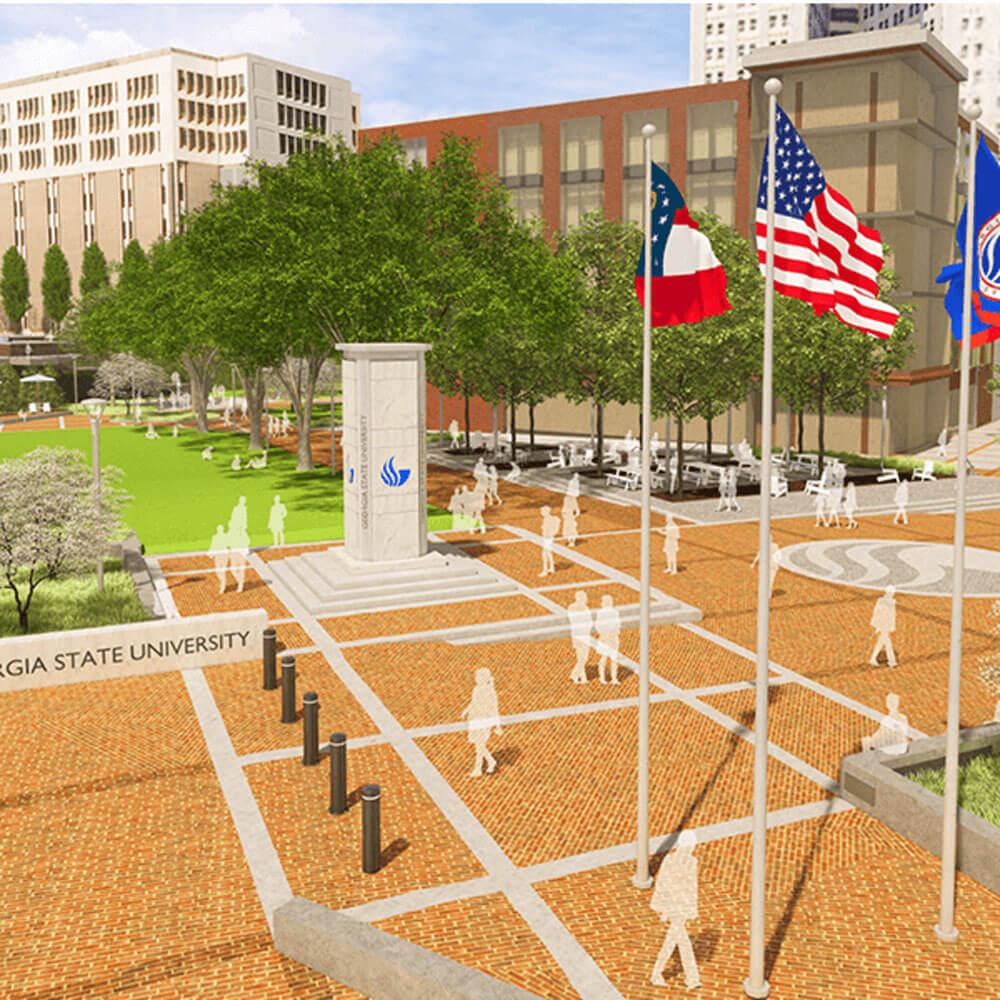
With Sparks Hall removed, a new addition and façade will rise on the Arts & Humanities Building, which is home to Kopleff Recital Hall and the Ernest G. Welch School Galleries and will face into the Panther Quad.
“The idea is to turn the Arts & Humanities Building in a showpiece at the center of campus where we can highlight the incredible artistry of our students,” Abramson said. “We’re in the design phase right now, but it will have a grand lobby befitting of our students’ talent, and it will be night and day in terms of the experience we expect people to have there once it’s complete.”