
For much of 2023, an American timber company advanced their plans to build a log fumigation plant in Liberty County, Ga., a coastal area southeast of Savannah connected to the Atlantic Ocean through delicate marshland and tidal waterways.
The company requested a permit from the state to release up to 10 tons of methyl bromide, a pesticide linked to birth defects and ozone layer damage, into the low country air each year as part of their operations. The plant’s proposed emissions output would be among the highest levels in the nation, and its environmental effects were set to fall on the majority Black community of Riceboro, located between Savannah, Georgia and Jacksonville, Fla., known for their rich Gullah Geechee heritage.
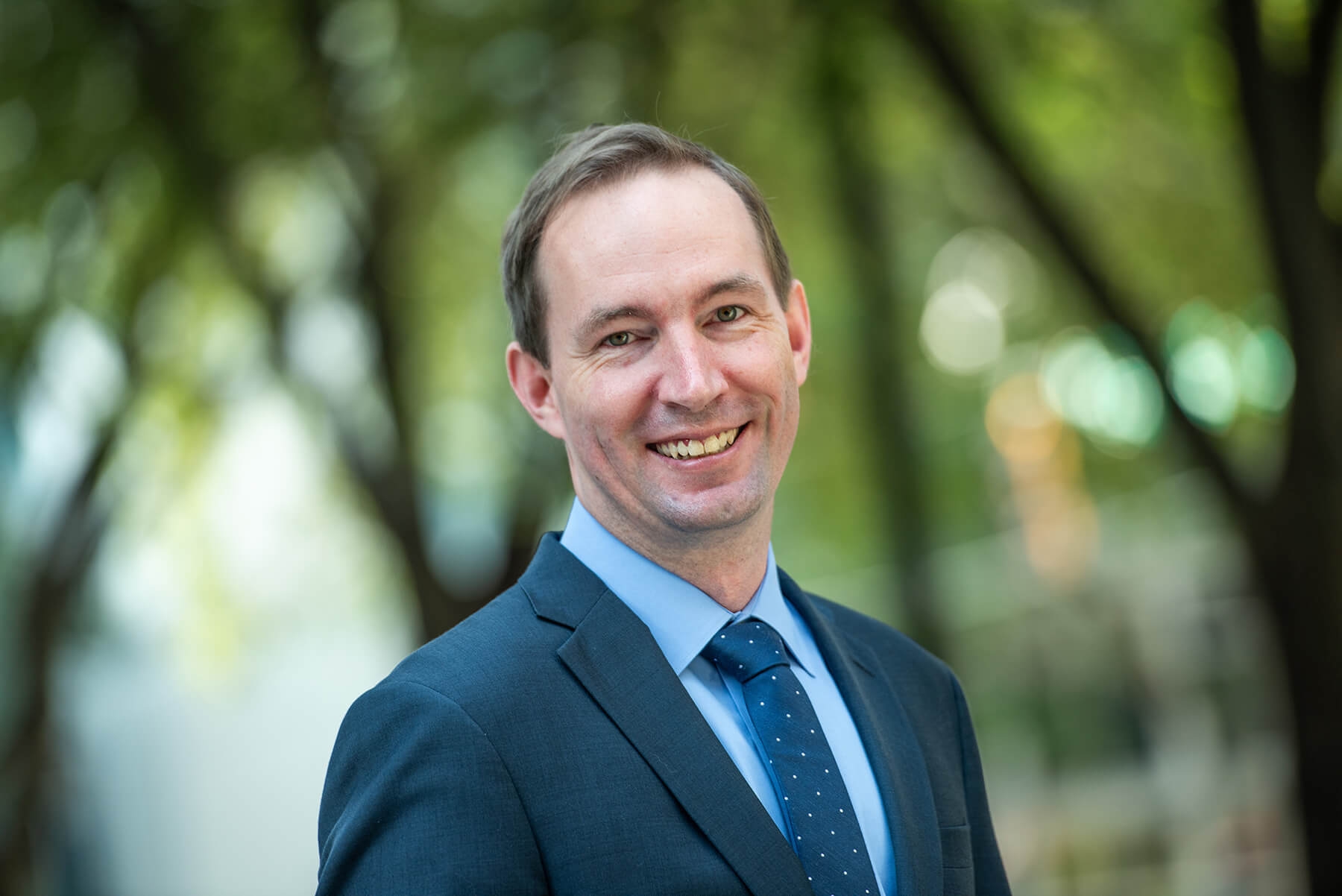
After learning about the requested permit, Senior Attorney Patrick Anderson (J.D. ’17) stepped into action with a team from the Southern Environmental Law Center (SELC), preparing statements that outlined the substantial health risk to Riceboro residents and the land they lived on.
But Anderson was not aiming to be heard in a courtroom. Instead, those statements were delivered to local Riceboro community leaders, giving them the resources to contact their elected officials and work together to make the community voices heard.
The Riceboro residents amplified their concerns so effectively that the company canceled its permit request only two months after it was submitted, and the company withdrew all plans to build on the site.
For Anderson, that victory belonged to the community of Riceboro. The outcome confirmed a belief he carried from the time he enrolled at Georgia State University College of Law: that the strongest environmental advocacy happens when communities are at the heart of the process.
A Foundation in Community-Centered Advocacy
Anderson entered law school with a life-long interest in protecting the kinds of places he had grown up around. Raised at the foot of Pikes Peak in Colorado, he spent much of his childhood near what he describes as a "wonderful swath of nature and public lands."
"My interest in environmental law originally came from a desire to protect special places, especially through urban planning law, which is what drew me to Georgia State in the first place," Anderson said.
As a student, he worked with Atlanta Legal Aid on matters regarding local flooding, urban gentrification and how those issues affect local residents.
“Once I saw firsthand that public interest attorneys could have a real impact through enforcing environmental laws, I was totally hooked,” he said.
Anderson pursued additional opportunities that connected legal education and public service while attending law school. He was selected for the Urban Fellows Program, an interdisciplinary initiative from the Center for the Comparative Study of Metropolitan Growth (Metro Growth) designed to help students explore legal issues that affect urban areas.
As an Urban Fellow, Anderson heard from local officials, planners and community decision-makers about legal, political and practical issues facing local governments like transportation infrastructure backlogs and affordable housing among other municipal concerns. Urban Fellows classroom simulations challenged Anderson to navigate the competing interests that shape local governance and prepared him to communicate legal solutions to the communities they serve.
Through the program, he found a mentor in Professor Ryan Rowberry, the Janice C. Griffith Chair in Law and co-director for the Metro Growth Center, who reinforced ideas of engaging the public in local advocacy from the classroom.
For professors like Rowberry, preparing students to practice environmental law means not only teaching the statutes and regulations, but also helping them understand how legal decisions affect communities.
“Community engagement is critical to achieving sustainable outcomes in environmental law,” said Rowberry. “Without the buy-in of the local community, any policy or program will fail, because the local community needs to take ownership for it to succeed.”
Rowberry saw those same principles reflected in Anderson during his time as a student.
“Patrick was always a concerned and thoughtful student with a focus on helping others,” said Rowberry. “It is not a surprise to me that he would use his time and skills to advocate on behalf of others in the chance that it could improve the lives of many. He exemplifies the very best of legal rigor and a service-oriented mindset.”
That commitment to community-centered advocacy has continued throughout Anderson’s career. At SELC, Anderson combines the legal experience he developed throughout his career with the community-focused approach that took shape at Georgia State Law, working to ensure that industrial polluters comply with the Clean Air Act.
While Anderson's imagined protecting local lands when he started law school, the evolution of his practice to protecting the air we breathe is something he welcomes.
"The lesson I'd pass on to law students is that you may not end up practicing the kind of law you planned on when you started, but if you're lucky, you may find something even more fulfilling," Anderson said.