
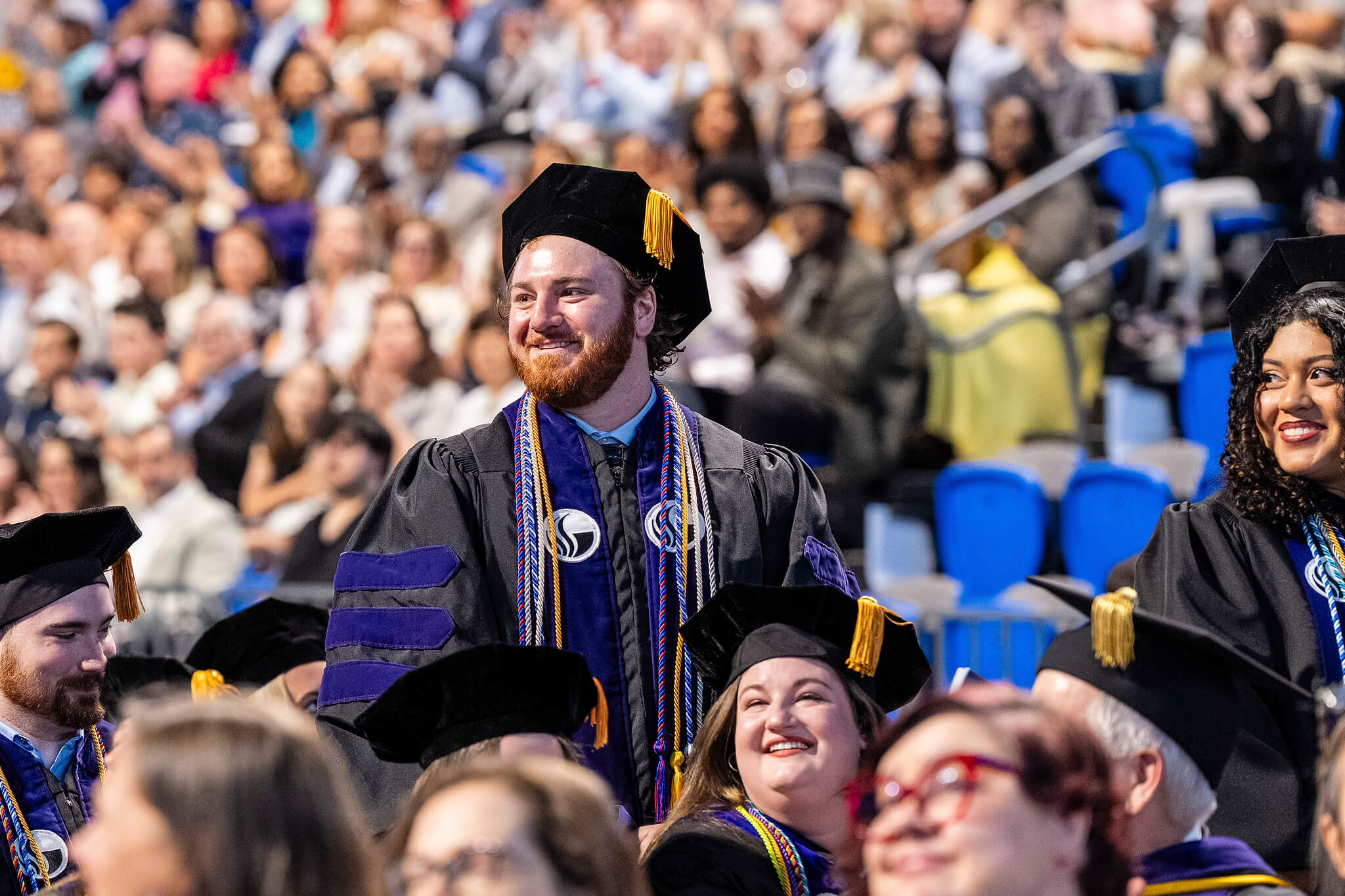
The appeal of practicing health law came into focus at the intersection of healthcare policy and Scott Fineberg's (J.D. '26) everyday life. A simple diagnosis that turned into a prolonged negotiation with an insurance company revealed to him how the law shapes access to patient care, and how difficult those systems can be to navigate without support.
Fineberg first encountered challenges with the health care system in 2019 after being diagnosed with Crohn’s disease and faced with a complex back-and-forth process to secure approval for the medication to treat the disease.
“I had extreme difficulty getting the medication prescribed by my doctor approved by insurance,” he said. “It was a real insight into how unnecessarily complicated health insurance is made. Realizing that doctors who have never met me before could deny my personal doctor's recommendations just based on their opinions frustrated me.
Although his coverage was eventually resolved with the help of a nurse practitioner experienced in working with insurance providers, Fineberg identified a bigger issue: everyone doesn't have access to knowledgeable advocates.
By the time he reached his junior year at Williams College in Massachusetts, where he studied political science and history, Fineberg identified law as the best career to understand and challenge the bureaucratic systems that affected him directly.
“I decided, if I have the privilege to go to law school, I owe it to people in my same situation to try to fight for better treatment for them,” he said.
At Georgia State University College of Law, he found a home in the No. 2 ranked health law program nationwide, aligning his goals with a rigorous curriculum and an emphasis on experiential learning opportunities.
“When I began, I realized that Georgia State is a place that makes real lawyers, not just law students,” he said.
Fineberg’s interest in health law never wavered throughout his time in the program, and he developed a growing interest in courtroom litigation. One of his proudest milestones came during his second year, when he won a 2L Advocacy trial, building his confidence in the ability to construct and present strong legal arguments.
“I was so invested in pursuing every strong argument possible,” he said. “I know that I want to litigate one day, and lawyers litigating on behalf of plaintiffs will be [at] the front of the line as the U.S. approach to health insurance develops.”
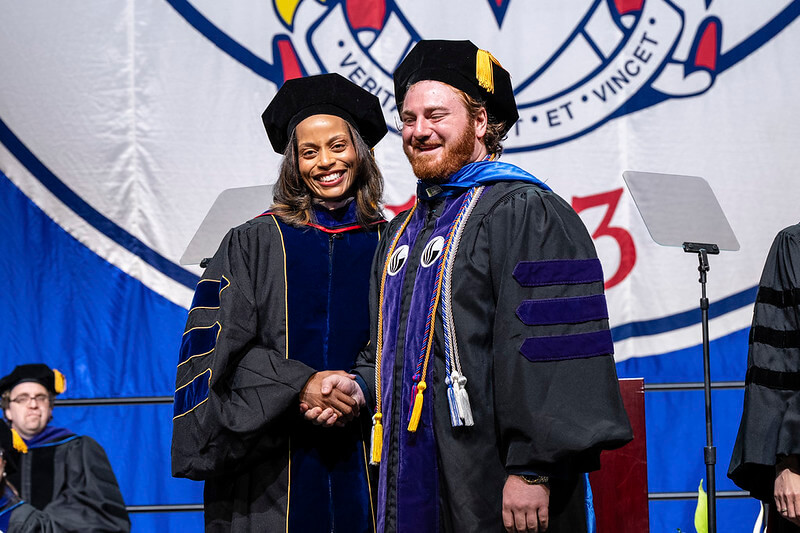
At Georgia State University College of Law, Fineberg found a home in the No. 2 ranked health law program nationwide, aligning his goals with a rigorous curriculum and an emphasis on experiential learning opportunities.
Fineberg found more hands-on opportunities to exercise his practical skills by working with the Olmstead Disability Rights Clinic, where he assisted real clients navigating the Medicare system. This experiential learning program introduced him to the day-to-day realities of legal practice.
“The clinic was my first real exposure to legal work outside of the school,” he said. “It gave me the opportunity to understand how important client interaction is to being a successful lawyer.”
Through his clinic work, Fineberg connected with Professors Leslie Wolf and Stacie Kershner (J.D. ‘08), and he credits them with helping him refine his interests and think deeply about the health law field.
“Scott brings an innate curiosity to everything he does,” said Professor Wolf, Ben F. Johnson Jr. Chair in Law, Distinguished University Professor, and director of the Center for Law, Health & Society. “This trait will serve him and his future clients well as he begins his legal career.”
His academic commitment to health law was recognized at the Georgia State Law Honors Day in March 2026, where he received the “Excellence in Health Law Award,” for his outstanding performance and sustained focus on the field. “The subject material engaged me, and it was very exciting to see that hard work recognized by the college,” he said.
Outside of academics, Fineberg’s involvement as the Student Bar Association election commissioner broadened his perspective on the law school community. Working with students across different class years and backgrounds, he developed a greater appreciation for the range of experiences that shape the profession.
“It gives me an appreciation for how many different types of lawyers there are,” he said. “We are not a monolith profession.”
After graduation, Fineberg will begin a two-year term as a staff attorney with the Eleventh Circuit Court of Appeals, where he will review a high volume of appellate cases and prepare memoranda on a wide range of legal issues. The role offers a close look at how appellate decisions are shaped and provides front-row exposure to experienced litigators at work.
“I will be in a unique position of watching some incredibly skilled litigators argue at one of the highest courts in the country,” he said. He expects the experience to inform his long-term plans, particularly as he considers a future in appellate litigation within health law.