ATLANTA — Georgia State University Athletics has announced a comprehensive five-year vision aimed at strengthening its financial foundation, enhancing competitive success and elevating the overall experience for student-athletes and fans. The strategy positions the department for long-term growth and adaptability as the collegiate athletics landscape continues to evolve.
Central to the plan is an investment in place and people, anchored by the continued development of an athletics neighborhood in Summerhill. The plan also includes an expanded commitment to student-athlete support through name, image and likeness (NIL) opportunities, including the hiring of a General Manager to advance revenue growth initiatives.
“I’ve asked our team, in close partnership with Director of Athletics Charlie Cobb, to develop a refreshed vision that will guide a coordinated effort over the next three to five years to elevate Georgia State Athletics,” said Georgia State President M. Brian Blake. “The timing is perfect as we embark on new fundraising efforts to invest in our student-athletes, our facilities and our community, and strengthen the role athletics plays in advancing the university’s mission.”
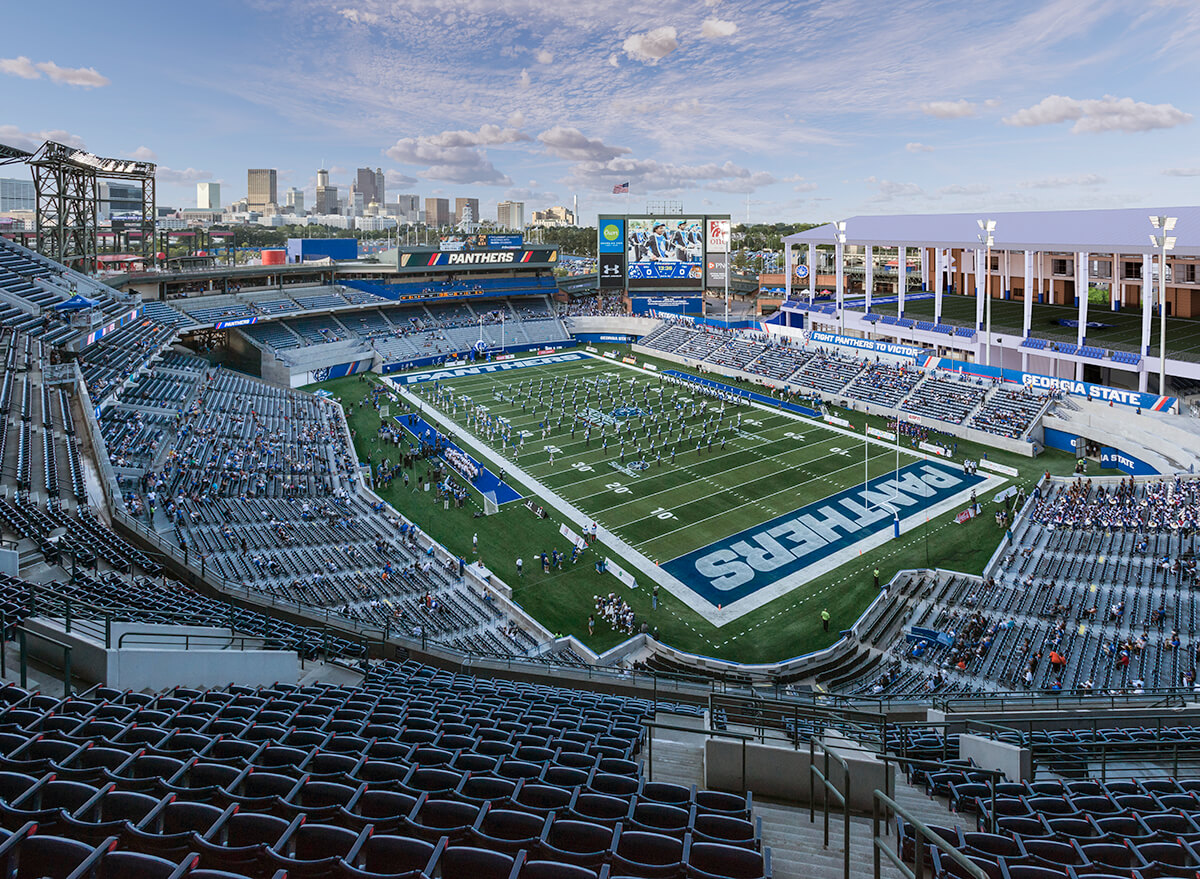
Transformational facility projects in the Summerhill neighborhood are creating a cohesive, campus-adjacent hub designed to enhance the student-athlete experience, strengthen fan engagement and elevate the department’s competitive profile. Recent developments — including Center Parc Credit Union Stadium, the GSU Convocation Center, the 188 MLK Soccer Complex, the Bobby Jones Golf Course Instruction Facility and a new baseball stadium currently under construction — reflect a strategic focus on connecting athletics more closely with campus and community.
“We are committed to the success and development of our student-athletes,” said Athletics Director Charlie Cobb. “We aim to build on our successes and create new momentum through these five-year aspirational goals, which reflect our vision for the future and engage the Panther Family. Through this work, we are confident we will continue to create meaningful opportunities that positively impact our student-athletes and our community.”
Cobb said the five-year plan is guided by a set of aspirational goals designed to drive progress across key areas.
Advance the “College Town Downtown” vision through facility development in Summerhill.
Georgia State Athletics will continue to expand its footprint in Summerhill by completing the new baseball stadium in fall 2026 and advancing additional phases of the athletics neighborhood. Envisioned projects include a covered football practice field, expanded premium seating and hospitality areas, new basketball and volleyball practice facilities, a softball stadium, beach volleyball venue, tennis courts and the potential for future retail.
Win conference championships in football and men’s basketball.
As flagship programs, football and men’s basketball are central to the department’s competitive identity. Achieving conference championships in these sports remains a top priority.
Exceed $3 million in revenue sharing for student-athletes.
With student-athlete expectations shifting in a rapidly changing environment, Georgia State Athletics is prioritizing increased investment in resources that support recruitment, retention and overall student-athlete success. NIL and revenue-sharing opportunities will play a key role in maintaining competitiveness.
Unite alumni and fans in support of Georgia State Athletics.
The department will focus on strengthening engagement across the Panther community by enhancing the game-day experience and increasing attendance. Data-informed strategies and expanded programming tied to the “College Town Downtown” vision will support growth in sponsorships, ticket sales, premium experiences and philanthropic giving.
Expand student-athlete leadership development opportunities.
Georgia State Athletics will establish a student-athlete leadership council and expand programming to support leadership development, further enriching the overall student-athlete experience.
To ensure accountability and measure progress, Georgia State Athletics has established a set of key metrics to guide implementation. Competitive success will be evaluated annually against conference peers, with the goal of consistently finishing in the top half of league standings across all sports and achieving top-quartile performance in targeted programs.
The department is also prioritizing significant growth in fundraising and revenue generation, with a goal of reaching and sustaining $10 million annually in philanthropic and partnership support within five years. The addition of an Athletics General Manager will further strengthen efforts to expand NIL opportunities for student-athletes.
Fan and community engagement will remain a central focus, with plans to increase overall attendance by 50 percent over the next five years through enhanced game-day experiences and steady annual growth across all sports. At the same time, Georgia State Athletics will emphasize long-term financial health by growing revenues, managing expenses, maintaining appropriate reserves and ensuring responsible debt management.
The department will also continue to advance key infrastructure and development initiatives, positioning Georgia State Athletics for sustained organizational growth and long-term success within an evolving collegiate athletics landscape, Cobb added.