

Since helping launch Georgia State Law’s Immigration Clinic in 2020, Professor Emily Torstveit Ngara has contributed to shaping the careers of dozens of law students while advocating for some of the most vulnerable individuals in the immigration system. This summer, she was promoted to Director of Clinical Programs at the College of Law, a role that oversees all the college’s in-house clinical programs.
“This position is a dream come true,” Ngara said. “Our clients are truly remarkable in their resilience, their fortitude, and their generosity of spirit. In addition to that, I get to guide young lawyers as they develop their professional identity and skills. I can't adequately express the joy and pride it brings me.”
Under her guidance, the Immigration Clinic achieved a significant victory this year when an Afghan family of six were granted asylum. “Now they can breathe a little easier and work toward rebuilding all that they had to leave behind when they fled Afghanistan,” Ngara said.
She credits the win to the students’ tireless work in legal research, gathering evidence, securing experts, and building trust with the clients.
“Both the immigration judge and the asylum officer who conducted the interview commented on how well-prepared the case was,” she said.
The Clinic also recently filed applications for permanent residency for another Afghan family they successfully represented in an asylum case last year. In addition, they received a grant of Special Immigrant Juvenile Status that was filed for a minor client in the custody of a foster-care facility under contract with the federal government.
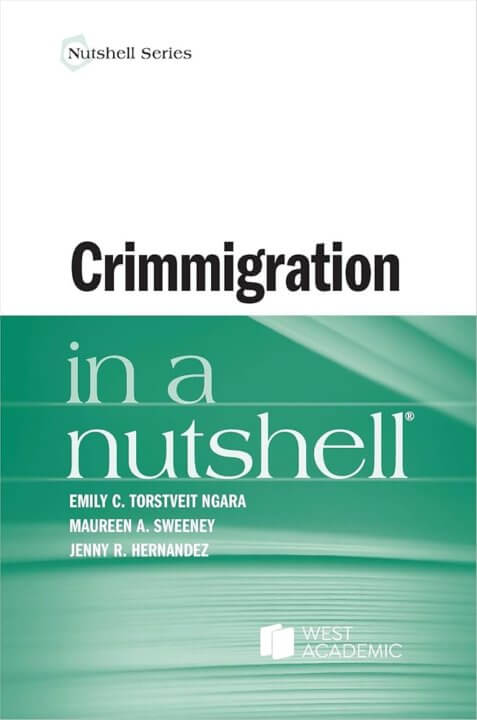
"Crimmigration in a Nutshell" is designed to give students and early-career attorneys a clearer understanding of how criminal charges can affect a noncitizen’s legal status.
While the clinic focuses on humanitarian cases, Ngara’s recent scholarship addresses another urgent legal intersection: immigration and criminal law. In May, she co-authored “Crimmigration in a Nutshell,” a resource designed to give students and early-career attorneys a clearer understanding of how criminal charges can affect a noncitizen’s legal status. “This is something that is very important for both immigration and criminal attorneys to understand, as mistakes can have devastating impacts on clients, their families, and their communities,” she said.
The book fills a gap in an area underserved in entry-level legal resources. Ngara and her co- authors set out to create an approachable resource that helps readers understand the real-world impact of crimmigration issues, learn how to analyze statutes effectively, and apply practical strategies to best serve their clients.
Beyond the classroom and courtroom, Ngara shared her expertise on the “70 Million” podcast in November 2024, discussing the dangers of immigration detention for transgender noncitizens.
Whether she’s mentoring students, advocating for clients, or writing to elevate the field, Ngara’s work centers on expanding access to justice—and training the next generation to do the same.
Written by Stacey Evans