
William Eskridge, the Garver Professor of Jurisprudence at the Yale Law School, discussed “The Story Behind the Marriage Equality Decision — and What is Next for America” in the 58th Henry J. Miller Distinguished Lecture Thursday, Sept. 15, in the Marjorie and Ralph Knowles Conference Center at Georgia State University College of Law.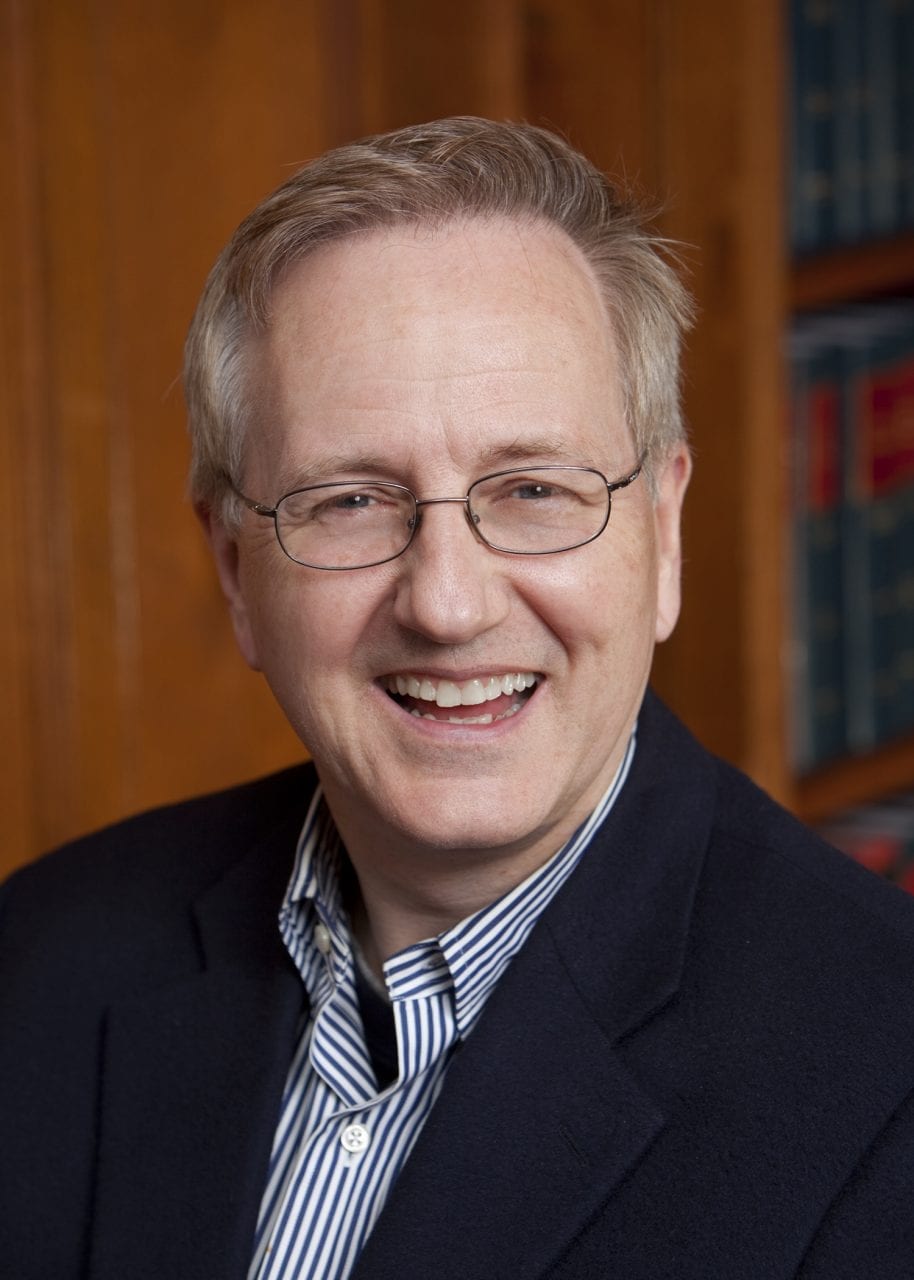
Eskridge shared the story of Michigan couple, April DeBoer and Jayne Rowse, and what led to the U.S. Supreme Court’s 2015 decision in Obergefell v. Hodges, which required all the states to provide marriage licenses to same-sex couples.
Eskridge also discussed the aftermath of Obergefell and the future of other LGBT rights and marriage equality.
“The Obergefell decision moved the Supreme Court to the right side of history on marriage equality. After his decades of scholarship in this area, the Court, and history, had to catch up with Bill Eskridge,” said Paul Lombardo, Regents’ Professor and the Bobby Lee Cook Professor of Law.
Eskridge has been involved in the marriage equality movement for lesbian, gay, bisexual and transgender people since 1990 and has been widely quoted and featured in news outlets. He has published numerous articles and books on statutory interpretation and sexuality, gender and law, including “A Republic of Statutes: The New American Constitutionalism” and “Gay Marriage: For Better or For Worse? What We Have Learned from the Evidence.” He is writing a book on the history of marriage equality from 1967 to 2017.
Eskridge earned a B.S. from and Davidson College, an M.S. at Harvard University and a J.D. from Yale.
The Henry J. Miller Distinguished Lecture Series is supported by the Charles Loridans Foundation Inc. and named for Henry J. Miller, a partner in the law firm of Alston & Bird for more than 50 years. Miller’s legacy continues to live in his role as mentor to generations of Atlanta’s professional community.