

Two Georgia State alums have made fortunes investing in cryptocurrency and are now sharing their trade secrets in a new book.

At the tail end of 2017, just a few days short of graduating with his MBA from the Robinson College of Business, Zach Hoffmeister (MBA ’17) made his first million.
Hoffmeister began investing in cryptocurrency while studying at Georgia State, and right as he was finishing school, the market went nuts. The value of the first and most famous cryptocurrency — Bitcoin — jumped from $1,000 per coin in January 2017 to nearly $20,000 per coin in mid-December. Millionaires were made overnight, and Hoffmeister was one of them.
His first act as a newly minted millionaire? He wiped out the $45,000 student loan debt he expected to pay off in 10 years.
“It was pretty liberating,” Hoffmeister says, laughing.
Hoffmeister’s foray into the risky world of cryptocurrency – digital money transferred across a network of computers without going through a financial institution – paid off big, but there were extreme lows and highs. Like that time he lost the value of a big, nice house in a week.
As Hoffmeister began to dabble in the cryptomarket, he found a partner in his classmate, John Granofsky (MBA ’17), who says he noticed Hoffmeister fine-tuning his portfolio during one of their MBA classes.
“We were supposed to be paying attention to the instructor, and Zach was on his computer looking at charts and reading about crypto simultaneously,” Granofsky remembers.
Hoffmeister encouraged Granofsky to jump in. He did and has done pretty darn well, too, making 10-fold on his initial investment of a few thousand dollars.
Together, they decided to share their stories — and that of friend and fellow investor Timothy Suggs — in a book published this past June.
“The Millionaire Millennials” may sound like a book about entitled Instagram stars, but it’s a beginner’s guide to investing in cryptocurrency. In the process of learning crypto 101, you also learn about the two Georgia State grads’ oft-suspenseful stories of crypto investment pitfalls and glory.
“The market took a nosedive in January [2018], and it’s rife with scams and coins that have no value,” Granofsky says. “That’s the purpose of the book — to give readers the foundational knowledge to do their own digging before risking their money.”
Bitcoin and Blockchain
Bitcoin is now one of hundreds of cryptocurrencies, but for a little while, before any of them existed, it was just the brilliant idea of a mysterious author whose identity remains unknown. In October 2008, a paper titled “Bitcoin: A Peer-to-Peer Electronic Cash System” was posted to a cryptography mailing list by someone named Satoshi Nakamoto.
Nakamoto’s idea was to eliminate the financial institutions that brokered electronic transactions. Because financial institutions have a hand in, and charge a fee for, almost every online purchase or trade, eliminating their involvement would make commerce cheaper and more efficient.
To understand how most cryptocurrencies work, you first have to understand the engine behind them — blockchain technology. As Hoffmeister and Granofsky tell it, blockchain is “a ledger of transactions that is public and decentralized.”
It is decentralized in the sense that there is no central database that can be hacked or erased. The data are spread across computer servers all over the world and connected — hence the chain — through cryptographic methods. The ledger consists of data in packages called blocks, and the information held in these blocks is validated by “miners,” who do so by solving computationally complex puzzles.
The decentralization of the transactions means things that are generally run through fee-heavy companies can theoretically be done without them. It means every type of electronic payment and exchange that includes a fee can potentially be made less expensive and more secure at the same time.
“The uses for blockchain are only limited by the imagination,” Hoffmeister says. “Blockchain technology has the potential to disrupt all aspects of digital data and communication — health care, banking, identity management, supply chains and the Internet itself.”
Bitcoin, he says, was just the first big project to use it.
All-In
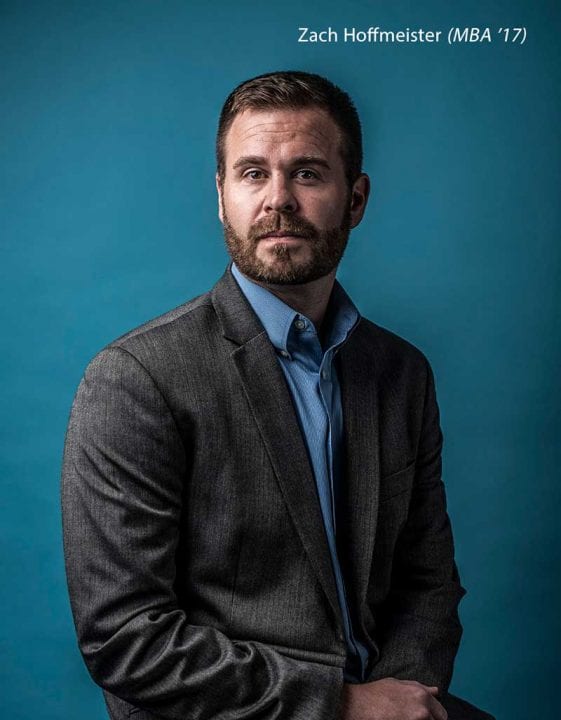 Although Hoffmeister grew up feeding calves on the family farm in Washington state, he always had an entrepreneurial streak. As a kid he would purchase gum from Costco and sell it at a profit to his grade-school classmates. He was always looking for a financial edge. So, when he saw a flier in 2015 for something called a Bitcoin fair — advertising “the future of money” — he took it.
“I had no idea what Bitcoin was,” he says.
His first taste of cryptocurrency wasn’t positive. He purchased some Bitcoin from a special machine at the fair and tried to use his receipt as payment at a nearby taco stand. The vendor wouldn’t take it.
“I wasn’t convinced,” he says. “Not to mention, every analyst out there was saying, ‘Highly risky, very scary — don’t put your money in this unless you just want to throw it away.’ The advice was, ‘just don’t do it.’”
Still, he was intrigued enough to buy $100 worth of Bitcoin the day after the fair. He watched as his small investment rose in value, slowly dipping his toes into the waters of cryptocurrency.
Before investing, Hoffmeister would study each new project by reading the whitepaper, a document that explains its purpose and strategy. In May 2015, he purchased $5,000 worth of Litecoin, an offshoot of Bitcoin, and saw it rise by about 50 percent.
Then he went for it. He sold nearly $30,000 he had invested in stocks — his entire investment portfolio aside from his 401K — and began moving it into crypto. Over the next few months, he had ups and downs, buying and selling at relatively small profits and losses.
Then, during that red-hot market in the winter of 2017, he had his first big win. He bought roughly 5,000 Internet of Things coins for about $7,000 and sold them for triple that the next month.
“I remember my heart beating so fast as I watched the price move up,” he says.
He tripled his money again in one day in early December on an investment in a coin called Decentraland for a profit of nearly $20,000.
Later that month, as the entire market surged, Hoffmeister and Granofsky met at Highland Cigar to celebrate some of the insane profits Hoffmeister was making. Between the time they arrived and the time they left, the value of his crypto investments increased by $40,000.
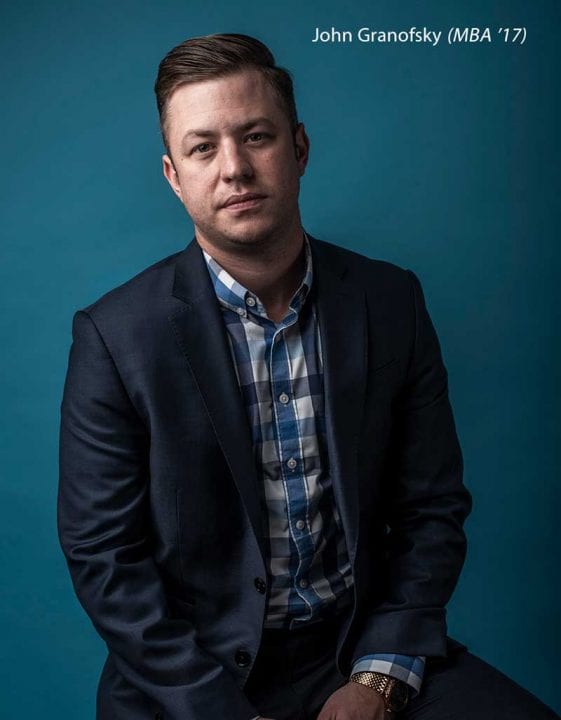
“I was watching it happen,” says Granofsky. “That will make you a believer.”
By that time, Granofsky had put some money in crypto as well, though in a less risky way than his friend.
“If I wasn’t getting a five-times return, things were moving too slowly for me,” he says about how crazy the market was at the end of 2017. “That’s not normal.”
At his own personal all-time high, Hoffmeister’s portfolio — including some plots of “digital land” that are now worth about half a million dollars — broke the million-dollar mark.
But that’s not to say he did everything right. For instance, he missed out on an investment in a cryptocurrency called RedCoin that could have yielded $100,000. In one week in January, his portfolio lost $300,000. He could have bought and held Bitcoin in 2015, when he first learned of its existence, at a fraction of what the currency is worth today.
Back then, Bitcoin cost around $250 each. By the time Granofsky got in two years later, the price had risen to about $2,000 and appeared to have hit its peak.
“In so many ways, I completely missed out,” says Hoffmeister.
Still, Hoffmeister was able to pay off his grad school loans in December. He had expected to be making a payment every single month for a decade, but that disappeared in a flash.
Both Granofsky and Hoffmeister, each in their mid-30s now, see liberation as their main goal of investing in cryptocurrency.
They’ve kept their day jobs — Hoffmeister works as an account executive officer for Travelers Insurance and Granofsky is a senior sales manager for a smartphone accessory manufacturer. But they hope their investments eventually render working nine to five unnecessary.
In the middle of our talk, Hoffmeister takes off his jacket to reveal a T-shirt sporting the logo of Loci, Inc., a new crypto project he’s invested in.
“It’s symbolic,” he says, smiling. “It means no more meetings.”
All-In
Although Hoffmeister grew up feeding calves on the family farm in Washington state, he always had an entrepreneurial streak. As a kid he would purchase gum from Costco and sell it at a profit to his grade-school classmates. He was always looking for a financial edge. So, when he saw a flier in 2015 for something called a Bitcoin fair — advertising “the future of money” — he took it.
“I had no idea what Bitcoin was,” he says.
His first taste of cryptocurrency wasn’t positive. He purchased some Bitcoin from a special machine at the fair and tried to use his receipt as payment at a nearby taco stand. The vendor wouldn’t take it.
“I wasn’t convinced,” he says. “Not to mention, every analyst out there was saying, ‘Highly risky, very scary — don’t put your money in this unless you just want to throw it away.’ The advice was, ‘just don’t do it.’”
Still, he was intrigued enough to buy $100 worth of Bitcoin the day after the fair. He watched as his small investment rose in value, slowly dipping his toes into the waters of cryptocurrency.
Before investing, Hoffmeister would study each new project by reading the whitepaper, a document that explains its purpose and strategy. In May 2015, he purchased $5,000 worth of Litecoin, an offshoot of Bitcoin, and saw it rise by about 50 percent.

Zach Hoffmeister (MBA ’17)
Then he went for it. He sold nearly $30,000 he had invested in stocks — his entire investment portfolio aside from his 401K — and began moving it into crypto. Over the next few months, he had ups and downs, buying and selling at relatively small profits and losses.
Then, during that red-hot market in the winter of 2017, he had his first big win. He bought roughly 5,000 Internet of Things coins for about $7,000 and sold them for triple that the next month.
“I remember my heart beating so fast as I watched the price move up,” he says.
He tripled his money again in one day in early December on an investment in a coin called Decentraland for a profit of nearly $20,000.
Later that month, as the entire market surged, Hoffmeister and Granofsky met at Highland Cigar to celebrate some of the insane profits Hoffmeister was making. Between the time they arrived and the time they left, the value of his crypto investments increased by $40,000.
“I was watching it happen,” says Granofsky. “That will make you a believer.”
By that time, Granofsky had put some money in crypto as well, though in a less risky way than his friend.
“If I wasn’t getting a five-times return, things were moving too slowly for me,” he says about how crazy the market was at the end of 2017. “That’s not normal.”
At his own personal all-time high, Hoffmeister’s portfolio — including some plots of “digital land” that are now worth about half a million dollars — broke the million-dollar mark.
But that’s not to say he did everything right. For instance, he missed out on an investment in a cryptocurrency called RedCoin that could have yielded $100,000. In one week in January, his portfolio lost $300,000. He could have bought and held Bitcoin in 2015, when he first learned of its existence, at a fraction of what the currency is worth today.

John Granofsky (MBA ’17)
Back then, Bitcoin cost around $250 each. By the time Granofsky got in two years later, the price had risen to about $2,000 and appeared to have hit its peak.
“In so many ways, I completely missed out,” says Hoffmeister.
Still, Hoffmeister was able to pay off his grad school loans in December. He had expected to be making a payment every single month for a decade, but that disappeared in a flash.
Both Granofsky and Hoffmeister, each in their mid-30s now, see liberation as their main goal of investing in cryptocurrency.
They’ve kept their day jobs — Hoffmeister works as an account executive officer for Travelers Insurance and Granofsky is a senior sales manager for a smartphone accessory manufacturer. But they hope their investments eventually render working nine to five unnecessary.
In the middle of our talk, Hoffmeister takes off his jacket to reveal a T-shirt sporting the logo of Loci, Inc., a new crypto project he’s invested in.
“It’s symbolic,” he says, smiling. “It means no more meetings.”
*Shaun Raviv is a freelance journalist based in Atlanta. He has written for The Atlantic, Buzzfeed, Deadspin, The Intercept, Smithsonian Magazine and more.
Photos by Steven Thackston