Kennedy Felton (B.A. '20)
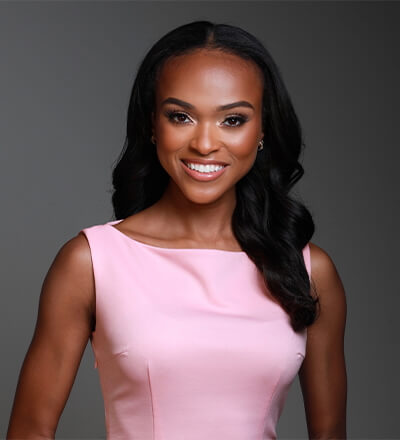 Kennedy Felton (B.A. ’20) is a journalist and digital storyteller. Since graduating from Georgia State in 2020 with a degree in journalism, she’s held several roles in the ever-changing media landscape. From internships with CNN and “The Tonight Show Starring Jimmy Fallon” to working on “Jimmy Kimmel Live!” and in social media for E! Entertainment Television and Bravo, she continues to give back to other young journalists by sharing her experiences and advice.
Interview by Paige White
Why did you choose Georgia State?
I’ve always been a big-city girl, which is crazy because I grew up in a small town in Maryland. I was always the only Black girl in all my classes. I didn’t even have my first Black friends until high school. As I was getting older and getting into high school, I started to wake up to social injustices that were going on in the news, and that’s when I started trying to figure out my identity as a Black woman. I knew I wanted to be in an environment that was diverse but also where I was connected with people who could relate. I didn’t want to be on a traditional campus either. As I said, I’m a city girl.
I love the nontraditional vibe that Georgia State provides, so that is why I chose it. It’s a melting pot — so many different religions, cultures and people. I think that’s very important to see in the early stages of being a young adult.
You have had incredible opportunities and jobs. How did you position yourself for those?
I think the main thing is that my parents have always taught me to be open to everything around me and not be afraid to say yes to things, even if it makes you uncomfortable or nervous. Just being open to whatever it is, because God is placing these things in front of me for a reason, and he’s opening certain doors for a reason.
After my first year in college, I moved to South Carolina because my cousin was a news anchor and had an opportunity for me to work at a radio station there. She had a friend who owned a public relations company. I did some social media work for them and, I think as Gen Z, we grew up in the digital age of social media, and I really took to it. I wanted to incorporate social media into my career. I would take everything I did at those internships, write about my experiences and talk myself up on my resume. I also started getting more involved on campus, so I was in the Public Relations Society of America, and I was in Softer Touch, which is a mentorship program for high schoolers. I did a lot of things for my community.
I think when you’re putting yourself in rooms and spaces, you never know who you’re going to meet. I was in the National Association of Black Journalists, and they were hosting an event at Warner Bros., formerly Turner Studios. They had an event for Black journalism students, and I went. I didn’t talk to anyone but I was in the room where it happened. When I applied to CNN for an internship, it turned out that the manager of the program was the moderator on the panel. I was able to connect with them and let them know I listened during that panel. Once I got CNN, doors started opening up for me.
As a woman in the workforce, what does Women’s History Month mean to you?
It means everything. To this day, it feels like the world takes one step forward and five steps back. I was fortunate enough that at my first “big girl” internship at CNN, my manager was a Black woman. Seeing her in such an important role as a senior producer in our department and seeing her be able to navigate her Blackness in such a big space was inspiring to me. I truly think that seeing her in that role continues to motivate me and push me in my journalism career. I think being a woman, and being a Black woman specifically, it’s important to see more of us in what we’re doing because the communications industry is small. You never know who you’re going to run into or if you might work with someone who you’ll see again.
I also think it’s important to see women in communications because we are empaths and deeply care about telling people’s stories — the stories of those who are hurting in their community or experiencing loss. It’s very important to handle those stories with care.
What advice would you give to first-year Kennedy?
I would tell first-year me that you don’t have to have everything figured out right now. If you allow yourself to be open to opportunity and believe in a higher power, all you have to do is trust in a plan that’s greater than you and everything will work out.
This is something that I have really started to learn within the past year. I am really someone who likes to have everything planned out. I started out undecided because I felt that if I declared journalism as a major, I would be locked into a contract and wouldn’t get out. But that didn’t happen and that wasn’t the case. So, trust the process, and it’s OK to be open to opportunities.