Media Contact
Vanessa Hall Brown
College Web Manager
Byrdine F. Lewis College of Nursing and Health Professions
[email protected]
ATLANTA — While campus food pantries remain essential resources on higher education campuses across Georgia, the second annual Georgia Campus Food and Nutrition Security Solutions Summit (GA‑FANS), held March 3, emphasized the need for long‑term, coordinated strategies across institutions and community partners to address the root causes of hunger.
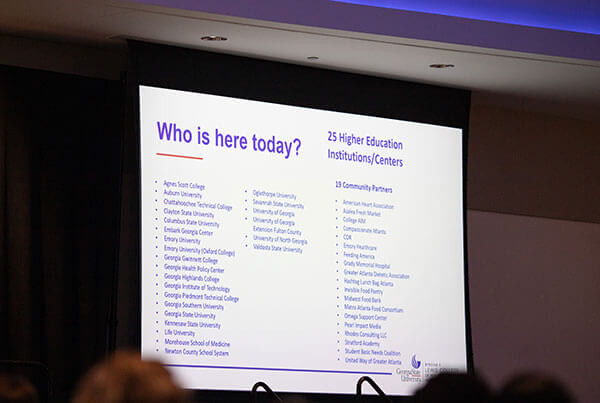
Hosted by Georgia State University’s Department of Nutrition and organized by Assistant Professor of Nutrition Nida Shaikh, GA‑FANS’ think‑tank event supported knowledge sharing and generated strategic actions to address food and nutrition insecurity across college campuses statewide. The event brought together more than 150 representatives from 44 organizations, including 25 higher education campuses and 19 community partners from across Georgia and beyond, creating a unique space for cross‑sector collaboration. Higher education leaders, students, faculty, staff, researchers and community anti‑hunger advocates gathered for a day of inspiring collaboration and solutions‑driven conversations.
Reflecting on the event, Opeyemi Akintimehin, a dual MBA/M.H.A. student at Georgia State University, described the summit as “a valuable blend of big‑picture thinking and on‑the‑ground practice,” highlighting the collaborative, solutions‑oriented environment that allowed institutions to share both challenges and successes.
Throughout the day, discussions centered on the broader factors that affect students’ ability to access food and the implications for their physical and mental health. Participants emphasized that food insecurity often overlaps with other challenges, including housing instability, transportation barriers, and financial strain. Sessions explored food and nutrition insecurity challenges and priority needs across campuses and emphasized the importance of coordinated, campuswide responses as part of broader student success and well‑being efforts.
Several institutions shared promising approaches already underway. Kennesaw State University highlighted its intern‑based CARE Services case‑management model, which connects students with wraparound resources to support academic persistence and overall well‑being. Speakers discussed the value of collaboration among student affairs, academic departments and community partners in strengthening campus food support systems.
Data and student perspectives were also central to the conversation. During the panel session "Measurement for Action," presenters emphasized how collecting and applying campus food and nutrition insecurity data can guide program development and strengthen advocacy for institutional support. “What made this convening especially meaningful was the shared commitment to sustainable, data‑informed strategies — not temporary fixes, but institutional and policy approaches that move the work forward in lasting ways,” said Sarah Ray, assistant dean of students at Clayton State University.
Moderated by Kamore Campbell, post‑secondary success coach at College AIM, the "Student Voices — Are We Listening?" panel featured students with lived experience reflecting on the academic and health impacts of food insecurity. “Being able to speak openly about these challenges and the solutions in a room full of leaders, advocates and change‑makers was empowering,” said one of the student panelists. Panelists emphasized the importance of reducing stigma and increasing awareness and utilization of available support services. “There’s something meaningful and validating about feeling intentionally heard and seen, and your experience acknowledged, followed up with ‘What can we do to do better?’” another student panelist reflected.
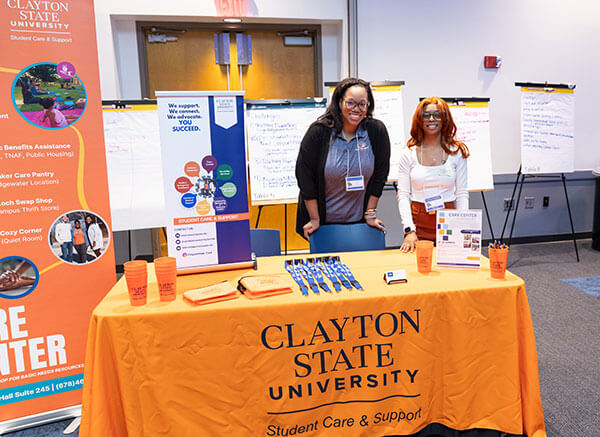
The summit also featured 14 exhibitors from campus programs and community organizations, including Azalea Fresh Market, Student Basic Needs Coalition and The Invisible Food Pantry, giving attendees access to practical resources, tools and examples of initiatives already making a difference. “I really appreciated the student panel and having access to so many community providers in one place,” said Mindy Stombler, a principal lecturer in Georgia State’s Department of Sociology.
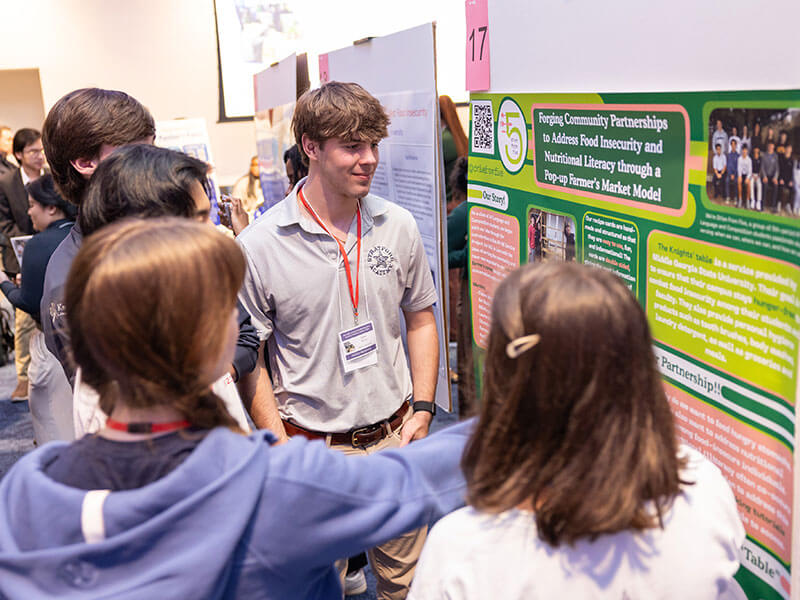
In addition, the inaugural oral and poster presentation session highlighted 22 innovative campus food security programs, including hydroponics initiatives, a free cooking demonstration, a nutrition education and produce program, and community‑based service‑learning pedagogical partnerships.
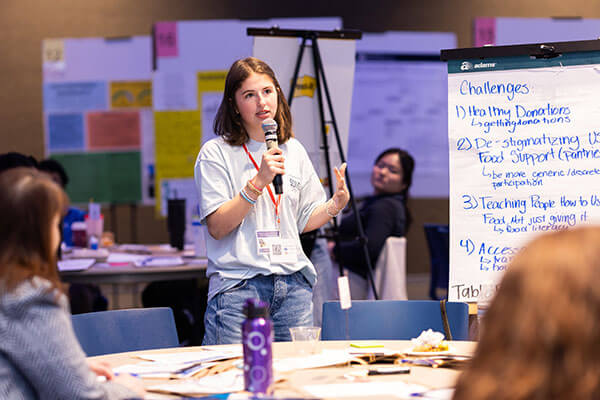
In the afternoon, participants engaged in small‑group brainstorming sessions facilitated by Debra Kibbe, assistant project director at the Georgia Health Policy Center, and Shaikh. Groups generated and shared ideas for action to address campus food and nutrition insecurity and voted on priorities that resonated most strongly across institutions. The three top‑ranked priorities included increasing awareness and access to available resources and services, strengthening data collection to better understand student needs, and expanding funding and donations to support healthier food options.
GA‑FANS 2026 underscored a shared commitment across higher education partners in Georgia to push toward coordinated and actionable change.