
Media Contact
Lauren Hibbard
Director of Communications
Lewis College of Nursing and Health Professions
[email protected]
ATLANTA — More than 700,000 Americans experience a stroke each year, and many survivors are left with long-term motor impairments that affect their ability to perform everyday activities. Access to rehabilitation programs typically drops off within a few months after a stroke, leaving patients with minimal support when ongoing practice is still needed. Patients have increasingly turned to rehabilitation programs on mobile apps for convenient, at-home guidance, but many apps are developed without the input of people who need them and don’t adapt to real-life challenges.
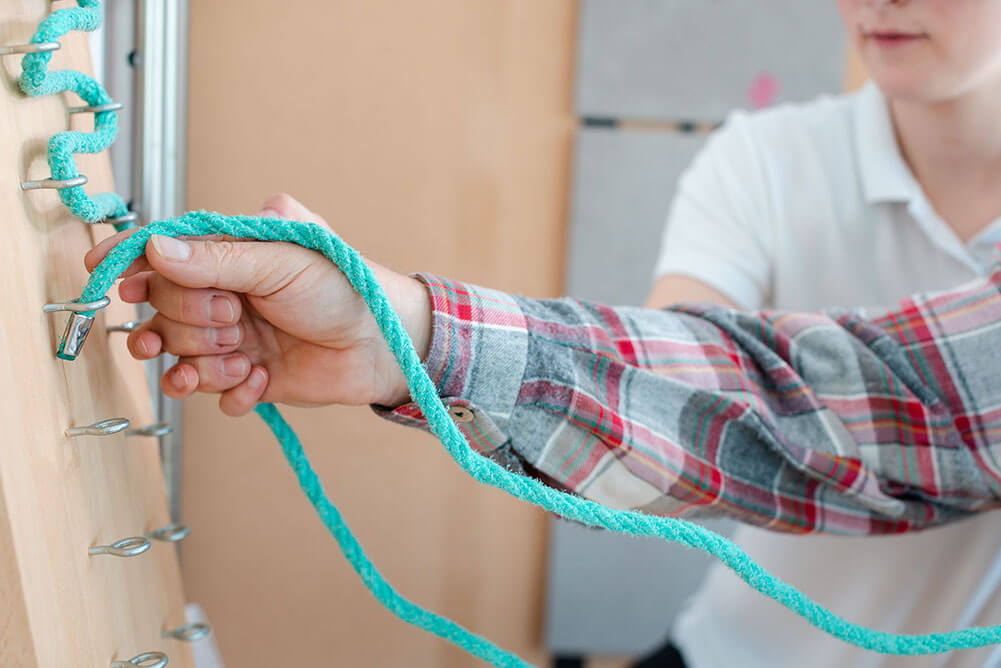
Enter mRehab, a mobile app designed in 2018 by now-Georgia State occupational therapist Sutanuka Bhattacharjya and her research team in conjunction with stroke survivors. The system pairs everyday 3D-printed objects with a user’s smartphone to provide interactive exercises. It tracks real-time performance and gives auditory and visual feedback.
In preliminary studies of how stroke survivors were using the app, the team found that some people found some exercises too challenging and some lost track of how to gauge their progress, but overall, stroke survivors made progress in their physical recovery.
To expand her previous studies, Bhattacharjya, an assistant professor of occupational therapy in the Lewis College of Nursing and Health Professions, was awarded up to $750,000 over three years by the National Institute on Disability, Independent Living and Rehabilitation Research of the Administration for Community Living. The institute is the federal government’s primary disability research organization.
“Through this study, we hope to refine the design of the mRehab system, based on its usability and functionality for stroke survivors,” she said. “We’ll compare its effectiveness against a commercially available system called FitMi. From that comparison, we’ll have evidence-based design criteria to support a more robust system, and that, in turn, will help support long-term rehabilitation for people after a stroke.”
The study is being conducted at both Georgia State and the University at Buffalo to capture recommendations and opinions of a diverse participant population.
With a system improved from the feedback of users, Bhattacharjya hopes to see increased engagement from users and better compliance, leading to greater mobility and independence for stroke survivors.
Featured Researcher
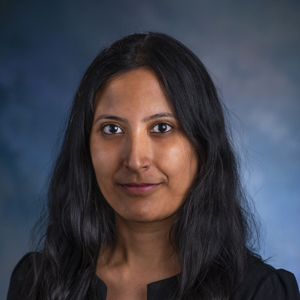
Sutanuka Bhattacharjya
Assistant Professor of Occupational Therapy
Department of Occupational Therapy, Lewis College of Nursing and Health Professions
Bhattacharjya's research focuses on use of technology to promote self-management of rehabilitation in rural and remote regions, both locally and globally.