
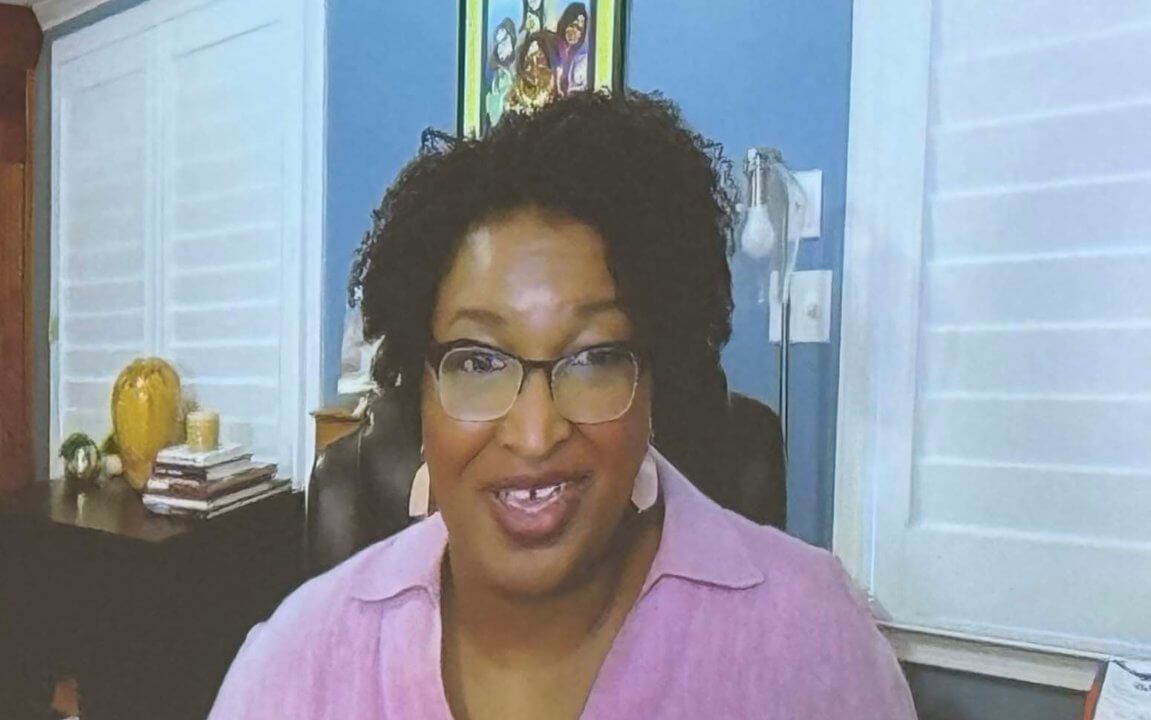
 Stacey Abrams spoke to the Georgia Leadership Education in Neurodevelopmental and Related Disabilities (GaLEND) class, sharing her background and professional journey insights. Abrams is a politician, lawyer, activist, writer and producer primarily known for her work on voter rights.
In 2018, Abrams became the first Black woman to win Georgia's gubernatorial nomination and the 2022 Democratic nominee but was defeated. She highlighted how systemic racism and societal barriers inspired her work. Abrams grew up with parents who valued education and activism despite facing significant challenges, including racial and economic inequities.
Her mother, a college librarian with advanced degrees, earned less than a janitor because of discriminatory laws. Her father, who had dyslexia, overcame obstacles to become the first in his family to attend college but was limited in career opportunities due to systemic biases."But because of race, gender and ability, I watched them denied access to opportunities. And yet, instead of becoming bitter about this, my parents turned their attention to how they can help other people," said Abrams. These experiences taught Abrams the importance of advocacy and resilience.
Abrams described her career as emphasizing her nonprofit, public and private work. Her approach involves identifying barriers, navigating them and helping others do the same. In her entrepreneurial ventures, her priority was on creating change rather than profit.
Abrams stressed the value of collaboration on projects, persistence and leveraging resources to influence change. She highlighted the importance of connecting with others' values to gain buy-in for causes and advocated for self-care as a vital part of sustaining long-term efforts.
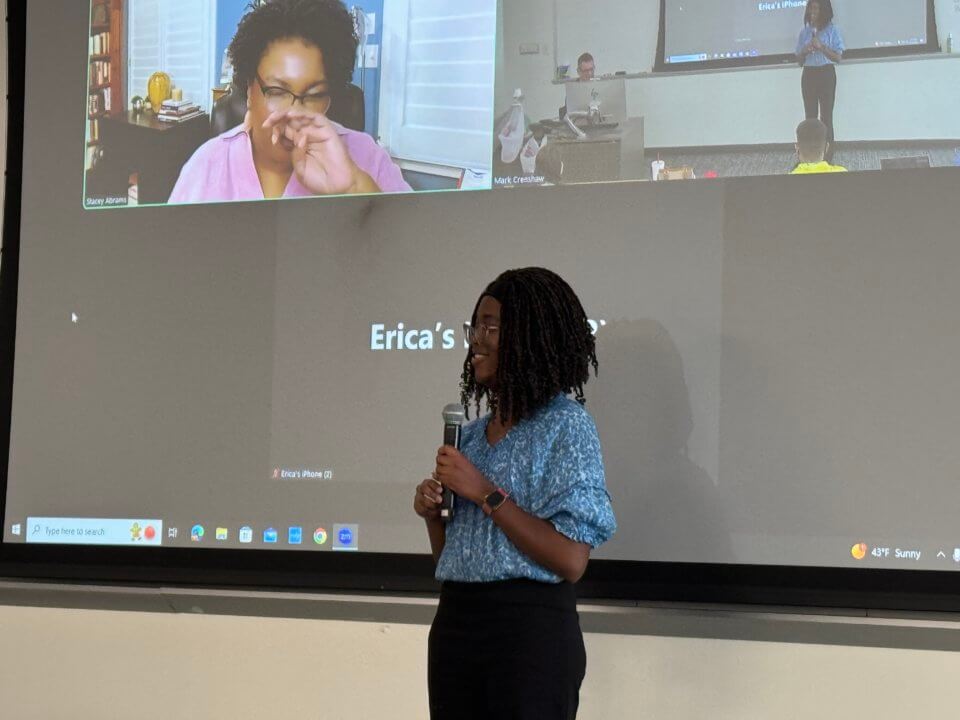
During the Q&A, Abrams discussed her leadership style, inspired by Star Trek's Captain Janeway, who embodies accountability and continuous improvement. She also shared strategies for building coalitions and overcoming resistance, stressing the need for persistence, empathy and aligning goals with others' priorities.
 LEND Students Q & A
What Star Trek character's leadership do you embody within your leadership style?
I love all the Trek captains. However, the captain who embodied the character that I tried to emulate most was Captain Janeway. So, Kathryn Janeway was the captain and pilot of Voyager. It's very easy to do the right thing when everyone is watching. Being close to your beliefs is much more complicated when no one holds you accountable. What I love about Kathryn Janeway is that, as the captain, she makes mistakes, fails and tries again.
To me, that is the best form of leadership—not a leadership that's perfect because you always make the right choice, but a leadership that is better because you're always willing to make better choices every time. You can acknowledge that you made a mistake and try to get better. I would love to be Captain Janeway.
Our group has been working on improving the Medicaid waiver process. And, you know, when it comes to Medicaid waiver, expanding Medicaid in Georgia, and other topics and ideas that are important for those with disabilities, our question is, how have you found good strategies or ways to get buy-in for people who don't necessarily agree with you or think the way that you think?
My job was to figure out how to get people who didn't agree with me to do things I needed them to do. And the first lesson is that they don't need to believe what you believe to do what you need them to do. We spend so much time trying to convince people to change their minds. And that's hard. You can change the behavior. You can get people to do things differently, not because you changed their beliefs but because you've aligned their beliefs with the behaviors you need. And regarding Medicaid waivers, the conversation is that we should do it because it's right for people. But the conversation could be, here's what is better if you do this.
My question is a bit different and more directed towards self-care, so knowing all your fantastic work, I'm perhaps a little bit worried about what you do to self-care to continue your work and care for someone.
Most of the work we want to do sits in the important and urgent space, and that's the work that you're going to be doing down with the Capitol. Getting your college degree or grad degree is urgent and important because it will have an impact and a timetable around it. Then, some things are important but not urgent.
I am careful about what I consider urgent. I don't take on other people's sense of urgency just because they want it now unless I agree that it needs to happen now, and that is an act of self-care because, especially those of us who want help, we tend to take on other people, not just their path. Still, they're anxious, and it's hard to put anxiety down. But if you never let yourself be, you'll never renew. So, I don't feel guilty about reading a romance novel and watching a television show and just shutting down because it's only when I do that that I can get started, and I can go back and start figuring out everything else I've done.
Media Contact
Gail Rodriguez
Communications Manager
School of Public Health
Center for Leadership in Disability