
In this occasional series, we ask Arts and Sciences instructors to discuss how they engage students in the great questions of our time.
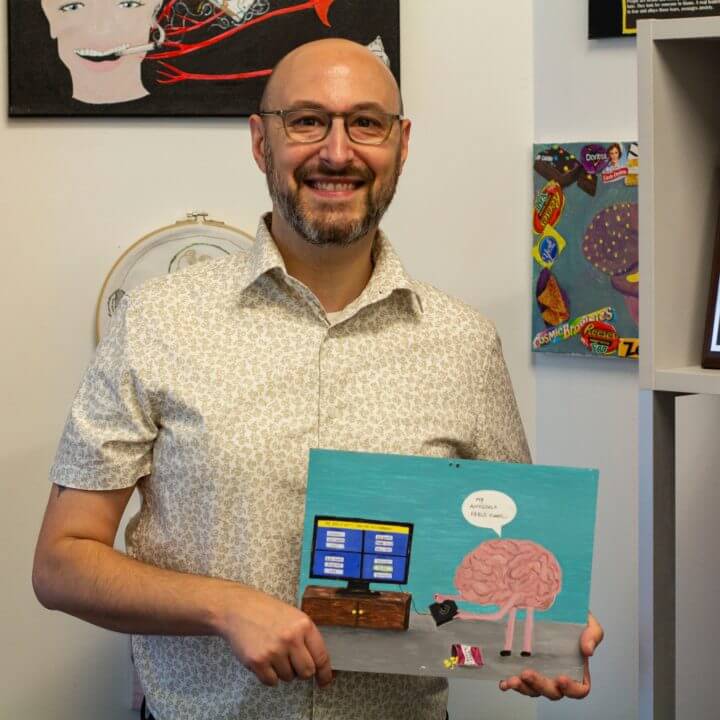
Dr. Joe Normandin with some art.
Senior Lecturer, Director of Undergraduate Studies
Introduction to Neuroscience
Q. How would you describe this course?
A. This course gives a broad overview of the nervous system and relates it to experiences in our everyday lives. The class also explores how students can apply neuroscience concepts to real-world situations. We explore topics like cochlear implants and the social construction of deafness. We explore the neuroscience of sexual orientation and discuss ethics in research when we study the experiments on Einstein's brain. I constantly relate the nervous system functions to our everyday experience and how it can shape our world views.
Q. What makes this course appealing to students?
A. This course explores ideas about who people are. It also explores how we bring sensory information into our nervous system, how we move, sexual behavior, language, drugs of abuse, mental illness, and issues of consciousness and mortality.
I wanted to make this course approachable for students of every background. I designed this course to energize students and get them interested in these subjects, regardless of their major.
Q. Why is this course important?
A. Neuroscience can help guide healthcare and life decisions. For example, students have used knowledge from this course to help have conversations with their doctors about the medications they are taking. This course also develops critical thinking through pop culture analysis. These exercises are valuable and can help students identify good scientific writing.
I hope, through this course, that students not only gain an appreciation for the complexity of the nervous system but also apply these critical thinking skills for the rest of their life.
Q. How can students take this course into the workforce?
A. If you're a Neuroscience or Biology student, this course aligns with what you're already doing. However, appreciating the complexities of the nervous system and how that's expressed differently by different people is helpful in any workplace environment.
Not everybody's brains work the same way, and that's okay. This course allows you to understand and appreciate neurodiversity and gets students comfortable with others who don't think like them. Also, the critical thinking skills we develop in this course are equally important to the average student.
Q. What's the most exciting or unusual assignment you give students in this class?
A. It has to be the Functional Neuroanatomy Improv assignment! Professional improvisers from Atlanta come to class, and we play a game where students have to figure out what part of the brain is active in this scene. It helps students learn different functions of the brain. Everyone is laughing and answering questions by the middle of that class period. So many people get engaged that have never spoken up in class before.
The students all get to participate and be improvisers themselves. I find that not only is it a good lesson for understanding the brain, but it also changes the tone of the class. I want students to understand this course is collaborative and feel safe. It creates an environment that is far more comfortable on an everyday basis. Some improvisers have been doing this with me for so long that they have learned Functional Neuroanatomy.
I also have a bonus assignment where students can create a work of art inspired by the class. These pieces end up displayed in the Neuroscience Institute.
— Interview by Emma Barrett (B.A., English, ’25). Photos by Raven Schley.