

story by Claire Miller
Jennifer Esposito and Venus Evans-Winters first met 20 years ago as graduate students, when they were both invited to make a presentation entitled, “The Next Generation of Scholars of Color” at the American Educational Research Association’s Presidential Panel.
 Esposito, now chair of the College of Education & Human Development’s Department of Educational Policy Studies, and Evans-Winters, founder of the Planet Venus Institute and a certified clinical trauma professional, have been writing together ever since.
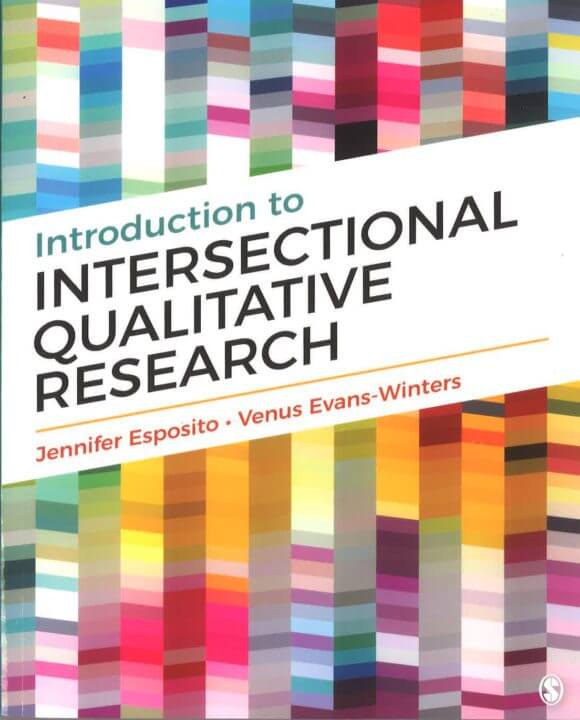
Their newest book, “Introduction to Intersectional Qualitative Research,” is designed to help students understand how to incorporate intersectionality into qualitative research. Intersectionality is a theory that describes how the overlap of social identities, such as race, gender, sexuality and class, contributes to the specific type of system oppression and discrimination that individuals experience.
“It was important to us to write the book that we wanted when we were in graduate school,” Esposito said. “We read intersectional theory in women’s studies and sociology classes and then we learned about qualitative research. It was up to us to figure out how to put the two together, and it’s something we are still learning. We wrote the book as a how-to for students and novice researchers with the same concerns we had.”
Esposito and Evans-Winters detail how to design a research study and collect and analyze data while keeping intersectionality at the core. In doing so, Esposito hopes that readers will better understand how to take a more ethical approach to their research.
“Centering intersectionality in qualitative research means asking yourself again and again, ‘What is the researcher’s sociopolitical proximity to the research topic, to the research participants themselves, and to the cultural context in which the study takes place?’” Esposito said. “In order to answer these questions, the researcher must examine their relationship to power.”