
THE
COME
BACK
KID
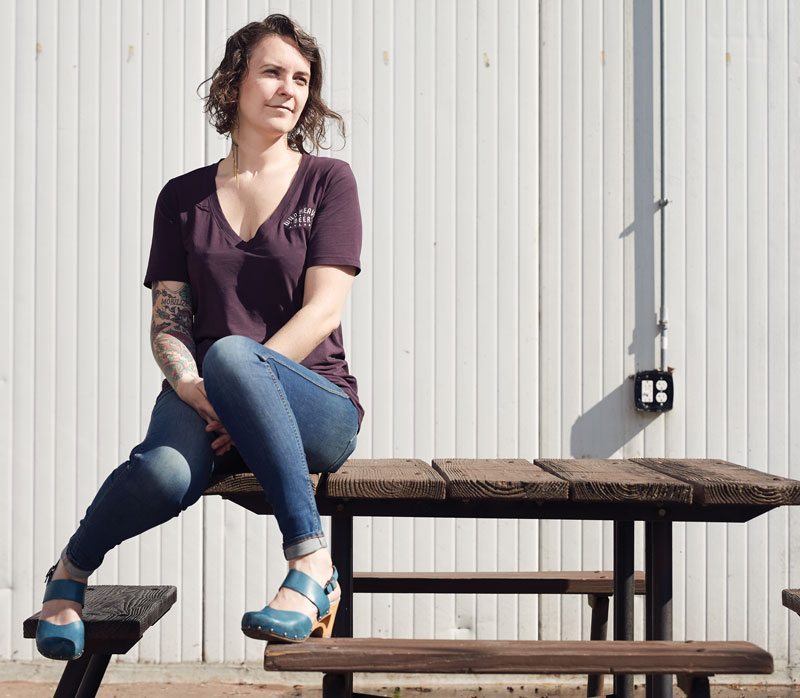
A hit-and-run by a drunk driver during her friend’s bachelorette party nearly killed Angela Riley (B.A. ’12). With a little help from her friends and an assist from The Giving Kitchen, she’s recovered and repaying the favors.
THE
COME
BACK
KID
A hit-and-run by a drunk driver during her friend’s bachelorette party nearly killed Angela Riley (B.A. ’12). With a little help from her friends and an assist from The Giving Kitchen, she’s recovered and repaying the favors.
THE
COME
BACK
KID
A hit-and-run by a drunk driver during her friend’s bachelorette party nearly killed Angela Riley (B.A. ’12). With a little help from her friends and an assist from The Giving Kitchen, she’s recovered and repaying the favors.
THE
COME
BACK
KID
A hit-and-run by a drunk driver during her friend’s bachelorette party nearly killed Angela Riley (B.A. ’12). With a little help from her friends and an assist from The Giving Kitchen, she’s recovered and repaying the favors.
THE
COME
BACK
KID
A hit-and-run by a drunk driver during her friend’s bachelorette party nearly killed Angela Riley (B.A. ’12). With a little help from her friends and an assist from The Giving Kitchen, she’s recovered and repaying the favors.
written by Abby Carney (B.A. ’12)*

gaggle of buoyant young women exit a bar in Nashville just before 2 a.m. and begin to cross Broadway on their way to another honky-tonk. They’re dressed in ’80s workout attire — leotards, scrunchies, neon lipstick and so much shimmer glitter that it’s clearly visible in the grainy surveillance video from 2013.
They’re giggling across the street when a drunk driver plows through the crosswalk, striking one of the girls and throwing her onto the hood of his car before speeding off. Screaming and crying, the others scramble to help their friend, 25-year-old Angela Riley, who just broke a windshield with her head and fractured her spine in two places.
One of the young women attending to Riley is wearing a white tulle veil. Her name is Amelia York, Riley’s childhood friend and roommate, and she’s out tonight celebrating her bachelorette weekend with her bridal party.
An occupational therapist, York is the situation’s first responder as it transitions from barroom karaoke to medical emergency in a flash.
“You can see it’s her because she’s running around, and her veil makes it look like she’s flying,” Riley says. “It’s like I’m Sleeping Beauty, and she’s one of the little fairies.”
She’s describing the surveillance footage, which she’s had on DVD since the court subpoenaed it for a civil suit against the driver. She’s replayed the worst night of her life so much the disc is heavily scratched and worn.
When York sees Riley is bleeding from her nose with no facial abrasions, she knows right away her friend has suffered a traumatic brain injury.
It takes a few minutes for passersby to take them seriously.
“We were bedraggled in smeared, excessive makeup,” York recalls. “Glitter mascara was all over our faces from crying. We looked like complete nut jobs.”
Riley soon arrives at Vanderbilt Trauma Center, where the bridal party hovers in the waiting room for the next 36 hours without a single word from hospital staff about Riley’s condition. They don’t know if their friend is dead or alive.
THE 2:30 A.M. CALL
 usan Riley, Angela’s mother, remembers well her early morning conversation with York.
“We just needed to get there as fast as we could,” she recalls. “That’s all the doctors would tell the girls about her condition.”
She and her husband immediately jumped in the car and drove through the night to Nashville, stopping periodically to let Susan vomit on the side of the road. She was so worried about Angela that she’d become physically ill.
Arriving at the hospital, however, she exuded complete confidence despite her fears. All the girls had known Susan for years. She’d worked at Decatur (Ga.) High School for nearly two decades, and they all grew up under her wing.
“Susan is the most positive, angelic person on the planet,” York says. “She got there and hugged us. She has this great southern accent. She was like, ‘Oh, baby dolls, it’s gonna be okay.’ She was the one comforting us. She’s always had this great strength and positivity, and everyone loves her for it.”
The doctors told them Riley might not survive — or might instead wake up unable to recognize her own mother and best friends. One of the doctors described surviving a brain injury like groping around from floor to floor inside a dark 10-story building just trying to find a light switch.
When Riley woke up amid a tangle of tubes and tape, however, she immediately found her parents’ faces.
“She’s got wires everywhere,” Susan describes the scene. “She looks up at her daddy. She looks at me. And this is what she says — it got me through everything — she said, ‘Let’s go.’ So, from that moment, I thought, ‘She knows us. She knows I’m the one who’ll get her out of here. It’s gonna be okay.’”
After a week in intensive care, Riley was flown back to Atlanta to begin intensive rehabilitation.
That summer, Susan drove Angela to rehab every day, waiting outside her daughter’s room from 8:30 a.m. – 4 p.m. while she regained her strength and relearned how to walk and talk.
“The first time we went to the rehab room where they eat, Angela dropped her face in her grits and eggs,” Susan says. “It took her quite a while just to be able to hold her head up.”
Riley’s entire family, including her four brothers, organized their schedules to take shifts staying with Riley at her apartment, where they believed she should remain so she could still feel like an adult.
“They kept saying I was young and I was healthy,” Riley recalls. “And if I worked hard enough, I could return to a normal life if I just kept trying.”
At 25, Riley was back at square one. The girl who moved out at 18 and fiercely fought for her independence, working in restaurants and interning at the J. Mack Robinson College of Business while pursuing her undergraduate degree, would have to learn once more how to feed and bathe herself, hold objects, speak — all of it. For a time, she required 24-hour supervision. There was no promise she’d pull through, recover fully or recover at all.
“It started slow, and it felt like forever,” Riley says, “but it took about six months for the main part of recovery and another six months for me to regain executive functions like being able to balance a checkbook and understand what I was saying. I didn’t know what not to say, so I’d say really inappropriate things to the wrong people.”
“She felt really derailed,” York says. “At the time in life when people start their careers and settle down, her slate got wiped clean. She couldn’t focus on career. She had to learn to tie her shoes. She has had to come so far, and I think people who don’t understand brain injuries don’t know how difficult that is.”
A HELPING OF HEALING
 ord spread after Riley’s accident. Her Decatur community, where she was born and raised, even sold hair scrunchies to raise funds for Riley: “Scrunchies for Angela.”
Around that time, chef Ryan Hidinger and his wife Jen had just started The Giving Kitchen, a charitable organization that financially assists Atlanta restaurant workers with grants to help them get back on their feet when unanticipated crises arise in their lives. A server at Leon’s Full Service in Decatur at the time of the accident, Riley had been working in local restaurants since she was a teenager. The Hidingers heard Riley’s story and wanted to help.
Ryan Hidinger was diagnosed with stage 4 gallbladder cancer just before Christmas 2012.
The chef at Muss & Turner’s in Smyrna, Ga., was given six months to live. After his diagnosis, the Atlanta restaurant community rallied around the Hidingers, and the couple were overwhelmed with the support they were given. In fact, they were showered with a surplus of donations and decided they wanted to help others in need, too.
“After that first team meeting to raise funds for Ryan, we started to hear stories of others in our community. Angela was the very first one,” recalls Jen Hidinger. “We heard the story and immediately said, ‘Let’s help her out.’”
Their grant helped Riley pay her rent and living expenses through her first year of recovery.
The Giving Kitchen helped Riley before it even had its bylaws in place. She was the prototype for their mission: to financially assist Atlanta restaurant workers like Riley who have had their worlds turned upside down by an accident, sickness or other crisis.
“The Atlanta restaurant community is a close-knit place, and everyone looks after each other,” Riley says. “Finding my own community was extremely important to me and made me feel like I belonged somewhere.”
Ryan Hidinger died in January 2014. Shortly thereafter, and as soon as she was able, Riley became a full-time volunteer with The Giving Kitchen.
Four months later, she was hired on as the nonprofit’s communications manager. On social media and the website, in emails and all other communications, Riley has been the voice of The Giving Kitchen from the very beginning. She’s essentially one of the founding members.
“When we hired her, we thought it was kind of amazing,” Jen says. “She was our first grant recipient, and ultimately, we were able to give her a job matching her skills, and here she is growing and growing.”
Though Jen didn’t meet Riley until after she got out of the hospital, she’s seen Riley’s progress firsthand.
“You can see drastic growth from many different angles,” Jen says. “She’s a bright, vibrant, young lady. She’s smart and incredibly driven. I recognized what the accident did to her, to her motor skills, but she had this intense drive to help.”
“It’s crazy to look at the worst thing that ever happened to me and also think it was the best thing that ever happened to me.”
1,000-MILE JOURNEY
Riley is back to her old wit, creativity and way with words. Her friends say her talent remains sharp as ever despite a few symptoms common with brain injury survivors. She must take care to avoid becoming overstimulated in loud, busy places, for example, and can’t rely on her short-term memory as she once could. However, Riley has learned to adapt with compensatory strategies, such as writing everything down and making meticulous lists.
Susan says she’s seen her daughter change since the accident.
“She’s always been awesome,” she says, “but she has a different approach to life. When you come that close to losing everything, it just makes you different. She said not too long ago, ‘A lot of my friends are getting married, and some are having children, and I’m trying to figure out who I am again.’”
Riley left The Giving Kitchen last year to become the brand storyteller for Wild Heaven Brewery back home in Decatur. Since that first donation to help Riley pay her bills, The Giving Kitchen has given financial assistance to 650 people and awarded more than $1 million in grants.
“Angela was a driving force between our very small initial staff that gave a voice to this organization,” Jen says. “To be part of that very first team, to give this organization its first legs from crawl to walk, is really amazing.”
Riley still often visits York and her husband — just as if the accident never happened.
“She’ll bring over a bunch of her good Wild Heaven beers, and we’ll sit on the back deck,” York says. “She indulges us by being homebodies with us.”
It’s been four years since that wretched night in Nashville, but Riley doesn’t hold a grudge against the driver who put her life on hold. A percentage of what she was awarded in a civil suit was donated back to The Giving Kitchen. She’s at peace, almost thankful for what happened.
“I don’t know I would have found my place or my voice without it,” she says. “It’s crazy to look at the worst thing that ever happened to me and also think it was the best thing that ever happened to me.”
Riley’s long journey of self-discovery started soon after the wreck, even before The Giving Kitchen heard her story.
As part of her rehab exercises during her recovery, Riley had been trying on her bridesmaid dress and practicing for York’s big day.
RELATED CONTENT
“She was preparing to regain her independence,” York says, “but with the specific goal of being at my wedding.”
On June 15, 2012 — just 35 days after the accident — Angela Riley walked down the aisle as her friend’s bridesmaid.
gaggle of buoyant young women exit a bar in Nashville just before 2 a.m. and begin to cross Broadway on their way to another honky-tonk. They’re dressed in ’80s workout attire — leotards, scrunchies, neon lipstick and so much shimmer glitter that it’s clearly visible in the grainy surveillance video from 2013.
They’re giggling across the street when a drunk driver plows through the crosswalk, striking one of the girls and throwing her onto the hood of his car before speeding off. Screaming and crying, the others scramble to help their friend, 25-year-old Angela Riley, who just broke a windshield with her head and fractured her spine in two places.
One of the young women attending to Riley is wearing a white tulle veil. Her name is Amelia York, Riley’s childhood friend and roommate, and she’s out tonight celebrating her bachelorette weekend with her bridal party.
An occupational therapist, York is the situation’s first responder as it transitions from barroom karaoke to medical emergency in a flash.
“You can see it’s her because she’s running around, and her veil makes it look like she’s flying,” Riley says. “It’s like I’m Sleeping Beauty, and she’s one of the little fairies.”
She’s describing the surveillance footage, which she’s had on DVD since the court subpoenaed it for a civil suit against the driver. She’s replayed the worst night of her life so much the disc is heavily scratched and worn.
When York sees Riley is bleeding from her nose with no facial abrasions, she knows right away her friend has suffered a traumatic brain injury.
It takes a few minutes for passersby to take them seriously.
“We were bedraggled in smeared, excessive makeup,” York recalls. “Glitter mascara was all over our faces from crying. We looked like complete nut jobs.”
Riley soon arrives at Vanderbilt Trauma Center, where the bridal party hovers in the waiting room for the next 36 hours without a single word from hospital staff about Riley’s condition. They don’t know if their friend is dead or alive.

THE 2:30 A.M. CALL
usan Riley, Angela’s mother, remembers well her early morning conversation with York.
“We just needed to get there as fast as we could,” she recalls. “That’s all the doctors would tell the girls about her condition.”
She and her husband immediately jumped in the car and drove through the night to Nashville, stopping periodically to let Susan vomit on the side of the road. She was so worried about Angela that she’d become physically ill.
Arriving at the hospital, however, she exuded complete confidence despite her fears. All the girls had known Susan for years. She’d worked at Decatur (Ga.) High School for nearly two decades, and they all grew up under her wing.
“Susan is the most positive, angelic person on the planet,” York says. “She got there and hugged us. She has this great southern accent. She was like, ‘Oh, baby dolls, it’s gonna be okay.’ She was the one comforting us. She’s always had this great strength and positivity, and everyone loves her for it.”
The doctors told them Riley might not survive — or might instead wake up unable to recognize her own mother and best friends. One of the doctors described surviving a brain injury like groping around from floor to floor inside a dark 10-story building just trying to find a light switch.
When Riley woke up amid a tangle of tubes and tape, however, she immediately found her parents’ faces.
“She’s got wires everywhere,” Susan describes the scene. “She looks up at her daddy. She looks at me. And this is what she says — it got me through everything — she said, ‘Let’s go.’ So, from that moment, I thought, ‘She knows us. She knows I’m the one who’ll get her out of here. It’s gonna be okay.’”
After a week in intensive care, Riley was flown back to Atlanta to begin intensive rehabilitation.
That summer, Susan drove Angela to rehab every day, waiting outside her daughter’s room from 8:30 a.m. – 4 p.m. while she regained her strength and relearned how to walk and talk.
“The first time we went to the rehab room where they eat, Angela dropped her face in her grits and eggs,” Susan says. “It took her quite a while just to be able to hold her head up.”
Riley’s entire family, including her four brothers, organized their schedules to take shifts staying with Riley at her apartment, where they believed she should remain so she could still feel like an adult.
“They kept saying I was young and I was healthy,” Riley recalls. “And if I worked hard enough, I could return to a normal life if I just kept trying.”
At 25, Riley was back at square one. The girl who moved out at 18 and fiercely fought for her independence, working in restaurants and interning at the J. Mack Robinson College of Business while pursuing her undergraduate degree, would have to learn once more how to feed and bathe herself, hold objects, speak — all of it. For a time, she required 24-hour supervision. There was no promise she’d pull through, recover fully or recover at all.
“It started slow, and it felt like forever,” Riley says, “but it took about six months for the main part of recovery and another six months for me to regain executive functions like being able to balance a checkbook and understand what I was saying. I didn’t know what not to say, so I’d say really inappropriate things to the wrong people.”
“She felt really derailed,” York says. “At the time in life when people start their careers and settle down, her slate got wiped clean. She couldn’t focus on career. She had to learn to tie her shoes. She has had to come so far, and I think people who don’t understand brain injuries don’t know how difficult that is.”
A HELPING OF HEALING
ord spread after Riley’s accident. Her Decatur community, where she was born and raised, even sold hair scrunchies to raise funds for Riley: “Scrunchies for Angela.”
Around that time, chef Ryan Hidinger and his wife Jen had just started The Giving Kitchen, a charitable organization that financially assists Atlanta restaurant workers with grants to help them get back on their feet when unanticipated crises arise in their lives. A server at Leon’s Full Service in Decatur at the time of the accident, Riley had been working in local restaurants since she was a teenager. The Hidingers heard Riley’s story and wanted to help.
Ryan Hidinger was diagnosed with stage 4 gallbladder cancer just before Christmas 2012.
The chef at Muss & Turner’s in Smyrna, Ga., was given six months to live. After his diagnosis, the Atlanta restaurant community rallied around the Hidingers, and the couple were overwhelmed with the support they were given. In fact, they were showered with a surplus of donations and decided they wanted to help others in need, too.
“After that first team meeting to raise funds for Ryan, we started to hear stories of others in our community. Angela was the very first one,” recalls Jen Hidinger. “We heard the story and immediately said, ‘Let’s help her out.’”
Their grant helped Riley pay her rent and living expenses through her first year of recovery.
The Giving Kitchen helped Riley before it even had its bylaws in place. She was the prototype for their mission: to financially assist Atlanta restaurant workers like Riley who have had their worlds turned upside down by an accident, sickness or other crisis.
“The Atlanta restaurant community is a close-knit place, and everyone looks after each other,” Riley says. “Finding my own community was extremely important to me and made me feel like I belonged somewhere.”
Ryan Hidinger died in January 2014. Shortly thereafter, and as soon as she was able, Riley became a full-time volunteer with The Giving Kitchen.
Four months later, she was hired on as the nonprofit’s communications manager. On social media and the website, in emails and all other communications, Riley has been the voice of The Giving Kitchen from the very beginning. She’s essentially one of the founding members.
“When we hired her, we thought it was kind of amazing,” Jen says. “She was our first grant recipient, and ultimately, we were able to give her a job matching her skills, and here she is growing and growing.”
Though Jen didn’t meet Riley until after she got out of the hospital, she’s seen Riley’s progress firsthand.
“You can see drastic growth from many different angles,” Jen says. “She’s a bright, vibrant, young lady. She’s smart and incredibly driven. I recognized what the accident did to her, to her motor skills, but she had this intense drive to help.”
“It’s crazy to look at the worst thing that ever happened to me and also think it was the best thing that ever happened to me.”
1,000-MILE JOURNEY
 iley is back to her old wit, creativity and way with words. Her friends say her talent remains sharp as ever despite a few symptoms common with brain injury survivors. She must take care to avoid becoming overstimulated in loud, busy places, for example, and can’t rely on her short-term memory as she once could. However, Riley has learned to adapt with compensatory strategies, such as writing everything down and making meticulous lists.
Susan says she’s seen her daughter change since the accident.
“She’s always been awesome,” she says, “but she has a different approach to life. When you come that close to losing everything, it just makes you different. She said not too long ago, ‘A lot of my friends are getting married, and some are having children, and I’m trying to figure out who I am again.’”
Riley left The Giving Kitchen last year to become the brand storyteller for Wild Heaven Brewery back home in Decatur. Since that first donation to help Riley pay her bills, The Giving Kitchen has given financial assistance to 650 people and awarded more than $1 million in grants.
“Angela was a driving force between our very small initial staff that gave a voice to this organization,” Jen says. “To be part of that very first team, to give this organization its first legs from crawl to walk, is really amazing.”
Riley still often visits York and her husband — just as if the accident never happened.
“She’ll bring over a bunch of her good Wild Heaven beers, and we’ll sit on the back deck,” York says. “She indulges us by being homebodies with us.”
It’s been four years since that wretched night in Nashville, but Riley doesn’t hold a grudge against the driver who put her life on hold. A percentage of what she was awarded in a civil suit was donated back to The Giving Kitchen. She’s at peace, almost thankful for what happened.
“I don’t know I would have found my place or my voice without it,” she says. “It’s crazy to look at the worst thing that ever happened to me and also think it was the best thing that ever happened to me.”
Riley’s long journey of self-discovery started soon after the wreck, even before The Giving Kitchen heard her story.
As part of her rehab exercises during her recovery, Riley had been trying on her bridesmaid dress and practicing for York’s big day.
“She was preparing to regain her independence,” York says, “but with the specific goal of being at my wedding.”
On June 15, 2012 — just 35 days after the accident — Angela Riley walked down the aisle as her friend’s bridesmaid.
gaggle of buoyant young women exit a bar in Nashville just before 2 a.m. and begin to cross Broadway on their way to another honky-tonk. They’re dressed in ’80s workout attire — leotards, scrunchies, neon lipstick and so much shimmer glitter that it’s clearly visible in the grainy surveillance video from 2013.
They’re giggling across the street when a drunk driver plows through the crosswalk, striking one of the girls and throwing her onto the hood of his car before speeding off. Screaming and crying, the others scramble to help their friend, 25-year-old Angela Riley, who just broke a windshield with her head and fractured her spine in two places.
One of the young women attending to Riley is wearing a white tulle veil. Her name is Amelia York, Riley’s childhood friend and roommate, and she’s out tonight celebrating her bachelorette weekend with her bridal party.
An occupational therapist, York is the situation’s first responder as it transitions from barroom karaoke to medical emergency in a flash.
“You can see it’s her because she’s running around, and her veil makes it look like she’s flying,” Riley says. “It’s like I’m Sleeping Beauty, and she’s one of the little fairies.”
She’s describing the surveillance footage, which she’s had on DVD since the court subpoenaed it for a civil suit against the driver. She’s replayed the worst night of her life so much the disc is heavily scratched and worn.
When York sees Riley is bleeding from her nose with no facial abrasions, she knows right away her friend has suffered a traumatic brain injury.
It takes a few minutes for passersby to take them seriously.
“We were bedraggled in smeared, excessive makeup,” York recalls. “Glitter mascara was all over our faces from crying. We looked like complete nut jobs.”
Riley soon arrives at Vanderbilt Trauma Center, where the bridal party hovers in the waiting room for the next 36 hours without a single word from hospital staff about Riley’s condition. They don’t know if their friend is dead or alive.
THE 2:30 A.M. CALL
usan Riley, Angela’s mother, remembers well her early morning conversation with York.
“We just needed to get there as fast as we could,” she recalls. “That’s all the doctors would tell the girls about her condition.”
She and her husband immediately jumped in the car and drove through the night to Nashville, stopping periodically to let Susan vomit on the side of the road. She was so worried about Angela that she’d become physically ill.
Arriving at the hospital, however, she exuded complete confidence despite her fears. All the girls had known Susan for years. She’d worked at Decatur (Ga.) High School for nearly two decades, and they all grew up under her wing.
“Susan is the most positive, angelic person on the planet,” York says. “She got there and hugged us. She has this great southern accent. She was like, ‘Oh, baby dolls, it’s gonna be okay.’ She was the one comforting us. She’s always had this great strength and positivity, and everyone loves her for it.”
The doctors told them Riley might not survive — or might instead wake up unable to recognize her own mother and best friends. One of the doctors described surviving a brain injury like groping around from floor to floor inside a dark 10-story building just trying to find a light switch.
When Riley woke up amid a tangle of tubes and tape, however, she immediately found her parents’ faces.
“She’s got wires everywhere,” Susan describes the scene. “She looks up at her daddy. She looks at me. And this is what she says — it got me through everything — she said, ‘Let’s go.’ So, from that moment, I thought, ‘She knows us. She knows I’m the one who’ll get her out of here. It’s gonna be okay.’”
After a week in intensive care, Riley was flown back to Atlanta to begin intensive rehabilitation.
That summer, Susan drove Angela to rehab every day, waiting outside her daughter’s room from 8:30 a.m. – 4 p.m. while she regained her strength and relearned how to walk and talk.
“The first time we went to the rehab room where they eat, Angela dropped her face in her grits and eggs,” Susan says. “It took her quite a while just to be able to hold her head up.”
Riley’s entire family, including her four brothers, organized their schedules to take shifts staying with Riley at her apartment, where they believed she should remain so she could still feel like an adult.
“They kept saying I was young and I was healthy,” Riley recalls. “And if I worked hard enough, I could return to a normal life if I just kept trying.”
At 25, Riley was back at square one. The girl who moved out at 18 and fiercely fought for her independence, working in restaurants and interning at the J. Mack Robinson College of Business while pursuing her undergraduate degree, would have to learn once more how to feed and bathe herself, hold objects, speak — all of it. For a time, she required 24-hour supervision. There was no promise she’d pull through, recover fully or recover at all.
“It started slow, and it felt like forever,” Riley says, “but it took about six months for the main part of recovery and another six months for me to regain executive functions like being able to balance a checkbook and understand what I was saying. I didn’t know what not to say, so I’d say really inappropriate things to the wrong people.”
“She felt really derailed,” York says. “At the time in life when people start their careers and settle down, her slate got wiped clean. She couldn’t focus on career. She had to learn to tie her shoes. She has had to come so far, and I think people who don’t understand brain injuries don’t know how difficult that is.”
A HELPING OF HEALING
ord spread after Riley’s accident. Her Decatur community, where she was born and raised, even sold hair scrunchies to raise funds for Riley: “Scrunchies for Angela.”
Around that time, chef Ryan Hidinger and his wife Jen had just started The Giving Kitchen, a charitable organization that financially assists Atlanta restaurant workers with grants to help them get back on their feet when unanticipated crises arise in their lives. A server at Leon’s Full Service in Decatur at the time of the accident, Riley had been working in local restaurants since she was a teenager. The Hidingers heard Riley’s story and wanted to help.
Ryan Hidinger was diagnosed with stage 4 gallbladder cancer just before Christmas 2012.
The chef at Muss & Turner’s in Smyrna, Ga., was given six months to live. After his diagnosis, the Atlanta restaurant community rallied around the Hidingers, and the couple were overwhelmed with the support they were given. In fact, they were showered with a surplus of donations and decided they wanted to help others in need, too.
“After that first team meeting to raise funds for Ryan, we started to hear stories of others in our community. Angela was the very first one,” recalls Jen Hidinger. “We heard the story and immediately said, ‘Let’s help her out.’”
Their grant helped Riley pay her rent and living expenses through her first year of recovery.
The Giving Kitchen helped Riley before it even had its bylaws in place. She was the prototype for their mission: to financially assist Atlanta restaurant workers like Riley who have had their worlds turned upside down by an accident, sickness or other crisis.
“The Atlanta restaurant community is a close-knit place, and everyone looks after each other,” Riley says. “Finding my own community was extremely important to me and made me feel like I belonged somewhere.”
Ryan Hidinger died in January 2014. Shortly thereafter, and as soon as she was able, Riley became a full-time volunteer with The Giving Kitchen.
Four months later, she was hired on as the nonprofit’s communications manager. On social media and the website, in emails and all other communications, Riley has been the voice of The Giving Kitchen from the very beginning. She’s essentially one of the founding members.
“When we hired her, we thought it was kind of amazing,” Jen says. “She was our first grant recipient, and ultimately, we were able to give her a job matching her skills, and here she is growing and growing.”
Though Jen didn’t meet Riley until after she got out of the hospital, she’s seen Riley’s progress firsthand.
“You can see drastic growth from many different angles,” Jen says. “She’s a bright, vibrant, young lady. She’s smart and incredibly driven. I recognized what the accident did to her, to her motor skills, but she had this intense drive to help.”
“It’s crazy to look at the worst thing that ever happened to me and also think it was the best thing that ever happened to me.”
1,000-MILE JOURNEY
iley is back to her old wit, creativity and way with words. Her friends say her talent remains sharp as ever despite a few symptoms common with brain injury survivors. She must take care to avoid becoming overstimulated in loud, busy places, for example, and can’t rely on her short-term memory as she once could. However, Riley has learned to adapt with compensatory strategies, such as writing everything down and making meticulous lists.
Susan says she’s seen her daughter change since the accident.
“She’s always been awesome,” she says, “but she has a different approach to life. When you come that close to losing everything, it just makes you different. She said not too long ago, ‘A lot of my friends are getting married, and some are having children, and I’m trying to figure out who I am again.’”
Riley left The Giving Kitchen last year to become the brand storyteller for Wild Heaven Brewery back home in Decatur. Since that first donation to help Riley pay her bills, The Giving Kitchen has given financial assistance to 650 people and awarded more than $1 million in grants.
“Angela was a driving force between our very small initial staff that gave a voice to this organization,” Jen says. “To be part of that very first team, to give this organization its first legs from crawl to walk, is really amazing.”
Riley still often visits York and her husband — just as if the accident never happened.
“She’ll bring over a bunch of her good Wild Heaven beers, and we’ll sit on the back deck,” York says. “She indulges us by being homebodies with us.”
It’s been four years since that wretched night in Nashville, but Riley doesn’t hold a grudge against the driver who put her life on hold. A percentage of what she was awarded in a civil suit was donated back to The Giving Kitchen. She’s at peace, almost thankful for what happened.
“I don’t know I would have found my place or my voice without it,” she says. “It’s crazy to look at the worst thing that ever happened to me and also think it was the best thing that ever happened to me.”
Riley’s long journey of self-discovery started soon after the wreck, even before The Giving Kitchen heard her story.
As part of her rehab exercises during her recovery, Riley had been trying on her bridesmaid dress and practicing for York’s big day.
“She was preparing to regain her independence,” York says, “but with the specific goal of being at my wedding.”
On June 15, 2012 — just 35 days after the accident — Angela Riley walked down the aisle as her friend’s bridesmaid.