
Professor Andrew I. Cohen of the Philosophy Department at Georgia State University has received a two-year, $180,000 grant from the National Endowment for the Humanities (NEH) to investigate moral injury in post-deployment soldiers.
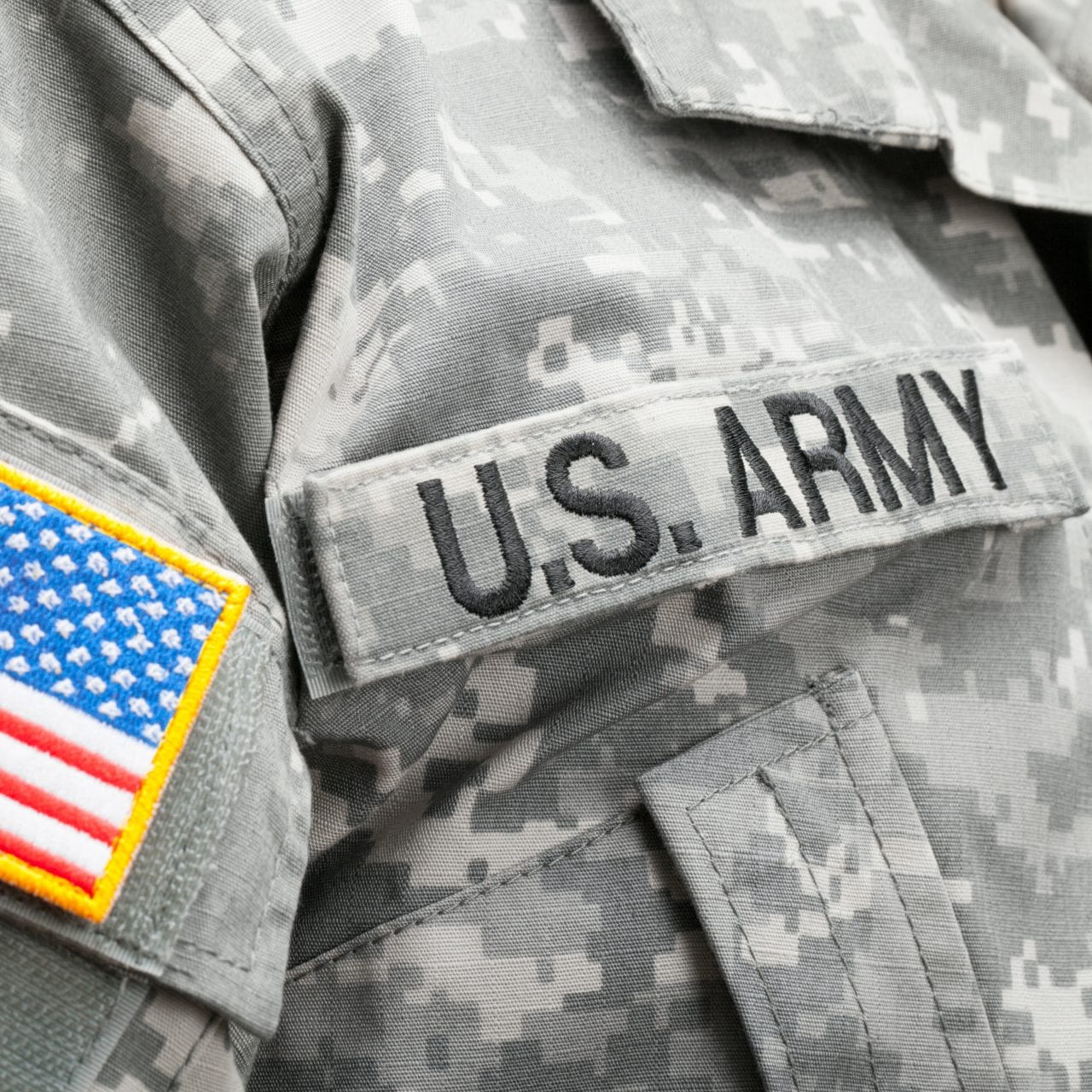
USA flag and U.S. Army patch on solder's uniform
Experts define moral injury as a disorientation and loss of trust in others or self caused by involvement in injustice or wrongdoing. It typically involves shattered understandings of oneself and loss of confidence in morality and the meaning of community.
“We’re focusing on soldiers because this is a group who is doing a lot in the name of the United States and are often put in morally challenging situations,” said Cohen. “Moral injury is not unique to soldiers, but they are an important population to study because there are many reports of their struggles with morality after deployment.”
Cohen is collaborating with Kathryn McClymond of the Department of Religious Studies and Jennifer A. Samp of the University of Georgia on the project.
“I think that it’s important to distinguish post-traumatic stress disorder and moral injury,” added Samp. “PTSD has received much more media coverage because it’s a clinical diagnosis. While moral injury does have some overlap with PTSD, it’s a distinct phenomenon. And just because soldiers don’t have to actively go out and seek assistance, it doesn’t mean that moral injury and the experience of moral injury is any less serious. It’s just less known.”
The two-part study will begin with a series of focus groups with post-deployment veterans at multiple locations in the Southeast. The focus groups will be moderated by licensed-military-clinical social workers.
The researchers will use the information gathered in the focus groups to create a series of surveys that will deepen overall understanding of moral injury.
“We’re hoping that the idea of moral injury will become a part of the conversation about the experiences of soldiers,” said Cohen. “In the long term, it is also our hope that this notion of moral injury will enter the vocabulary of how people understand challenging choices we face.”