
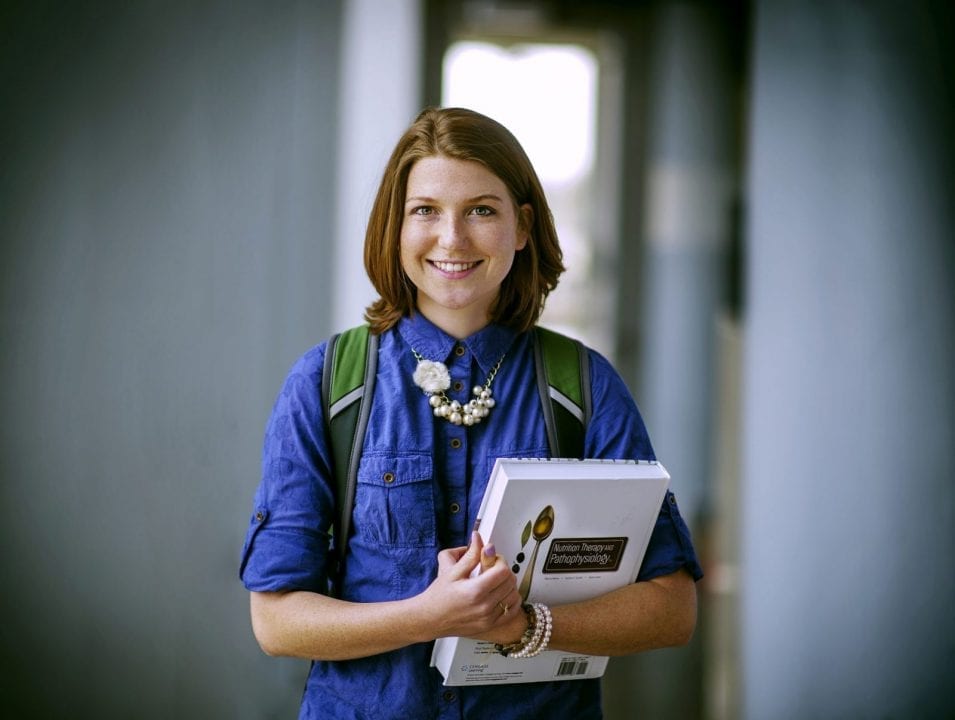
 B.S., Nutrition
n the United States, hunger and food insecurity are often hidden. And on a college campus, someone might not even realize a classmate has nothing to eat.
But nutrition major Diana Parker and fellow volunteers of the student-run Panther Pantry know some of their fellow students might need the help of the Georgia State food bank, especially toward the end of the semester.
The idea for the pantry wasn’t new—a group of Georgia State graduate students in nutrition had created a plan—but it had never been executed. A heartbreaking encounter spurred Parker into action to make the food bank a reality.
“I was sitting in a meeting on campus once, and someone said she was really hungry,” she said. “I asked, ‘Don’t you have any food in your dorm?’ And she said ‘I have rice, and that’s it.’”
With the work of Parker, her colleagues, volunteers from the Nutrition Student Network at Georgia State and other volunteers from around the university, the pantry began operations last year.
It stocks food as well as other necessities such as toothbrushes and toothpaste in a private corner of campus, the old print shop down in the basement of the Urban Life building.
“When students walk into the door, they are a little more reserved,” Parker said. “And as they’re leaving, I kind of notice a physical change in them. They usually walk out with a lighter step, and they’re excited.”
The pantry’s goal isn’t just to stock food, but to stock healthy food. That’s what Parker plans to address through policymaking after she gets her master’s degree in public health.
—Jeremy Craig