
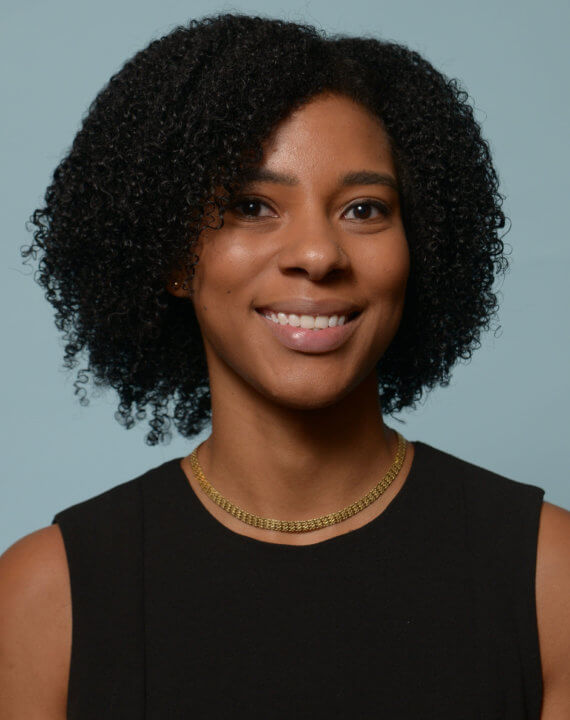
 The Georgia Leadership Education in Neurodevelopmental and Related Disabilities (GaLEND) program at Georgia State University is thrilled to announce that Kristin Fauntleroy-Love, MD, is joining our faculty as the Director for the Systems of Care course.
Dr. Fauntleroy-Love, a proud GaLEND alumna, currently serves as an Assistant Professor of Pediatrics at Emory University and a physician in the Neurodevelopmental Disabilities and Child Neurology department at Children’s Healthcare of Atlanta.
GaLEND is a one-year interdisciplinary training program that prepares emerging leaders to deliver coordinated, culturally responsive, and family-centered care for children with neurodevelopmental disabilities and their families. Ahead of her transition into this new role, we spoke with Dr. Fauntleroy-Love about her experience as a LEND trainee and how that journey continues to shape her work today.
How did your time as a GaLEND fellow in 2018 - 2019 shape your career path and influence your approach to caring for children and supporting their families?
My time as a GaLEND fellow in 2018–2019 fundamentally shaped who I am as a physician today. It solidified my commitment to true family-centered practice and taught me the importance of partnering with families as experts in their own experiences. Working in a multidisciplinary environment pushed me to listen deeply, collaborate intentionally, and honor each child as an individual.
LEND taught me about people in a way that medical school simply couldn’t. I often say that I learned medicine from textbooks, but I learned to understand the person in LEND. I always tell families, ‘Children don’t read the textbook.’ Meaning every child shows up as their own unique self, not as a list of symptoms in a book, and I will always treat them that way, honoring who they are and understanding their family’s lived experience as the foundation of care.
The exposure to diverse family stories, goals, identities, and challenges humbled me and shaped my entire approach to care. Beginning my career with that foundation continues to guide every clinical encounter I have today.
What motivated you to pursue a residency in Neurodevelopmental Disabilities Medicine, and what were the most impactful lessons from your training at Indiana Children’s Hospital?
I pursued a residency in Neurodevelopmental Disabilities because I found my greatest joy in supporting children with disabilities and their families. This came from years of volunteering with Extra Special People in Georgia, an organization that has adaptive recreational and after-school programs as well as family support. Even after being accepted into veterinary school, I realized I felt more excitement about teaching adaptive yoga to kids with disabilities. That moment made it clear exactly where I belonged.
During my training at Riley Children’s Hospital at Indiana University School of Medicine, I learned to deliver complex news with empathy, build trust with families navigating overwhelming systems, and advocate fiercely on their behalf. My mentors modeled what it means to be clinically excellent while remaining deeply human. They supported me as a mother, believed in my research vision, and created an environment where I felt safe, valued, and encouraged to grow. Dr. Rebecca McNally and Dr. Joseph O’ Neil were among the many who profoundly shaped my journey.
As a pediatrician at Children’s Healthcare of Atlanta, what aspects of your work bring you the most fulfillment, and how do you see your role evolving in the coming years?
As a pediatric neurologist and physician specializing in neurodevelopmental disabilities at Children’s Healthcare of Atlanta, the most fulfilling part of my work is walking alongside families as they enter the world of neurodevelopment.
I want them to know from the very beginning that they don’t have to navigate this alone—we will walk this path together. It is an honor to support families on some of the hardest days of their lives and to watch them come back with more confidence, a stronger sense of community, and pride in what their child is accomplishing at every visit. It really is the greatest reward.
In the coming years, I see my role expanding to include more systems-level work—strengthening community partnerships to make care more accessible for every family.
Can you share more about your research in Kenya supporting mothers of autistic children? What inspired this work, and what impact have you seen so far?
My research in Kenya focuses on supporting caregivers of children with autism. My current project, Takia, provides culturally grounded autism education and peer support. We are also exploring expansions of the model to include caregivers of children with cerebral palsy and those with feeding challenges. This work is inspired by the strength, resourcefulness, and love I’ve seen in caregivers around the world, even before my clinical career, and by the significant gaps in support that leave many families feeling alone.
Takia was intentionally co-developed with Kenyan caregivers and local autism experts to ensure equitable collaboration rooted in real community needs. Through the program, 10 caregivers were trained as Autism Information Navigators (AINs) who now use Takia to support other families and raise autism awareness in their communities. Caregivers have reported increased confidence in educating others about autism, and in just seven months, more than 500 people have engaged with an AIN.
The first cohort of AINs has been an absolute powerhouse. The cohorts are compassionate, dedicated, and deeply impactful. I honestly couldn’t have asked for better partners in this work.
What excites you most about joining the Georgia LEND faculty as the Director for the Systems of Care course, and what do you hope to bring to the program?
I am thrilled to be joining the Georgia LEND faculty as the Director of the Systems of Care course. It feels like a full-circle moment to return to the program that shaped me, now with the opportunity to help guide the next generation of leaders.
I hope to bring a perspective that is both deeply clinical and deeply human, shaped by my experiences as a clinician, researcher, advocate, mother, and more. I want learners to understand systems of care not as abstract structures, but as living networks shaped by families, culture, policy, and community. My goal is for them to feel empowered to challenge inequities, build bridges, and create solutions, locally and globally, that center the voices of people with disabilities and those who love them.
Media Contact
Gail Rodriguez
Communications Manager
School of Public Health
Center for Leadership in Disability